# Hands-on [[hands-on]]
Now that you've studied the theory behind Deep Q-Learning, **you’re ready to train your Deep Q-Learning agent to play Atari Games**. We'll start with Space Invaders, but you'll be able to use any Atari game you want 🔥
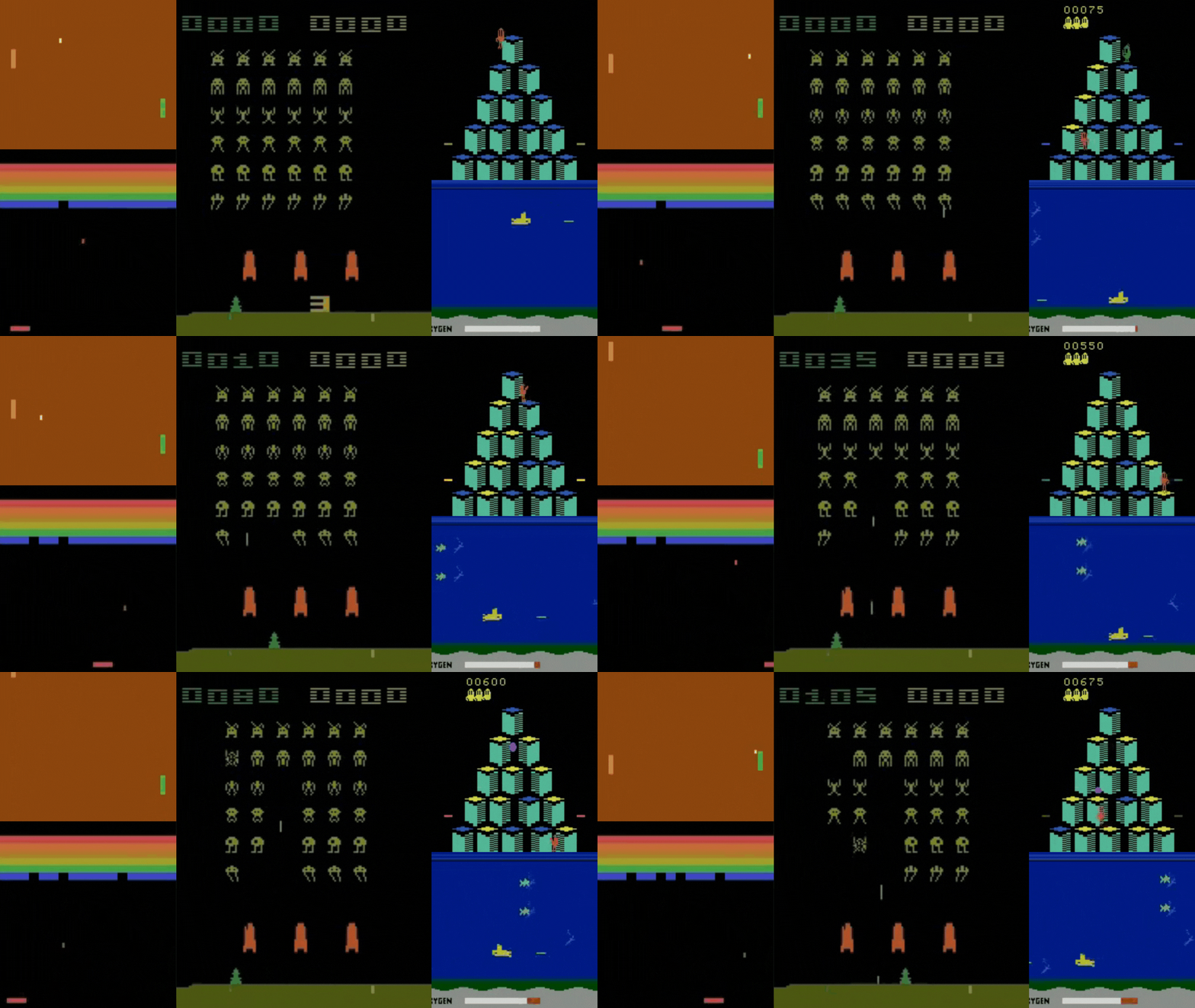 We're using the [RL-Baselines-3 Zoo integration](https://github.com/DLR-RM/rl-baselines3-zoo), a vanilla version of Deep Q-Learning with no extensions such as Double-DQN, Dueling-DQN, or Prioritized Experience Replay.
Also, **if you want to learn to implement Deep Q-Learning by yourself after this hands-on**, you definitely should look at the CleanRL implementation: https://github.com/vwxyzjn/cleanrl/blob/master/cleanrl/dqn_atari.py
To validate this hands-on for the certification process, you need to push your trained model to the Hub and **get a result of >= 200**.
To find your result, go to the leaderboard and find your model, **the result = mean_reward - std of reward**
**If you don't find your model, go to the bottom of the page and click on the refresh button.**
For more information about the certification process, check this section 👉 https://huggingface.co/deep-rl-course/en/unit0/introduction#certification-process
And you can check your progress here 👉 https://huggingface.co/spaces/ThomasSimonini/Check-my-progress-Deep-RL-Course
**To start the hands-on click on Open In Colab button** 👇 :
[](https://colab.research.google.com/github/huggingface/deep-rl-class/blob/master/notebooks/unit3/unit3.ipynb)
# Unit 3: Deep Q-Learning with Atari Games 👾 using RL Baselines3 Zoo
We're using the [RL-Baselines-3 Zoo integration](https://github.com/DLR-RM/rl-baselines3-zoo), a vanilla version of Deep Q-Learning with no extensions such as Double-DQN, Dueling-DQN, or Prioritized Experience Replay.
Also, **if you want to learn to implement Deep Q-Learning by yourself after this hands-on**, you definitely should look at the CleanRL implementation: https://github.com/vwxyzjn/cleanrl/blob/master/cleanrl/dqn_atari.py
To validate this hands-on for the certification process, you need to push your trained model to the Hub and **get a result of >= 200**.
To find your result, go to the leaderboard and find your model, **the result = mean_reward - std of reward**
**If you don't find your model, go to the bottom of the page and click on the refresh button.**
For more information about the certification process, check this section 👉 https://huggingface.co/deep-rl-course/en/unit0/introduction#certification-process
And you can check your progress here 👉 https://huggingface.co/spaces/ThomasSimonini/Check-my-progress-Deep-RL-Course
**To start the hands-on click on Open In Colab button** 👇 :
[](https://colab.research.google.com/github/huggingface/deep-rl-class/blob/master/notebooks/unit3/unit3.ipynb)
# Unit 3: Deep Q-Learning with Atari Games 👾 using RL Baselines3 Zoo
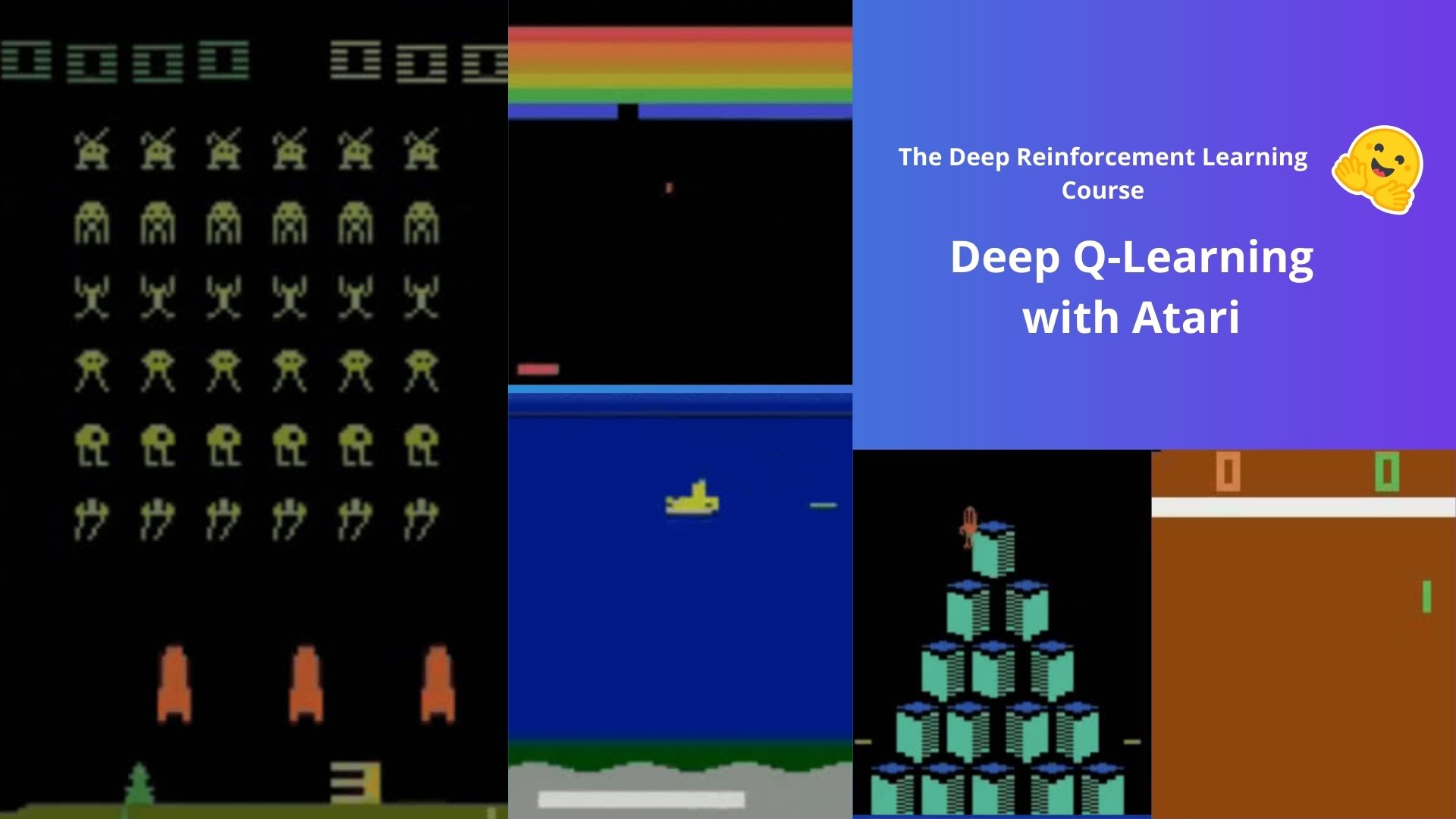 In this hands-on, **you'll train a Deep Q-Learning agent** playing Space Invaders using [RL Baselines3 Zoo](https://github.com/DLR-RM/rl-baselines3-zoo), a training framework based on [Stable-Baselines3](https://stable-baselines3.readthedocs.io/en/master/) that provides scripts for training, evaluating agents, tuning hyperparameters, plotting results and recording videos.
We're using the [RL-Baselines-3 Zoo integration, a vanilla version of Deep Q-Learning](https://stable-baselines3.readthedocs.io/en/master/modules/dqn.html) with no extensions such as Double-DQN, Dueling-DQN, and Prioritized Experience Replay.
### 🎮 Environments:
- [SpacesInvadersNoFrameskip-v4](https://gymnasium.farama.org/environments/atari/space_invaders/)
You can see the difference between Space Invaders versions here 👉 https://gymnasium.farama.org/environments/atari/space_invaders/#variants
### 📚 RL-Library:
- [RL-Baselines3-Zoo](https://github.com/DLR-RM/rl-baselines3-zoo)
## Objectives of this hands-on 🏆
At the end of the hands-on, you will:
- Be able to understand deeper **how RL Baselines3 Zoo works**.
- Be able to **push your trained agent and the code to the Hub** with a nice video replay and an evaluation score 🔥.
## Prerequisites 🏗️
Before diving into the hands-on, you need to:
🔲 📚 **[Study Deep Q-Learning by reading Unit 3](https://huggingface.co/deep-rl-course/unit3/introduction)** 🤗
We're constantly trying to improve our tutorials, so **if you find some issues in this hands-on**, please [open an issue on the Github Repo](https://github.com/huggingface/deep-rl-class/issues).
# Let's train a Deep Q-Learning agent playing Atari' Space Invaders 👾 and upload it to the Hub.
We strongly recommend students **to use Google Colab for the hands-on exercises instead of running them on their personal computers**.
By using Google Colab, **you can focus on learning and experimenting without worrying about the technical aspects of setting up your environments**.
To validate this hands-on for the certification process, you need to push your trained model to the Hub and **get a result of >= 200**.
To find your result, go to the leaderboard and find your model, **the result = mean_reward - std of reward**
For more information about the certification process, check this section 👉 https://huggingface.co/deep-rl-course/en/unit0/introduction#certification-process
## Set the GPU 💪
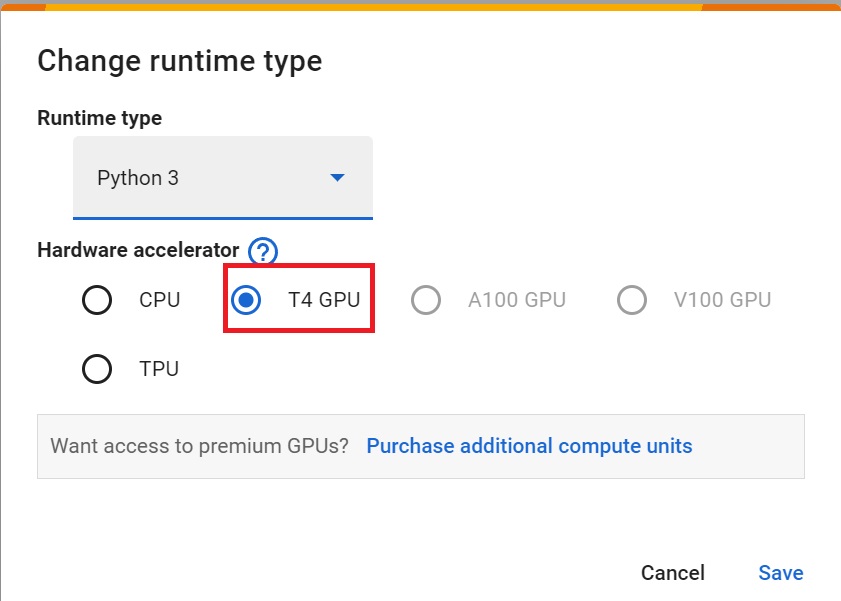
- To **accelerate the agent's training, we'll use a GPU**. To do that, go to `Runtime > Change Runtime type`
In this hands-on, **you'll train a Deep Q-Learning agent** playing Space Invaders using [RL Baselines3 Zoo](https://github.com/DLR-RM/rl-baselines3-zoo), a training framework based on [Stable-Baselines3](https://stable-baselines3.readthedocs.io/en/master/) that provides scripts for training, evaluating agents, tuning hyperparameters, plotting results and recording videos.
We're using the [RL-Baselines-3 Zoo integration, a vanilla version of Deep Q-Learning](https://stable-baselines3.readthedocs.io/en/master/modules/dqn.html) with no extensions such as Double-DQN, Dueling-DQN, and Prioritized Experience Replay.
### 🎮 Environments:
- [SpacesInvadersNoFrameskip-v4](https://gymnasium.farama.org/environments/atari/space_invaders/)
You can see the difference between Space Invaders versions here 👉 https://gymnasium.farama.org/environments/atari/space_invaders/#variants
### 📚 RL-Library:
- [RL-Baselines3-Zoo](https://github.com/DLR-RM/rl-baselines3-zoo)
## Objectives of this hands-on 🏆
At the end of the hands-on, you will:
- Be able to understand deeper **how RL Baselines3 Zoo works**.
- Be able to **push your trained agent and the code to the Hub** with a nice video replay and an evaluation score 🔥.
## Prerequisites 🏗️
Before diving into the hands-on, you need to:
🔲 📚 **[Study Deep Q-Learning by reading Unit 3](https://huggingface.co/deep-rl-course/unit3/introduction)** 🤗
We're constantly trying to improve our tutorials, so **if you find some issues in this hands-on**, please [open an issue on the Github Repo](https://github.com/huggingface/deep-rl-class/issues).
# Let's train a Deep Q-Learning agent playing Atari' Space Invaders 👾 and upload it to the Hub.
We strongly recommend students **to use Google Colab for the hands-on exercises instead of running them on their personal computers**.
By using Google Colab, **you can focus on learning and experimenting without worrying about the technical aspects of setting up your environments**.
To validate this hands-on for the certification process, you need to push your trained model to the Hub and **get a result of >= 200**.
To find your result, go to the leaderboard and find your model, **the result = mean_reward - std of reward**
For more information about the certification process, check this section 👉 https://huggingface.co/deep-rl-course/en/unit0/introduction#certification-process
## Set the GPU 💪
- To **accelerate the agent's training, we'll use a GPU**. To do that, go to `Runtime > Change Runtime type`
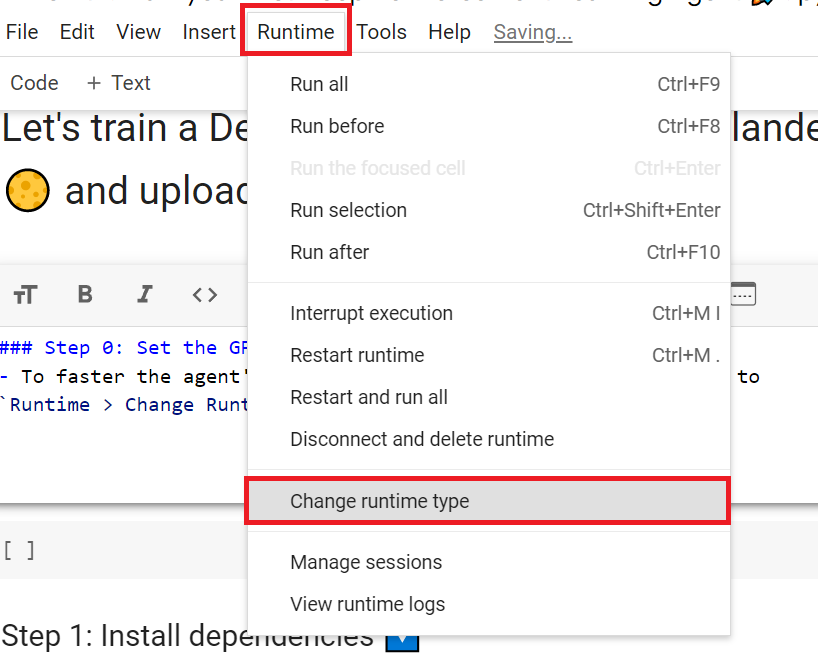 - `Hardware Accelerator > GPU`
 # Install RL-Baselines3 Zoo and its dependencies 📚
If you see `ERROR: pip's dependency resolver does not currently take into account all the packages that are installed.` **this is normal and it's not a critical error** there's a conflict of version. But the packages we need are installed.
```python
# For now we install this update of RL-Baselines3 Zoo
pip install git+https://github.com/DLR-RM/rl-baselines3-zoo@update/hf
```
IF AND ONLY IF THE VERSION ABOVE DOES NOT EXIST ANYMORE. UNCOMMENT AND INSTALL THE ONE BELOW
```python
#pip install rl_zoo3==2.0.0a9
```
```bash
apt-get install swig cmake ffmpeg
```
To be able to use Atari games in Gymnasium we need to install atari package. And accept-rom-license to download the rom files (games files).
```python
!pip install gymnasium[atari]
!pip install gymnasium[accept-rom-license]
```
## Create a virtual display 🔽
During the hands-on, we'll need to generate a replay video. To do so, if you train it on a headless machine, **we need to have a virtual screen to be able to render the environment** (and thus record the frames).
Hence the following cell will install the librairies and create and run a virtual screen 🖥
```bash
apt install python-opengl
apt install ffmpeg
apt install xvfb
pip3 install pyvirtualdisplay
```
```python
# Virtual display
from pyvirtualdisplay import Display
virtual_display = Display(visible=0, size=(1400, 900))
virtual_display.start()
```
## Train our Deep Q-Learning Agent to Play Space Invaders 👾
To train an agent with RL-Baselines3-Zoo, we just need to do two things:
1. Create a hyperparameter config file that will contain our training hyperparameters called `dqn.yml`.
This is a template example:
```
SpaceInvadersNoFrameskip-v4:
env_wrapper:
- stable_baselines3.common.atari_wrappers.AtariWrapper
frame_stack: 4
policy: 'CnnPolicy'
n_timesteps: !!float 1e7
buffer_size: 100000
learning_rate: !!float 1e-4
batch_size: 32
learning_starts: 100000
target_update_interval: 1000
train_freq: 4
gradient_steps: 1
exploration_fraction: 0.1
exploration_final_eps: 0.01
# If True, you need to deactivate handle_timeout_termination
# in the replay_buffer_kwargs
optimize_memory_usage: False
```
Here we see that:
- We use the `Atari Wrapper` that preprocess the input (Frame reduction ,grayscale, stack 4 frames)
- We use `CnnPolicy`, since we use Convolutional layers to process the frames
- We train it for 10 million `n_timesteps`
- Memory (Experience Replay) size is 100000, aka the amount of experience steps you saved to train again your agent with.
💡 My advice is to **reduce the training timesteps to 1M,** which will take about 90 minutes on a P100. `!nvidia-smi` will tell you what GPU you're using. At 10 million steps, this will take about 9 hours. I recommend running this on your local computer (or somewhere else). Just click on: `File>Download`.
In terms of hyperparameters optimization, my advice is to focus on these 3 hyperparameters:
- `learning_rate`
- `buffer_size (Experience Memory size)`
- `batch_size`
As a good practice, you need to **check the documentation to understand what each hyperparameters does**: https://stable-baselines3.readthedocs.io/en/master/modules/dqn.html#parameters
2. We start the training and save the models on `logs` folder 📁
- Define the algorithm after `--algo`, where we save the model after `-f` and where the hyperparameter config is after `-c`.
```bash
python -m rl_zoo3.train --algo ________ --env SpaceInvadersNoFrameskip-v4 -f _________ -c _________
```
#### Solution
```bash
python -m rl_zoo3.train --algo dqn --env SpaceInvadersNoFrameskip-v4 -f logs/ -c dqn.yml
```
## Let's evaluate our agent 👀
- RL-Baselines3-Zoo provides `enjoy.py`, a python script to evaluate our agent. In most RL libraries, we call the evaluation script `enjoy.py`.
- Let's evaluate it for 5000 timesteps 🔥
```bash
python -m rl_zoo3.enjoy --algo dqn --env SpaceInvadersNoFrameskip-v4 --no-render --n-timesteps _________ --folder logs/
```
#### Solution
```bash
python -m rl_zoo3.enjoy --algo dqn --env SpaceInvadersNoFrameskip-v4 --no-render --n-timesteps 5000 --folder logs/
```
## Publish our trained model on the Hub 🚀
Now that we saw we got good results after the training, we can publish our trained model on the hub 🤗 with one line of code.
# Install RL-Baselines3 Zoo and its dependencies 📚
If you see `ERROR: pip's dependency resolver does not currently take into account all the packages that are installed.` **this is normal and it's not a critical error** there's a conflict of version. But the packages we need are installed.
```python
# For now we install this update of RL-Baselines3 Zoo
pip install git+https://github.com/DLR-RM/rl-baselines3-zoo@update/hf
```
IF AND ONLY IF THE VERSION ABOVE DOES NOT EXIST ANYMORE. UNCOMMENT AND INSTALL THE ONE BELOW
```python
#pip install rl_zoo3==2.0.0a9
```
```bash
apt-get install swig cmake ffmpeg
```
To be able to use Atari games in Gymnasium we need to install atari package. And accept-rom-license to download the rom files (games files).
```python
!pip install gymnasium[atari]
!pip install gymnasium[accept-rom-license]
```
## Create a virtual display 🔽
During the hands-on, we'll need to generate a replay video. To do so, if you train it on a headless machine, **we need to have a virtual screen to be able to render the environment** (and thus record the frames).
Hence the following cell will install the librairies and create and run a virtual screen 🖥
```bash
apt install python-opengl
apt install ffmpeg
apt install xvfb
pip3 install pyvirtualdisplay
```
```python
# Virtual display
from pyvirtualdisplay import Display
virtual_display = Display(visible=0, size=(1400, 900))
virtual_display.start()
```
## Train our Deep Q-Learning Agent to Play Space Invaders 👾
To train an agent with RL-Baselines3-Zoo, we just need to do two things:
1. Create a hyperparameter config file that will contain our training hyperparameters called `dqn.yml`.
This is a template example:
```
SpaceInvadersNoFrameskip-v4:
env_wrapper:
- stable_baselines3.common.atari_wrappers.AtariWrapper
frame_stack: 4
policy: 'CnnPolicy'
n_timesteps: !!float 1e7
buffer_size: 100000
learning_rate: !!float 1e-4
batch_size: 32
learning_starts: 100000
target_update_interval: 1000
train_freq: 4
gradient_steps: 1
exploration_fraction: 0.1
exploration_final_eps: 0.01
# If True, you need to deactivate handle_timeout_termination
# in the replay_buffer_kwargs
optimize_memory_usage: False
```
Here we see that:
- We use the `Atari Wrapper` that preprocess the input (Frame reduction ,grayscale, stack 4 frames)
- We use `CnnPolicy`, since we use Convolutional layers to process the frames
- We train it for 10 million `n_timesteps`
- Memory (Experience Replay) size is 100000, aka the amount of experience steps you saved to train again your agent with.
💡 My advice is to **reduce the training timesteps to 1M,** which will take about 90 minutes on a P100. `!nvidia-smi` will tell you what GPU you're using. At 10 million steps, this will take about 9 hours. I recommend running this on your local computer (or somewhere else). Just click on: `File>Download`.
In terms of hyperparameters optimization, my advice is to focus on these 3 hyperparameters:
- `learning_rate`
- `buffer_size (Experience Memory size)`
- `batch_size`
As a good practice, you need to **check the documentation to understand what each hyperparameters does**: https://stable-baselines3.readthedocs.io/en/master/modules/dqn.html#parameters
2. We start the training and save the models on `logs` folder 📁
- Define the algorithm after `--algo`, where we save the model after `-f` and where the hyperparameter config is after `-c`.
```bash
python -m rl_zoo3.train --algo ________ --env SpaceInvadersNoFrameskip-v4 -f _________ -c _________
```
#### Solution
```bash
python -m rl_zoo3.train --algo dqn --env SpaceInvadersNoFrameskip-v4 -f logs/ -c dqn.yml
```
## Let's evaluate our agent 👀
- RL-Baselines3-Zoo provides `enjoy.py`, a python script to evaluate our agent. In most RL libraries, we call the evaluation script `enjoy.py`.
- Let's evaluate it for 5000 timesteps 🔥
```bash
python -m rl_zoo3.enjoy --algo dqn --env SpaceInvadersNoFrameskip-v4 --no-render --n-timesteps _________ --folder logs/
```
#### Solution
```bash
python -m rl_zoo3.enjoy --algo dqn --env SpaceInvadersNoFrameskip-v4 --no-render --n-timesteps 5000 --folder logs/
```
## Publish our trained model on the Hub 🚀
Now that we saw we got good results after the training, we can publish our trained model on the hub 🤗 with one line of code.
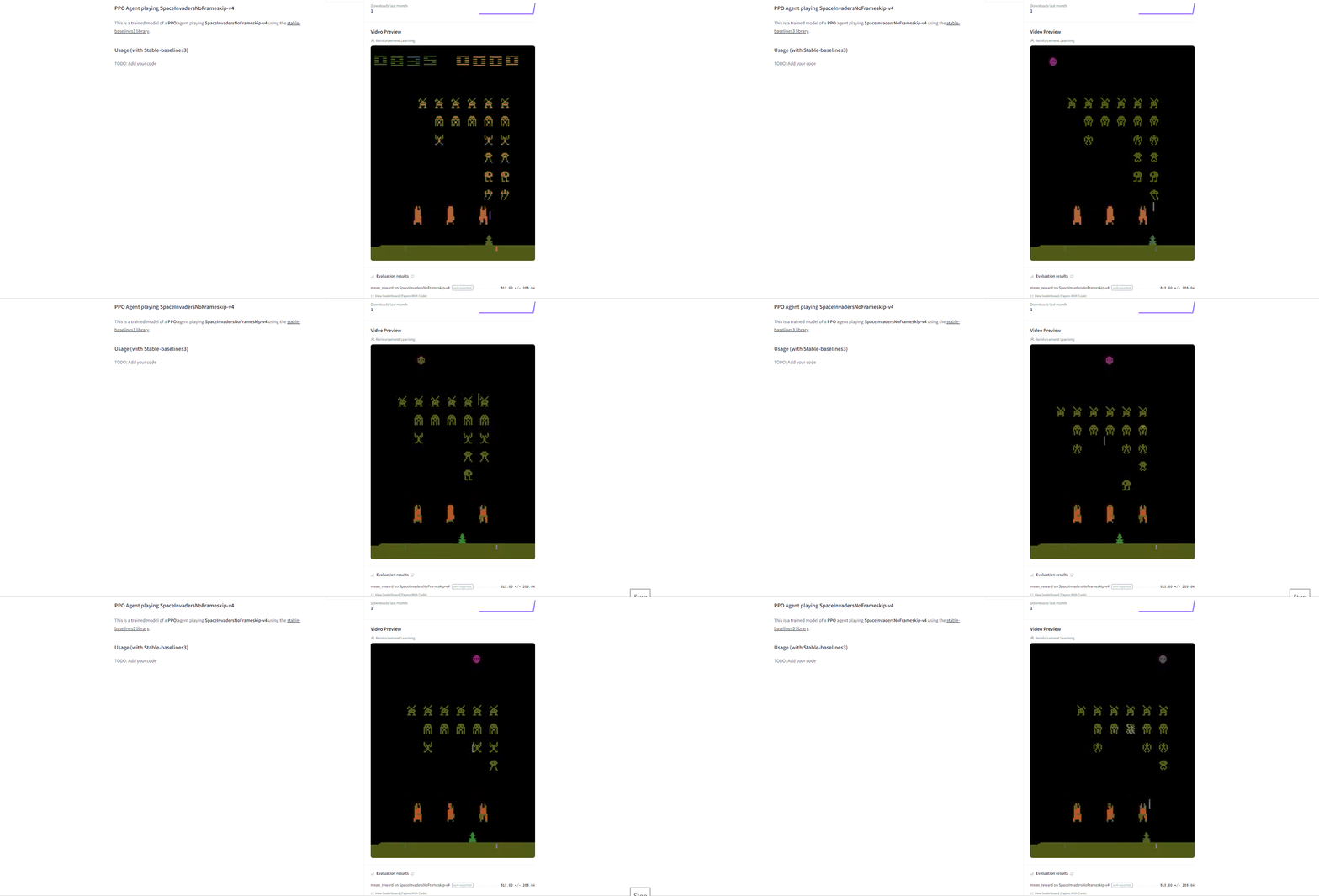 By using `rl_zoo3.push_to_hub` **you evaluate, record a replay, generate a model card of your agent and push it to the hub**.
This way:
- You can **showcase our work** 🔥
- You can **visualize your agent playing** 👀
- You can **share with the community an agent that others can use** 💾
- You can **access a leaderboard 🏆 to see how well your agent is performing compared to your classmates** 👉 https://huggingface.co/spaces/huggingface-projects/Deep-Reinforcement-Learning-Leaderboard
To be able to share your model with the community there are three more steps to follow:
1️⃣ (If it's not already done) create an account to HF ➡ https://huggingface.co/join
2️⃣ Sign in and then, you need to store your authentication token from the Hugging Face website.
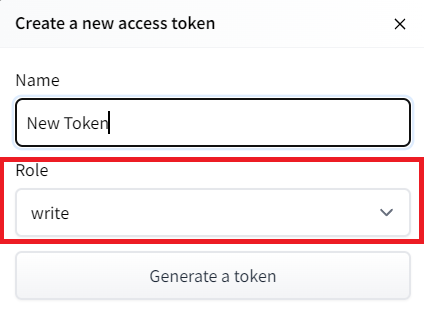
- Create a new token (https://huggingface.co/settings/tokens) **with write role**
By using `rl_zoo3.push_to_hub` **you evaluate, record a replay, generate a model card of your agent and push it to the hub**.
This way:
- You can **showcase our work** 🔥
- You can **visualize your agent playing** 👀
- You can **share with the community an agent that others can use** 💾
- You can **access a leaderboard 🏆 to see how well your agent is performing compared to your classmates** 👉 https://huggingface.co/spaces/huggingface-projects/Deep-Reinforcement-Learning-Leaderboard
To be able to share your model with the community there are three more steps to follow:
1️⃣ (If it's not already done) create an account to HF ➡ https://huggingface.co/join
2️⃣ Sign in and then, you need to store your authentication token from the Hugging Face website.
- Create a new token (https://huggingface.co/settings/tokens) **with write role**
 - Copy the token
- Run the cell below and past the token
```bash
from huggingface_hub import notebook_login # To log to our Hugging Face account to be able to upload models to the Hub.
notebook_login()
!git config --global credential.helper store
```
If you don't want to use a Google Colab or a Jupyter Notebook, you need to use this command instead: `huggingface-cli login`
3️⃣ We're now ready to push our trained agent to the 🤗 Hub 🔥
Let's run push_to_hub.py file to upload our trained agent to the Hub.
`--repo-name `: The name of the repo
`-orga`: Your Hugging Face username
`-f`: Where the trained model folder is (in our case `logs`)
- Copy the token
- Run the cell below and past the token
```bash
from huggingface_hub import notebook_login # To log to our Hugging Face account to be able to upload models to the Hub.
notebook_login()
!git config --global credential.helper store
```
If you don't want to use a Google Colab or a Jupyter Notebook, you need to use this command instead: `huggingface-cli login`
3️⃣ We're now ready to push our trained agent to the 🤗 Hub 🔥
Let's run push_to_hub.py file to upload our trained agent to the Hub.
`--repo-name `: The name of the repo
`-orga`: Your Hugging Face username
`-f`: Where the trained model folder is (in our case `logs`)
 ```bash
python -m rl_zoo3.push_to_hub --algo dqn --env SpaceInvadersNoFrameskip-v4 --repo-name _____________________ -orga _____________________ -f logs/
```
#### Solution
```bash
python -m rl_zoo3.push_to_hub --algo dqn --env SpaceInvadersNoFrameskip-v4 --repo-name dqn-SpaceInvadersNoFrameskip-v4 -orga ThomasSimonini -f logs/
```
###.
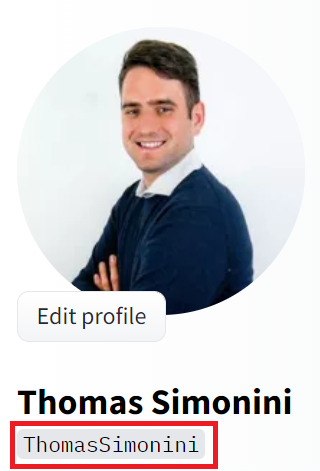
Congrats 🥳 you've just trained and uploaded your first Deep Q-Learning agent using RL-Baselines-3 Zoo. The script above should have displayed a link to a model repository such as https://huggingface.co/ThomasSimonini/dqn-SpaceInvadersNoFrameskip-v4. When you go to this link, you can:
- See a **video preview of your agent** at the right.
- Click "Files and versions" to see all the files in the repository.
- Click "Use in stable-baselines3" to get a code snippet that shows how to load the model.
- A model card (`README.md` file) which gives a description of the model and the hyperparameters you used.
Under the hood, the Hub uses git-based repositories (don't worry if you don't know what git is), which means you can update the model with new versions as you experiment and improve your agent.
**Compare the results of your agents with your classmates** using the [leaderboard](https://huggingface.co/spaces/huggingface-projects/Deep-Reinforcement-Learning-Leaderboard) 🏆
## Load a powerful trained model 🔥
- The Stable-Baselines3 team uploaded **more than 150 trained Deep Reinforcement Learning agents on the Hub**.
You can find them here: 👉 https://huggingface.co/sb3
Some examples:
- Asteroids: https://huggingface.co/sb3/dqn-AsteroidsNoFrameskip-v4
- Beam Rider: https://huggingface.co/sb3/dqn-BeamRiderNoFrameskip-v4
- Breakout: https://huggingface.co/sb3/dqn-BreakoutNoFrameskip-v4
- Road Runner: https://huggingface.co/sb3/dqn-RoadRunnerNoFrameskip-v4
Let's load an agent playing Beam Rider: https://huggingface.co/sb3/dqn-BeamRiderNoFrameskip-v4
1. We download the model using `rl_zoo3.load_from_hub`, and place it in a new folder that we can call `rl_trained`
```bash
# Download model and save it into the logs/ folder
python -m rl_zoo3.load_from_hub --algo dqn --env BeamRiderNoFrameskip-v4 -orga sb3 -f rl_trained/
```
2. Let's evaluate if for 5000 timesteps
```bash
python -m rl_zoo3.enjoy --algo dqn --env BeamRiderNoFrameskip-v4 -n 5000 -f rl_trained/ --no-render
```
Why not trying to train your own **Deep Q-Learning Agent playing BeamRiderNoFrameskip-v4? 🏆.**
If you want to try, check https://huggingface.co/sb3/dqn-BeamRiderNoFrameskip-v4#hyperparameters **in the model card, you have the hyperparameters of the trained agent.**
But finding hyperparameters can be a daunting task. Fortunately, we'll see in the next Unit, how we can **use Optuna for optimizing the Hyperparameters 🔥.**
## Some additional challenges 🏆
The best way to learn **is to try things by your own**!
In the [Leaderboard](https://huggingface.co/spaces/huggingface-projects/Deep-Reinforcement-Learning-Leaderboard) you will find your agents. Can you get to the top?
Here's a list of environments you can try to train your agent with:
- BeamRiderNoFrameskip-v4
- BreakoutNoFrameskip-v4
- EnduroNoFrameskip-v4
- PongNoFrameskip-v4
Also, **if you want to learn to implement Deep Q-Learning by yourself**, you definitely should look at CleanRL implementation: https://github.com/vwxyzjn/cleanrl/blob/master/cleanrl/dqn_atari.py
________________________________________________________________________
Congrats on finishing this chapter!
If you’re still feel confused with all these elements...it's totally normal! **This was the same for me and for all people who studied RL.**
Take time to really **grasp the material before continuing and try the additional challenges**. It’s important to master these elements and having a solid foundations.
In the next unit, **we’re going to learn about [Optuna](https://optuna.org/)**. One of the most critical task in Deep Reinforcement Learning is to find a good set of training hyperparameters. And Optuna is a library that helps you to automate the search.
### This is a course built with you 👷🏿♀️
Finally, we want to improve and update the course iteratively with your feedback. If you have some, please fill this form 👉 https://forms.gle/3HgA7bEHwAmmLfwh9
We're constantly trying to improve our tutorials, so **if you find some issues in this notebook**, please [open an issue on the Github Repo](https://github.com/huggingface/deep-rl-class/issues).
See you on Bonus unit 2! 🔥
### Keep Learning, Stay Awesome 🤗
```bash
python -m rl_zoo3.push_to_hub --algo dqn --env SpaceInvadersNoFrameskip-v4 --repo-name _____________________ -orga _____________________ -f logs/
```
#### Solution
```bash
python -m rl_zoo3.push_to_hub --algo dqn --env SpaceInvadersNoFrameskip-v4 --repo-name dqn-SpaceInvadersNoFrameskip-v4 -orga ThomasSimonini -f logs/
```
###.
Congrats 🥳 you've just trained and uploaded your first Deep Q-Learning agent using RL-Baselines-3 Zoo. The script above should have displayed a link to a model repository such as https://huggingface.co/ThomasSimonini/dqn-SpaceInvadersNoFrameskip-v4. When you go to this link, you can:
- See a **video preview of your agent** at the right.
- Click "Files and versions" to see all the files in the repository.
- Click "Use in stable-baselines3" to get a code snippet that shows how to load the model.
- A model card (`README.md` file) which gives a description of the model and the hyperparameters you used.
Under the hood, the Hub uses git-based repositories (don't worry if you don't know what git is), which means you can update the model with new versions as you experiment and improve your agent.
**Compare the results of your agents with your classmates** using the [leaderboard](https://huggingface.co/spaces/huggingface-projects/Deep-Reinforcement-Learning-Leaderboard) 🏆
## Load a powerful trained model 🔥
- The Stable-Baselines3 team uploaded **more than 150 trained Deep Reinforcement Learning agents on the Hub**.
You can find them here: 👉 https://huggingface.co/sb3
Some examples:
- Asteroids: https://huggingface.co/sb3/dqn-AsteroidsNoFrameskip-v4
- Beam Rider: https://huggingface.co/sb3/dqn-BeamRiderNoFrameskip-v4
- Breakout: https://huggingface.co/sb3/dqn-BreakoutNoFrameskip-v4
- Road Runner: https://huggingface.co/sb3/dqn-RoadRunnerNoFrameskip-v4
Let's load an agent playing Beam Rider: https://huggingface.co/sb3/dqn-BeamRiderNoFrameskip-v4
1. We download the model using `rl_zoo3.load_from_hub`, and place it in a new folder that we can call `rl_trained`
```bash
# Download model and save it into the logs/ folder
python -m rl_zoo3.load_from_hub --algo dqn --env BeamRiderNoFrameskip-v4 -orga sb3 -f rl_trained/
```
2. Let's evaluate if for 5000 timesteps
```bash
python -m rl_zoo3.enjoy --algo dqn --env BeamRiderNoFrameskip-v4 -n 5000 -f rl_trained/ --no-render
```
Why not trying to train your own **Deep Q-Learning Agent playing BeamRiderNoFrameskip-v4? 🏆.**
If you want to try, check https://huggingface.co/sb3/dqn-BeamRiderNoFrameskip-v4#hyperparameters **in the model card, you have the hyperparameters of the trained agent.**
But finding hyperparameters can be a daunting task. Fortunately, we'll see in the next Unit, how we can **use Optuna for optimizing the Hyperparameters 🔥.**
## Some additional challenges 🏆
The best way to learn **is to try things by your own**!
In the [Leaderboard](https://huggingface.co/spaces/huggingface-projects/Deep-Reinforcement-Learning-Leaderboard) you will find your agents. Can you get to the top?
Here's a list of environments you can try to train your agent with:
- BeamRiderNoFrameskip-v4
- BreakoutNoFrameskip-v4
- EnduroNoFrameskip-v4
- PongNoFrameskip-v4
Also, **if you want to learn to implement Deep Q-Learning by yourself**, you definitely should look at CleanRL implementation: https://github.com/vwxyzjn/cleanrl/blob/master/cleanrl/dqn_atari.py
________________________________________________________________________
Congrats on finishing this chapter!
If you’re still feel confused with all these elements...it's totally normal! **This was the same for me and for all people who studied RL.**
Take time to really **grasp the material before continuing and try the additional challenges**. It’s important to master these elements and having a solid foundations.
In the next unit, **we’re going to learn about [Optuna](https://optuna.org/)**. One of the most critical task in Deep Reinforcement Learning is to find a good set of training hyperparameters. And Optuna is a library that helps you to automate the search.
### This is a course built with you 👷🏿♀️
Finally, we want to improve and update the course iteratively with your feedback. If you have some, please fill this form 👉 https://forms.gle/3HgA7bEHwAmmLfwh9
We're constantly trying to improve our tutorials, so **if you find some issues in this notebook**, please [open an issue on the Github Repo](https://github.com/huggingface/deep-rl-class/issues).
See you on Bonus unit 2! 🔥
### Keep Learning, Stay Awesome 🤗