5.3 Deques
A queue allows removal only at the front and insertion only at the rear. As shown below, a double-ended queue, or deque, is more flexible: elements can be added or removed at either end.

Figure 5-7 Deque operations
5.3.1 Common deque operations
Table 5-3 lists common operations. Actual method names depend on the programming language.
Table 5-3 Efficiency of deque operations
| Method | Description | Time complexity |
|---|---|---|
push_first() |
Add an element at the front | \(O(1)\) |
push_last() |
Add an element at the rear | \(O(1)\) |
pop_first() |
Remove the front element | \(O(1)\) |
pop_last() |
Remove the rear element | \(O(1)\) |
peek_first() |
Access the front element | \(O(1)\) |
peek_last() |
Access the rear element | \(O(1)\) |
Again, we can use a deque class already provided by the programming language:
from collections import deque

# Initialize a deque
deq: deque[int] = deque()

# Enqueue elements
deq.append(2)      # Add at the rear
deq.append(5)
deq.append(4)
deq.appendleft(3)  # Add at the front
deq.appendleft(1)

# Access elements
front: int = deq[0]  # Front element
rear: int = deq[-1]  # Rear element

# Dequeue elements
pop_front: int = deq.popleft()  # Remove the front element
pop_rear: int = deq.pop()       # Remove the rear element

# Get the deque size
size: int = len(deq)

# Check whether the deque is empty
is_empty: bool = len(deq) == 0
/* Initialize a deque */
deque<int> deque;

/* Enqueue elements */
deque.push_back(2);   // Add at the rear
deque.push_back(5);
deque.push_back(4);
deque.push_front(3);  // Add at the front
deque.push_front(1);

/* Access elements */
int front = deque.front(); // Front element
int back = deque.back();   // Rear element

/* Dequeue elements */
deque.pop_front();  // Remove the front element
deque.pop_back();   // Remove the rear element

/* Get the deque size */
int size = deque.size();

/* Check whether the deque is empty */
bool empty = deque.empty();
/* Initialize a deque */
Deque<Integer> deque = new LinkedList<>();

/* Enqueue elements */
deque.offerLast(2);   // Add at the rear
deque.offerLast(5);
deque.offerLast(4);
deque.offerFirst(3);  // Add at the front
deque.offerFirst(1);

/* Access elements */
int peekFirst = deque.peekFirst();  // Front element
int peekLast = deque.peekLast();    // Rear element

/* Dequeue elements */
int popFirst = deque.pollFirst();  // Remove the front element
int popLast = deque.pollLast();    // Remove the rear element

/* Get the deque size */
int size = deque.size();

/* Check whether the deque is empty */
boolean isEmpty = deque.isEmpty();
/* Initialize a deque */
// In C#, use a LinkedList as a deque
LinkedList<int> deque = new();

/* Enqueue elements */
deque.AddLast(2);   // Add at the rear
deque.AddLast(5);
deque.AddLast(4);
deque.AddFirst(3);  // Add at the front
deque.AddFirst(1);

/* Access elements */
int peekFirst = deque.First.Value;  // Front element
int peekLast = deque.Last.Value;    // Rear element

/* Dequeue elements */
deque.RemoveFirst();  // Remove the front element
deque.RemoveLast();   // Remove the rear element

/* Get the deque size */
int size = deque.Count;

/* Check whether the deque is empty */
bool isEmpty = deque.Count == 0;
/* Initialize a deque */
// In Go, use a list as a deque
deque := list.New()

/* Enqueue elements */
deque.PushBack(2)      // Add at the rear
deque.PushBack(5)
deque.PushBack(4)
deque.PushFront(3)     // Add at the front
deque.PushFront(1)

/* Access elements */
front := deque.Front() // Front element
rear := deque.Back()   // Rear element

/* Dequeue elements */
deque.Remove(front)    // Remove the front element
deque.Remove(rear)     // Remove the rear element

/* Get the deque size */
size := deque.Len()

/* Check whether the deque is empty */
isEmpty := deque.Len() == 0
/* Initialize a deque */
// Swift has no built-in deque class; use an Array as a deque
var deque: [Int] = []

/* Enqueue elements */
deque.append(2) // Add at the rear
deque.append(5)
deque.append(4)
deque.insert(3, at: 0) // Add at the front
deque.insert(1, at: 0)

/* Access elements */
let peekFirst = deque.first! // Front element
let peekLast = deque.last! // Rear element

/* Dequeue elements */
// When using an Array, popFirst takes O(n) time
let popFirst = deque.removeFirst() // Remove the front element
let popLast = deque.removeLast() // Remove the rear element

/* Get the deque size */
let size = deque.count

/* Check whether the deque is empty */
let isEmpty = deque.isEmpty
/* Initialize a deque */
// JavaScript has no built-in deque; use an Array instead
const deque = [];

/* Enqueue elements */
deque.push(2);
deque.push(5);
deque.push(4);
// Note that this is an array, so unshift() takes O(n) time
deque.unshift(3);
deque.unshift(1);

/* Access elements */
const peekFirst = deque[0];
const peekLast = deque[deque.length - 1];

/* Dequeue elements */
// Note that this is an array, so shift() takes O(n) time
const popFront = deque.shift();
const popBack = deque.pop();

/* Get the deque size */
const size = deque.length;

/* Check whether the deque is empty */
const isEmpty = size === 0;
/* Initialize a deque */
// TypeScript has no built-in deque; use an Array instead
const deque: number[] = [];

/* Enqueue elements */
deque.push(2);
deque.push(5);
deque.push(4);
// Note that this is an array, so unshift() takes O(n) time
deque.unshift(3);
deque.unshift(1);

/* Access elements */
const peekFirst: number = deque[0];
const peekLast: number = deque[deque.length - 1];

/* Dequeue elements */
// Note that this is an array, so shift() takes O(n) time
const popFront: number = deque.shift() as number;
const popBack: number = deque.pop() as number;

/* Get the deque size */
const size: number = deque.length;

/* Check whether the deque is empty */
const isEmpty: boolean = size === 0;
/* Initialize a deque */
// In Dart, Queue is defined as a deque
Queue<int> deque = Queue<int>();

/* Enqueue elements */
deque.addLast(2);  // Add at the rear
deque.addLast(5);
deque.addLast(4);
deque.addFirst(3); // Add at the front
deque.addFirst(1);

/* Access elements */
int peekFirst = deque.first; // Front element
int peekLast = deque.last;   // Rear element

/* Dequeue elements */
int popFirst = deque.removeFirst(); // Remove the front element
int popLast = deque.removeLast();   // Remove the rear element

/* Get the deque size */
int size = deque.length;

/* Check whether the deque is empty */
bool isEmpty = deque.isEmpty;
/* Initialize a deque */
let mut deque: VecDeque<u32> = VecDeque::new();

/* Enqueue elements */
deque.push_back(2);  // Add at the rear
deque.push_back(5);
deque.push_back(4);
deque.push_front(3); // Add at the front
deque.push_front(1);

/* Access elements */
if let Some(front) = deque.front() { // Front element
}
if let Some(rear) = deque.back() {   // Rear element
}

/* Dequeue elements */
if let Some(pop_front) = deque.pop_front() { // Remove the front element
}
if let Some(pop_rear) = deque.pop_back() {   // Remove the rear element
}

/* Get the deque size */
let size = deque.len();

/* Check whether the deque is empty */
let is_empty = deque.is_empty();
/* Initialize a deque */
val deque = LinkedList<Int>()

/* Enqueue elements */
deque.offerLast(2)  // Add at the rear
deque.offerLast(5)
deque.offerLast(4)
deque.offerFirst(3) // Add at the front
deque.offerFirst(1)

/* Access elements */
val peekFirst = deque.peekFirst() // Front element
val peekLast = deque.peekLast()   // Rear element

/* Dequeue elements */
val popFirst = deque.pollFirst() // Remove the front element
val popLast = deque.pollLast()   // Remove the rear element

/* Get the deque size */
val size = deque.size

/* Check whether the deque is empty */
val isEmpty = deque.isEmpty()
# Initialize a deque
# Ruby has no built-in deque; use an Array instead
deque = []

# Enqueue elements
deque << 2
deque << 5
deque << 4
# Note that this is an array, so Array#unshift takes O(n) time
deque.unshift(3)
deque.unshift(1)

# Access elements
peek_first = deque.first
peek_last = deque.last

# Dequeue elements
# Note that this is an array, so Array#shift takes O(n) time
pop_front = deque.shift
pop_back = deque.pop

# Get the deque size
size = deque.length

# Check whether the deque is empty
is_empty = size.zero?
Visualize execution
5.3.2 Implementing a deque *
A deque is implemented much like a queue, using either a linked list or an array as the underlying structure.
1. Implementation with a doubly linked list
In the previous section, we used a singly linked list for a queue because it easily supports removing the head for dequeueing and adding after the tail for enqueueing.
A deque supports both insertion and removal at both ends. It therefore needs the symmetric operations in the other direction as well. For this reason, we use a doubly linked list.
As shown below, treat the list's head and tail as the deque's front and rear, and support adding and removing nodes at both ends.


Figure 5-8 Insertion and removal in a linked-list deque
The implementation is as follows:
class ListNode:
    """Doubly linked list node"""

    def __init__(self, val: int):
        """Constructor"""
        self.val: int = val
        self.next: ListNode | None = None  # Reference to the next node
        self.prev: ListNode | None = None  # Reference to the previous node

class LinkedListDeque:
    """Deque implemented with a doubly linked list"""

    def __init__(self):
        """Constructor"""
        self._front: ListNode | None = None  # Head node front
        self._rear: ListNode | None = None  # Tail node rear
        self._size: int = 0  # Deque size

    def size(self) -> int:
        """Get the deque size"""
        return self._size

    def is_empty(self) -> bool:
        """Check whether the deque is empty"""
        return self._size == 0

    def push(self, num: int, is_front: bool):
        """Enqueue operation"""
        node = ListNode(num)
        # If the linked list is empty, make both front and rear point to node
        if self.is_empty():
            self._front = self._rear = node
        # Enqueue at the front
        elif is_front:
            # Add node to the head of the linked list
            self._front.prev = node
            node.next = self._front
            self._front = node  # Update the head node
        # Enqueue at the rear
        else:
            # Add node to the tail of the linked list
            self._rear.next = node
            node.prev = self._rear
            self._rear = node  # Update the tail node
        self._size += 1  # Update the deque size

    def push_first(self, num: int):
        """Enqueue at the front"""
        self.push(num, True)

    def push_last(self, num: int):
        """Enqueue at the rear"""
        self.push(num, False)

    def pop(self, is_front: bool) -> int:
        """Dequeue operation"""
        if self.is_empty():
            raise IndexError("Deque is empty")
        # When the deque size is 1, the head and tail point to the same node
        if self._size == 1:
            val: int = self._front.val
            self._front = None
            self._rear = None
        # Dequeue from the front
        elif is_front:
            val: int = self._front.val  # Save the head node value
            # Remove the head node
            fnext: ListNode | None = self._front.next
            fnext.prev = None
            self._front.next = None
            self._front = fnext  # Update the head node
        # Dequeue from the rear
        else:
            val: int = self._rear.val  # Save the tail node value
            # Remove the tail node
            rprev: ListNode | None = self._rear.prev
            rprev.next = None
            self._rear.prev = None
            self._rear = rprev  # Update the tail node
        self._size -= 1  # Update the deque size
        return val

    def pop_first(self) -> int:
        """Dequeue from the front"""
        return self.pop(True)

    def pop_last(self) -> int:
        """Dequeue from the rear"""
        return self.pop(False)

    def peek_first(self) -> int:
        """Access the front element"""
        if self.is_empty():
            raise IndexError("Deque is empty")
        return self._front.val

    def peek_last(self) -> int:
        """Access the rear element"""
        if self.is_empty():
            raise IndexError("Deque is empty")
        return self._rear.val

    def to_array(self) -> list[int]:
        """Return an array for printing"""
        node = self._front
        res = [0] * self.size()
        for i in range(self.size()):
            res[i] = node.val
            node = node.next
        return res
/* Doubly linked list node */
struct DoublyListNode {
    int val;              // Node value
    DoublyListNode *next; // Pointer to the next node
    DoublyListNode *prev; // Pointer to the previous node
    DoublyListNode(int val) : val(val), prev(nullptr), next(nullptr) {
    }
};

/* Deque implemented with a doubly linked list */
class LinkedListDeque {
  private:
    DoublyListNode *front, *rear; // Head node front and tail node rear
    int queSize = 0;              // Deque size

  public:
    /* Constructor */
    LinkedListDeque() : front(nullptr), rear(nullptr) {
    }

    /* Destructor */
    ~LinkedListDeque() {
        // Traverse the linked list and delete each node to free its memory
        DoublyListNode *pre, *cur = front;
        while (cur != nullptr) {
            pre = cur;
            cur = cur->next;
            delete pre;
        }
    }

    /* Get the deque size */
    int size() {
        return queSize;
    }

    /* Check whether the deque is empty */
    bool isEmpty() {
        return size() == 0;
    }

    /* Enqueue operation */
    void push(int num, bool isFront) {
        DoublyListNode *node = new DoublyListNode(num);
        // If the linked list is empty, make both front and rear point to node
        if (isEmpty())
            front = rear = node;
        // Enqueue at the front
        else if (isFront) {
            // Add node to the head of the linked list
            front->prev = node;
            node->next = front;
            front = node; // Update the head node
        // Enqueue at the rear
        } else {
            // Add node to the tail of the linked list
            rear->next = node;
            node->prev = rear;
            rear = node; // Update the tail node
        }
        queSize++; // Update the deque size
    }

    /* Enqueue at the front */
    void pushFirst(int num) {
        push(num, true);
    }

    /* Enqueue at the rear */
    void pushLast(int num) {
        push(num, false);
    }

    /* Dequeue operation */
    int pop(bool isFront) {
        if (isEmpty())
            throw out_of_range("Deque is empty");
        int val;
        // When the deque size is 1, the head and tail point to the same node
        if (queSize == 1) {
            val = front->val;
            delete front; // Both point to the same node, so free it only once
            front = nullptr;
            rear = nullptr;
        }
        // Dequeue from the front
        else if (isFront) {
            val = front->val; // Save the head node value
            // Remove the head node
            DoublyListNode *fNext = front->next;
            fNext->prev = nullptr;
            front->next = nullptr;
            delete front;
            front = fNext; // Update the head node
        // Dequeue from the rear
        } else {
            val = rear->val; // Save the tail node value
            // Remove the tail node
            DoublyListNode *rPrev = rear->prev;
            rPrev->next = nullptr;
            rear->prev = nullptr;
            delete rear;
            rear = rPrev; // Update the tail node
        }
        queSize--; // Update the deque size
        return val;
    }

    /* Dequeue from the front */
    int popFirst() {
        return pop(true);
    }

    /* Dequeue from the rear */
    int popLast() {
        return pop(false);
    }

    /* Access the front element */
    int peekFirst() {
        if (isEmpty())
            throw out_of_range("Deque is empty");
        return front->val;
    }

    /* Access the rear element */
    int peekLast() {
        if (isEmpty())
            throw out_of_range("Deque is empty");
        return rear->val;
    }

    /* Return a vector for printing */
    vector<int> toVector() {
        DoublyListNode *node = front;
        vector<int> res(size());
        for (int i = 0; i < res.size(); i++) {
            res[i] = node->val;
            node = node->next;
        }
        return res;
    }
};
/* Doubly linked list node */
class ListNode {
    int val; // Node value
    ListNode next; // Reference to the next node
    ListNode prev; // Reference to the previous node

    ListNode(int val) {
        this.val = val;
        prev = next = null;
    }
}

/* Deque implemented with a doubly linked list */
class LinkedListDeque {
    private ListNode front, rear; // Head node front and tail node rear
    private int queSize = 0; // Deque size

    public LinkedListDeque() {
        front = rear = null;
    }

    /* Get the deque size */
    public int size() {
        return queSize;
    }

    /* Check whether the deque is empty */
    public boolean isEmpty() {
        return size() == 0;
    }

    /* Enqueue operation */
    private void push(int num, boolean isFront) {
        ListNode node = new ListNode(num);
        // If the linked list is empty, make both front and rear point to node
        if (isEmpty())
            front = rear = node;
        // Enqueue at the front
        else if (isFront) {
            // Add node to the head of the linked list
            front.prev = node;
            node.next = front;
            front = node; // Update the head node
        // Enqueue at the rear
        } else {
            // Add node to the tail of the linked list
            rear.next = node;
            node.prev = rear;
            rear = node; // Update the tail node
        }
        queSize++; // Update the queue size
    }

    /* Enqueue at the front */
    public void pushFirst(int num) {
        push(num, true);
    }

    /* Enqueue at the rear */
    public void pushLast(int num) {
        push(num, false);
    }

    /* Dequeue operation */
    private int pop(boolean isFront) {
        if (isEmpty())
            throw new IndexOutOfBoundsException();
        int val;
        // When the queue size is 1, the head and tail point to the same node
        if (queSize == 1) {
            val = front.val;
            front = null;
            rear = null;
        }
        // Dequeue from the front
        else if (isFront) {
            val = front.val; // Save the head node value
            // Remove the head node
            ListNode fNext = front.next;
            fNext.prev = null;
            front.next = null;
            front = fNext; // Update the head node
        // Dequeue from the rear
        } else {
            val = rear.val; // Save the tail node value
            // Remove the tail node
            ListNode rPrev = rear.prev;
            rPrev.next = null;
            rear.prev = null;
            rear = rPrev; // Update the tail node
        }
        queSize--; // Update the queue size
        return val;
    }

    /* Dequeue from the front */
    public int popFirst() {
        return pop(true);
    }

    /* Dequeue from the rear */
    public int popLast() {
        return pop(false);
    }

    /* Access the front element */
    public int peekFirst() {
        if (isEmpty())
            throw new IndexOutOfBoundsException();
        return front.val;
    }

    /* Access the rear element */
    public int peekLast() {
        if (isEmpty())
            throw new IndexOutOfBoundsException();
        return rear.val;
    }

    /* Return an array for printing */
    public int[] toArray() {
        ListNode node = front;
        int[] res = new int[size()];
        for (int i = 0; i < res.length; i++) {
            res[i] = node.val;
            node = node.next;
        }
        return res;
    }
}
/* Doubly linked list node */
class ListNode(int val) {
    public int val = val;       // Node value
    public ListNode? next = null; // Reference to the next node
    public ListNode? prev = null; // Reference to the previous node
}

/* Deque implemented with a doubly linked list */
class LinkedListDeque {
    ListNode? front, rear; // Head node front and tail node rear
    int queSize = 0;      // Deque size

    public LinkedListDeque() {
        front = null;
        rear = null;
    }

    /* Get the deque size */
    public int Size() {
        return queSize;
    }

    /* Check whether the deque is empty */
    public bool IsEmpty() {
        return Size() == 0;
    }

    /* Enqueue operation */
    void Push(int num, bool isFront) {
        ListNode node = new(num);
        // If the linked list is empty, make both front and rear point to node
        if (IsEmpty()) {
            front = node;
            rear = node;
        }
        // Enqueue at the front
        else if (isFront) {
            // Add node to the head of the linked list
            front!.prev = node;
            node.next = front;
            front = node; // Update the head node
        }
        // Enqueue at the rear
        else {
            // Add node to the tail of the linked list
            rear!.next = node;
            node.prev = rear;
            rear = node;  // Update the tail node
        }

        queSize++; // Update the queue size
    }

    /* Enqueue at the front */
    public void PushFirst(int num) {
        Push(num, true);
    }

    /* Enqueue at the rear */
    public void PushLast(int num) {
        Push(num, false);
    }

    /* Dequeue operation */
    int? Pop(bool isFront) {
        if (IsEmpty())
            throw new Exception();
        int? val;
        // When the queue size is 1, the head and tail point to the same node
        if (queSize == 1) {
            val = front!.val;
            front = null;
            rear = null;
        }
        // Dequeue from the front
        else if (isFront) {
            val = front!.val; // Save the head node value
            // Remove the head node
            ListNode? fNext = front?.next;
            fNext!.prev = null;
            front.next = null;
            front = fNext;   // Update the head node
        }
        // Dequeue from the rear
        else {
            val = rear!.val;  // Save the tail node value
            // Remove the tail node
            ListNode? rPrev = rear?.prev;
            rPrev!.next = null;
            rear.prev = null;
            rear = rPrev;    // Update the tail node
        }

        queSize--; // Update the queue size
        return val;
    }

    /* Dequeue from the front */
    public int? PopFirst() {
        return Pop(true);
    }

    /* Dequeue from the rear */
    public int? PopLast() {
        return Pop(false);
    }

    /* Access the front element */
    public int? PeekFirst() {
        if (IsEmpty())
            throw new Exception();
        return front?.val;
    }

    /* Access the rear element */
    public int? PeekLast() {
        if (IsEmpty())
            throw new Exception();
        return rear?.val;
    }

    /* Return an array for printing */
    public int?[] ToArray() {
        ListNode? node = front;
        int?[] res = new int?[Size()];
        for (int i = 0; i < res.Length; i++) {
            res[i] = node?.val;
            node = node?.next;
        }

        return res;
    }
}
/* Deque implemented with a doubly linked list */
type linkedListDeque struct {
    // Use the standard library list package
    data *list.List
}

/* Initialize the deque */
func newLinkedListDeque() *linkedListDeque {
    return &linkedListDeque{
        data: list.New(),
    }
}

/* Enqueue an element at the front */
func (s *linkedListDeque) pushFirst(value any) {
    s.data.PushFront(value)
}

/* Enqueue an element at the rear */
func (s *linkedListDeque) pushLast(value any) {
    s.data.PushBack(value)
}

/* Dequeue the front element */
func (s *linkedListDeque) popFirst() any {
    if s.isEmpty() {
        return nil
    }
    e := s.data.Front()
    s.data.Remove(e)
    return e.Value
}

/* Dequeue the rear element */
func (s *linkedListDeque) popLast() any {
    if s.isEmpty() {
        return nil
    }
    e := s.data.Back()
    s.data.Remove(e)
    return e.Value
}

/* Access the front element */
func (s *linkedListDeque) peekFirst() any {
    if s.isEmpty() {
        return nil
    }
    e := s.data.Front()
    return e.Value
}

/* Access the rear element */
func (s *linkedListDeque) peekLast() any {
    if s.isEmpty() {
        return nil
    }
    e := s.data.Back()
    return e.Value
}

/* Get the queue size */
func (s *linkedListDeque) size() int {
    return s.data.Len()
}

/* Check whether the queue is empty */
func (s *linkedListDeque) isEmpty() bool {
    return s.data.Len() == 0
}

/* Get the list for printing */
func (s *linkedListDeque) toList() *list.List {
    return s.data
}
/* Doubly linked list node */
class ListNode {
    var val: Int // Node value
    var next: ListNode? // Reference to the next node
    weak var prev: ListNode? // Reference to the previous node

    init(val: Int) {
        self.val = val
    }
}

/* Deque implemented with a doubly linked list */
class LinkedListDeque {
    private var front: ListNode? // Head node front
    private var rear: ListNode? // Tail node rear
    private var _size: Int // Deque size

    init() {
        _size = 0
    }

    /* Get the deque size */
    func size() -> Int {
        _size
    }

    /* Check whether the deque is empty */
    func isEmpty() -> Bool {
        size() == 0
    }

    /* Enqueue operation */
    private func push(num: Int, isFront: Bool) {
        let node = ListNode(val: num)
        // If the linked list is empty, make both front and rear point to node
        if isEmpty() {
            front = node
            rear = node
        }
        // Enqueue at the front
        else if isFront {
            // Add node to the head of the linked list
            front?.prev = node
            node.next = front
            front = node // Update the head node
        }
        // Enqueue at the rear
        else {
            // Add node to the tail of the linked list
            rear?.next = node
            node.prev = rear
            rear = node // Update the tail node
        }
        _size += 1 // Update the deque size
    }

    /* Enqueue at the front */
    func pushFirst(num: Int) {
        push(num: num, isFront: true)
    }

    /* Enqueue at the rear */
    func pushLast(num: Int) {
        push(num: num, isFront: false)
    }

    /* Dequeue operation */
    private func pop(isFront: Bool) -> Int {
        if isEmpty() {
            fatalError("Deque is empty")
        }
        let val: Int
        // When the deque size is 1, the head and tail point to the same node
        if _size == 1 {
            val = front!.val
            front = nil
            rear = nil
        }
        // Dequeue from the front
        else if isFront {
            val = front!.val // Save the head node value
            // Remove the head node
            let fNext = front?.next
            fNext?.prev = nil
            front?.next = nil
            front = fNext // Update the head node
        }
        // Dequeue from the rear
        else {
            val = rear!.val // Save the tail node value
            // Remove the tail node
            let rPrev = rear?.prev
            rPrev?.next = nil
            rear?.prev = nil
            rear = rPrev // Update the tail node
        }
        _size -= 1 // Update the deque size
        return val
    }

    /* Dequeue from the front */
    func popFirst() -> Int {
        pop(isFront: true)
    }

    /* Dequeue from the rear */
    func popLast() -> Int {
        pop(isFront: false)
    }

    /* Access the front element */
    func peekFirst() -> Int {
        if isEmpty() {
            fatalError("Deque is empty")
        }
        return front!.val
    }

    /* Access the rear element */
    func peekLast() -> Int {
        if isEmpty() {
            fatalError("Deque is empty")
        }
        return rear!.val
    }

    /* Return an array for printing */
    func toArray() -> [Int] {
        var node = front
        var res = Array(repeating: 0, count: size())
        for i in res.indices {
            res[i] = node!.val
            node = node?.next
        }
        return res
    }
}
/* Doubly linked list node */
class ListNode {
    prev; // Reference (pointer) to the previous node
    next; // Reference (pointer) to the next node
    val; // Node value

    constructor(val) {
        this.val = val;
        this.next = null;
        this.prev = null;
    }
}

/* Deque implemented with a doubly linked list */
class LinkedListDeque {
    #front; // Head node front
    #rear; // Tail node rear
    #queSize; // Deque size

    constructor() {
        this.#front = null;
        this.#rear = null;
        this.#queSize = 0;
    }

    /* Enqueue at the rear */
    pushLast(val) {
        const node = new ListNode(val);
        // If the linked list is empty, make both front and rear point to node
        if (this.#queSize === 0) {
            this.#front = node;
            this.#rear = node;
        } else {
            // Add node to the tail of the linked list
            this.#rear.next = node;
            node.prev = this.#rear;
            this.#rear = node; // Update the tail node
        }
        this.#queSize++;
    }

    /* Enqueue at the front */
    pushFirst(val) {
        const node = new ListNode(val);
        // If the linked list is empty, make both front and rear point to node
        if (this.#queSize === 0) {
            this.#front = node;
            this.#rear = node;
        } else {
            // Add node to the head of the linked list
            this.#front.prev = node;
            node.next = this.#front;
            this.#front = node; // Update the head node
        }
        this.#queSize++;
    }

    /* Dequeue from the rear */
    popLast() {
        if (this.#queSize === 0) {
            return null;
        }
        const value = this.#rear.val; // Store the tail node value
        // When the queue size is 1, the head and tail point to the same node
        if (this.#queSize === 1) {
            this.#front = null;
            this.#rear = null;
        }
        // Remove the tail node
        else {
            let temp = this.#rear.prev;
            temp.next = null;
            this.#rear.prev = null;
            this.#rear = temp; // Update the tail node
        }
        this.#queSize--;
        return value;
    }

    /* Dequeue from the front */
    popFirst() {
        if (this.#queSize === 0) {
            return null;
        }
        const value = this.#front.val; // Store the head node value
        // When the queue size is 1, the head and tail point to the same node
        if (this.#queSize === 1) {
            this.#front = null;
            this.#rear = null;
        }
        // Remove the head node
        else {
            let temp = this.#front.next;
            temp.prev = null;
            this.#front.next = null;
            this.#front = temp; // Update the head node
        }
        this.#queSize--;
        return value;
    }

    /* Access the rear element */
    peekLast() {
        return this.#queSize === 0 ? null : this.#rear.val;
    }

    /* Access the front element */
    peekFirst() {
        return this.#queSize === 0 ? null : this.#front.val;
    }

    /* Get the deque size */
    size() {
        return this.#queSize;
    }

    /* Check whether the deque is empty */
    isEmpty() {
        return this.#queSize === 0;
    }

    /* Print the deque */
    print() {
        const arr = [];
        let temp = this.#front;
        while (temp !== null) {
            arr.push(temp.val);
            temp = temp.next;
        }
        console.log('[' + arr.join(', ') + ']');
    }
}
/* Doubly linked list node */
class ListNode {
    prev: ListNode; // Reference (pointer) to the previous node
    next: ListNode; // Reference (pointer) to the next node
    val: number; // Node value

    constructor(val: number) {
        this.val = val;
        this.next = null;
        this.prev = null;
    }
}

/* Deque implemented with a doubly linked list */
class LinkedListDeque {
    private front: ListNode; // Head node front
    private rear: ListNode; // Tail node rear
    private queSize: number; // Deque size

    constructor() {
        this.front = null;
        this.rear = null;
        this.queSize = 0;
    }

    /* Enqueue at the rear */
    pushLast(val: number): void {
        const node: ListNode = new ListNode(val);
        // If the linked list is empty, make both front and rear point to node
        if (this.queSize === 0) {
            this.front = node;
            this.rear = node;
        } else {
            // Add node to the tail of the linked list
            this.rear.next = node;
            node.prev = this.rear;
            this.rear = node; // Update the tail node
        }
        this.queSize++;
    }

    /* Enqueue at the front */
    pushFirst(val: number): void {
        const node: ListNode = new ListNode(val);
        // If the linked list is empty, make both front and rear point to node
        if (this.queSize === 0) {
            this.front = node;
            this.rear = node;
        } else {
            // Add node to the head of the linked list
            this.front.prev = node;
            node.next = this.front;
            this.front = node; // Update the head node
        }
        this.queSize++;
    }

    /* Dequeue from the rear */
    popLast(): number {
        if (this.queSize === 0) {
            return null;
        }
        const value: number = this.rear!.val; // Store the tail node value
        // When the queue size is 1, the head and tail point to the same node
        if (this.queSize === 1) {
            this.front = null;
            this.rear = null;
        }
        // Remove the tail node
        else {
            let temp: ListNode = this.rear!.prev;
            temp!.next = null;
            this.rear!.prev = null;
            this.rear = temp; // Update the tail node
        }
        this.queSize--;
        return value;
    }

    /* Dequeue from the front */
    popFirst(): number {
        if (this.queSize === 0) {
            return null;
        }
        const value: number = this.front.val; // Store the head node value
        // When the queue size is 1, the head and tail point to the same node
        if (this.queSize === 1) {
            this.front = null;
            this.rear = null;
        }
        // Remove the head node
        else {
            let temp: ListNode = this.front!.next;
            temp!.prev = null;
            this.front!.next = null;
            this.front = temp; // Update the head node
        }
        this.queSize--;
        return value;
    }

    /* Access the rear element */
    peekLast(): number {
        return this.queSize === 0 ? null : this.rear.val;
    }

    /* Access the front element */
    peekFirst(): number {
        return this.queSize === 0 ? null : this.front.val;
    }

    /* Get the deque size */
    size(): number {
        return this.queSize;
    }

    /* Check whether the deque is empty */
    isEmpty(): boolean {
        return this.queSize === 0;
    }

    /* Print the deque */
    print(): void {
        const arr: number[] = [];
        let temp: ListNode = this.front;
        while (temp !== null) {
            arr.push(temp.val);
            temp = temp.next;
        }
        console.log('[' + arr.join(', ') + ']');
    }
}
/* Doubly linked list node */
class ListNode {
  int val; // Node value
  ListNode? next; // Reference to the next node
  ListNode? prev; // Reference to the previous node

  ListNode(this.val, {this.next, this.prev});
}

/* Deque implemented with a doubly linked list */
class LinkedListDeque {
  late ListNode? _front; // Head node _front
  late ListNode? _rear; // Tail node _rear
  int _queSize = 0; // Deque size

  LinkedListDeque() {
    this._front = null;
    this._rear = null;
  }

  /* Get the deque size */
  int size() {
    return this._queSize;
  }

  /* Check whether the deque is empty */
  bool isEmpty() {
    return size() == 0;
  }

  /* Enqueue operation */
  void push(int _num, bool isFront) {
    final ListNode node = ListNode(_num);
    if (isEmpty()) {
      // If the linked list is empty, make both _front and _rear point to node
      _front = _rear = node;
    } else if (isFront) {
      // Enqueue at the front
      // Add node to the head of the linked list
      _front!.prev = node;
      node.next = _front;
      _front = node; // Update the head node
    } else {
      // Enqueue at the rear
      // Add node to the tail of the linked list
      _rear!.next = node;
      node.prev = _rear;
      _rear = node; // Update the tail node
    }
    _queSize++; // Update the queue size
  }

  /* Enqueue at the front */
  void pushFirst(int _num) {
    push(_num, true);
  }

  /* Enqueue at the rear */
  void pushLast(int _num) {
    push(_num, false);
  }

  /* Dequeue operation */
  int? pop(bool isFront) {
    // If the queue is empty, return null immediately
    if (isEmpty()) {
      return null;
    }
    final int val;
    // When the queue size is 1, the head and tail point to the same node
    if (_queSize == 1) {
      val = _front!.val;
      _front = null;
      _rear = null;
    }
    // Dequeue from the front
    else if (isFront) {
      val = _front!.val; // Save the head node value
      // Remove the head node
      ListNode? fNext = _front!.next;
      fNext!.prev = null;
      _front!.next = null;
      _front = fNext; // Update the head node
    // Dequeue from the rear
    } else {
      val = _rear!.val; // Save the tail node value
      // Remove the tail node
      ListNode? rPrev = _rear!.prev;
      rPrev!.next = null;
      _rear!.prev = null;
      _rear = rPrev; // Update the tail node
    }
    _queSize--; // Update the queue size
    return val;
  }

  /* Dequeue from the front */
  int? popFirst() {
    return pop(true);
  }

  /* Dequeue from the rear */
  int? popLast() {
    return pop(false);
  }

  /* Access the front element */
  int? peekFirst() {
    return _front?.val;
  }

  /* Access the rear element */
  int? peekLast() {
    return _rear?.val;
  }

  /* Return an array for printing */
  List<int> toArray() {
    ListNode? node = _front;
    final List<int> res = [];
    for (int i = 0; i < _queSize; i++) {
      res.add(node!.val);
      node = node.next;
    }
    return res;
  }
}
/* Doubly linked list node */
pub struct ListNode<T> {
    pub val: T,                                 // Node value
    pub next: Option<Rc<RefCell<ListNode<T>>>>, // Pointer to the next node
    pub prev: Option<Rc<RefCell<ListNode<T>>>>, // Pointer to the previous node
}

impl<T> ListNode<T> {
    pub fn new(val: T) -> Rc<RefCell<ListNode<T>>> {
        Rc::new(RefCell::new(ListNode {
            val,
            next: None,
            prev: None,
        }))
    }
}

/* Deque implemented with a doubly linked list */
#[allow(dead_code)]
pub struct LinkedListDeque<T> {
    front: Option<Rc<RefCell<ListNode<T>>>>, // Head node front
    rear: Option<Rc<RefCell<ListNode<T>>>>,  // Tail node rear
    que_size: usize,                         // Deque size
}

impl<T: Copy> LinkedListDeque<T> {
    pub fn new() -> Self {
        Self {
            front: None,
            rear: None,
            que_size: 0,
        }
    }

    /* Get the deque size */
    pub fn size(&self) -> usize {
        return self.que_size;
    }

    /* Check whether the deque is empty */
    pub fn is_empty(&self) -> bool {
        return self.que_size == 0;
    }

    /* Enqueue operation */
    fn push(&mut self, num: T, is_front: bool) {
        let node = ListNode::new(num);
        // Enqueue at the front
        if is_front {
            match self.front.take() {
                // If the linked list is empty, make both front and rear point to node
                None => {
                    self.rear = Some(node.clone());
                    self.front = Some(node);
                }
                // Add node to the head of the linked list
                Some(old_front) => {
                    old_front.borrow_mut().prev = Some(node.clone());
                    node.borrow_mut().next = Some(old_front);
                    self.front = Some(node); // Update the head node
                }
            }
        }
        // Enqueue at the rear
        else {
            match self.rear.take() {
                // If the linked list is empty, make both front and rear point to node
                None => {
                    self.front = Some(node.clone());
                    self.rear = Some(node);
                }
                // Add node to the tail of the linked list
                Some(old_rear) => {
                    old_rear.borrow_mut().next = Some(node.clone());
                    node.borrow_mut().prev = Some(old_rear);
                    self.rear = Some(node); // Update the tail node
                }
            }
        }
        self.que_size += 1; // Update the deque size
    }

    /* Enqueue at the front */
    pub fn push_first(&mut self, num: T) {
        self.push(num, true);
    }

    /* Enqueue at the rear */
    pub fn push_last(&mut self, num: T) {
        self.push(num, false);
    }

    /* Dequeue operation */
    fn pop(&mut self, is_front: bool) -> Option<T> {
        // If the deque is empty, return None immediately
        if self.is_empty() {
            return None;
        };
        // Dequeue from the front
        if is_front {
            self.front.take().map(|old_front| {
                match old_front.borrow_mut().next.take() {
                    Some(new_front) => {
                        new_front.borrow_mut().prev.take();
                        self.front = Some(new_front); // Update the head node
                    }
                    None => {
                        self.rear.take();
                    }
                }
                self.que_size -= 1; // Update the deque size
                old_front.borrow().val
            })
        }
        // Dequeue from the rear
        else {
            self.rear.take().map(|old_rear| {
                match old_rear.borrow_mut().prev.take() {
                    Some(new_rear) => {
                        new_rear.borrow_mut().next.take();
                        self.rear = Some(new_rear); // Update the tail node
                    }
                    None => {
                        self.front.take();
                    }
                }
                self.que_size -= 1; // Update the deque size
                old_rear.borrow().val
            })
        }
    }

    /* Dequeue from the front */
    pub fn pop_first(&mut self) -> Option<T> {
        return self.pop(true);
    }

    /* Dequeue from the rear */
    pub fn pop_last(&mut self) -> Option<T> {
        return self.pop(false);
    }

    /* Access the front element */
    pub fn peek_first(&self) -> Option<&Rc<RefCell<ListNode<T>>>> {
        self.front.as_ref()
    }

    /* Access the rear element */
    pub fn peek_last(&self) -> Option<&Rc<RefCell<ListNode<T>>>> {
        self.rear.as_ref()
    }

    /* Return a vector for printing */
    pub fn to_array(&self, head: Option<&Rc<RefCell<ListNode<T>>>>) -> Vec<T> {
        let mut res: Vec<T> = Vec::new();
        fn recur<T: Copy>(cur: Option<&Rc<RefCell<ListNode<T>>>>, res: &mut Vec<T>) {
            if let Some(cur) = cur {
                res.push(cur.borrow().val);
                recur(cur.borrow().next.as_ref(), res);
            }
        }

        recur(head, &mut res);
        res
    }
}
/* Doubly linked list node */
typedef struct DoublyListNode {
    int val;                     // Node value
    struct DoublyListNode *next; // Next node
    struct DoublyListNode *prev; // Previous node
} DoublyListNode;

/* Constructor */
DoublyListNode *newDoublyListNode(int num) {
    DoublyListNode *new = (DoublyListNode *)malloc(sizeof(DoublyListNode));
    new->val = num;
    new->next = NULL;
    new->prev = NULL;
    return new;
}

/* Destructor */
void delDoublyListNode(DoublyListNode *node) {
    free(node);
}

/* Deque implemented with a doubly linked list */
typedef struct {
    DoublyListNode *front, *rear; // Head node front and tail node rear
    int queSize;                  // Deque size
} LinkedListDeque;

/* Constructor */
LinkedListDeque *newLinkedListDeque() {
    LinkedListDeque *deque = (LinkedListDeque *)malloc(sizeof(LinkedListDeque));
    deque->front = NULL;
    deque->rear = NULL;
    deque->queSize = 0;
    return deque;
}

/* Destructor */
void delLinkedListdeque(LinkedListDeque *deque) {
    // Free all nodes
    for (int i = 0; i < deque->queSize && deque->front != NULL; i++) {
        DoublyListNode *tmp = deque->front;
        deque->front = deque->front->next;
        free(tmp);
    }
    // Free the deque structure
    free(deque);
}

/* Get the queue size */
int size(LinkedListDeque *deque) {
    return deque->queSize;
}

/* Check whether the queue is empty */
bool empty(LinkedListDeque *deque) {
    return (size(deque) == 0);
}

/* Enqueue */
void push(LinkedListDeque *deque, int num, bool isFront) {
    DoublyListNode *node = newDoublyListNode(num);
    // If the list is empty, make both front and rear point to node
    if (empty(deque)) {
        deque->front = deque->rear = node;
    }
    // Enqueue at the front
    else if (isFront) {
        // Add node to the head of the linked list
        deque->front->prev = node;
        node->next = deque->front;
        deque->front = node; // Update the head node
    }
    // Enqueue at the rear
    else {
        // Add node to the tail of the linked list
        deque->rear->next = node;
        node->prev = deque->rear;
        deque->rear = node;
    }
    deque->queSize++; // Update the queue size
}

/* Enqueue at the front */
void pushFirst(LinkedListDeque *deque, int num) {
    push(deque, num, true);
}

/* Enqueue at the rear */
void pushLast(LinkedListDeque *deque, int num) {
    push(deque, num, false);
}

/* Access the front element */
int peekFirst(LinkedListDeque *deque) {
    assert(size(deque) && deque->front);
    return deque->front->val;
}

/* Access the rear element */
int peekLast(LinkedListDeque *deque) {
    assert(size(deque) && deque->rear);
    return deque->rear->val;
}

/* Dequeue */
int pop(LinkedListDeque *deque, bool isFront) {
    if (empty(deque))
        return -1;
    int val;
    // When the queue size is 1, the head and tail point to the same node
    if (deque->queSize == 1) {
        val = deque->front->val;
        delDoublyListNode(deque->front); // Both point to the same node, so free it only once
        deque->front = NULL;
        deque->rear = NULL;
    }
    // Dequeue from the front
    else if (isFront) {
        val = peekFirst(deque); // Save the head node value
        DoublyListNode *fNext = deque->front->next;
        fNext->prev = NULL;
        deque->front->next = NULL;
        delDoublyListNode(deque->front);
        deque->front = fNext; // Update the head node
    }
    // Dequeue from the rear
    else {
        val = peekLast(deque); // Save the tail node value
        DoublyListNode *rPrev = deque->rear->prev;
        rPrev->next = NULL;
        deque->rear->prev = NULL;
        delDoublyListNode(deque->rear);
        deque->rear = rPrev; // Update the tail node
    }
    deque->queSize--; // Update the queue size
    return val;
}

/* Dequeue from the front */
int popFirst(LinkedListDeque *deque) {
    return pop(deque, true);
}

/* Dequeue from the rear */
int popLast(LinkedListDeque *deque) {
    return pop(deque, false);
}

/* Print the queue */
void printLinkedListDeque(LinkedListDeque *deque) {
    int *arr = malloc(sizeof(int) * deque->queSize);
    // Copy the linked list data into an array
    int i;
    DoublyListNode *node;
    for (i = 0, node = deque->front; i < deque->queSize; i++) {
        arr[i] = node->val;
        node = node->next;
    }
    printArray(arr, deque->queSize);
    free(arr);
}
/* Doubly linked list node */
class ListNode(var _val: Int) {
    // The node value is stored in _val
    var next: ListNode? = null // Reference to the next node
    var prev: ListNode? = null // Reference to the previous node
}

/* Deque implemented with a doubly linked list */
class LinkedListDeque {
    private var front: ListNode? = null // Head node front
    private var rear: ListNode? = null // Tail node rear
    private var queSize: Int = 0 // Deque size

    /* Get the deque size */
    fun size(): Int {
        return queSize
    }

    /* Check whether the deque is empty */
    fun isEmpty(): Boolean {
        return size() == 0
    }

    /* Enqueue operation */
    fun push(num: Int, isFront: Boolean) {
        val node = ListNode(num)
        // If the linked list is empty, make both front and rear point to node
        if (isEmpty()) {
            rear = node
            front = rear
            // Enqueue at the front
        } else if (isFront) {
            // Add node to the head of the linked list
            front?.prev = node
            node.next = front
            front = node // Update the head node
            // Enqueue at the rear
        } else {
            // Add node to the tail of the linked list
            rear?.next = node
            node.prev = rear
            rear = node // Update the tail node
        }
        queSize++ // Update the queue size
    }

    /* Enqueue at the front */
    fun pushFirst(num: Int) {
        push(num, true)
    }

    /* Enqueue at the rear */
    fun pushLast(num: Int) {
        push(num, false)
    }

    /* Dequeue operation */
    fun pop(isFront: Boolean): Int {
        if (isEmpty())
            throw IndexOutOfBoundsException()
        val _val: Int
        // When the queue size is 1, the head and tail point to the same node
        if (queSize == 1) {
            _val = front!!._val
            front = null
            rear = null
        }
        // Dequeue from the front
        else if (isFront) {
            _val = front!!._val // Save the head node value
            // Remove the head node
            val fNext = front!!.next
            fNext!!.prev = null
            front!!.next = null
            front = fNext // Update the head node
            // Dequeue from the rear
        } else {
            _val = rear!!._val // Save the tail node value
            // Remove the tail node
            val rPrev = rear!!.prev
            rPrev!!.next = null
            rear!!.prev = null
            rear = rPrev // Update the tail node
        }
        queSize-- // Update the queue size
        return _val
    }

    /* Dequeue from the front */
    fun popFirst(): Int {
        return pop(true)
    }

    /* Dequeue from the rear */
    fun popLast(): Int {
        return pop(false)
    }

    /* Access the front element */
    fun peekFirst(): Int {
        if (isEmpty()) throw IndexOutOfBoundsException()
        return front!!._val
    }

    /* Access the rear element */
    fun peekLast(): Int {
        if (isEmpty()) throw IndexOutOfBoundsException()
        return rear!!._val
    }

    /* Return an array for printing */
    fun toArray(): IntArray {
        var node = front
        val res = IntArray(size())
        for (i in res.indices) {
            res[i] = node!!._val
            node = node.next
        }
        return res
    }
}
=begin
File: linkedlist_deque.rb
Created Time: 2024-04-06
Author: Xuan Khoa Tu Nguyen (ngxktuzkai2000@gmail.com)
=end

### Doubly linked list node
class ListNode
  attr_accessor :val
  attr_accessor :next # Reference to the next node
  attr_accessor :prev # Reference to the previous node

  ### Constructor ###
  def initialize(val)
    @val = val
  end
end

### Deque implemented with a doubly linked list ###
class LinkedListDeque
  ### Get the deque size ###
  attr_reader :size

  ### Constructor ###
  def initialize
    @front = nil  # Head node front
    @rear = nil   # Tail node rear
    @size = 0     # Deque size
  end

  ### Check whether the deque is empty ###
  def is_empty?
    size.zero?
  end

  ### Enqueue operation ###
  def push(num, is_front)
    node = ListNode.new(num)
    # If the list is empty, point both front and rear to node
    if is_empty?
      @front = @rear = node
    # Enqueue at the front
    elsif is_front
      # Add node to the head of the linked list
      @front.prev = node
      node.next = @front
      @front = node # Update the head node
    # Enqueue at the rear
    else
      # Add node to the tail of the linked list
      @rear.next = node
      node.prev = @rear
      @rear = node # Update the tail node
    end
    @size += 1 # Update the queue size
  end

  ### Enqueue at the front ###
  def push_first(num)
    push(num, true)
  end

  ### Enqueue at the rear ###
  def push_last(num)
    push(num, false)
  end

  ### Dequeue operation ###
  def pop(is_front)
    raise IndexError, 'Deque is empty' if is_empty?

    # When the queue size is 1, the head and tail point to the same node
    if @size == 1
      val = @front.val
      @front = nil
      @rear = nil
    # Dequeue from the front
    elsif is_front
      val = @front.val # Save the head node value
      # Remove the head node
      fnext = @front.next
      fnext.prev = nil
      @front.next = nil
      @front = fnext # Update the head node
    # Dequeue from the rear
    else
      val = @rear.val # Save the tail node value
      # Remove the tail node
      rprev = @rear.prev
      rprev.next = nil
      @rear.prev = nil
      @rear = rprev # Update the tail node
    end
    @size -= 1 # Update the queue size

    val
  end

  ### Dequeue from the front ###
  def pop_first
    pop(true)
  end

  ### Dequeue from the rear ###
  def pop_last
    pop(false)
  end

  ### Access the front element ###
  def peek_first
    raise IndexError, 'Deque is empty' if is_empty?

    @front.val
  end

  ### Access the rear element ###
  def peek_last
    raise IndexError, 'Deque is empty' if is_empty?

    @rear.val
  end

  ### Return an array for printing ###
  def to_array
    node = @front
    res = Array.new(size, 0)
    for i in 0...size
      res[i] = node.val
      node = node.next
    end
    res
  end
end
2. Implementation with an array
As with an array-based queue, we can use a circular array to implement a deque, as shown below.


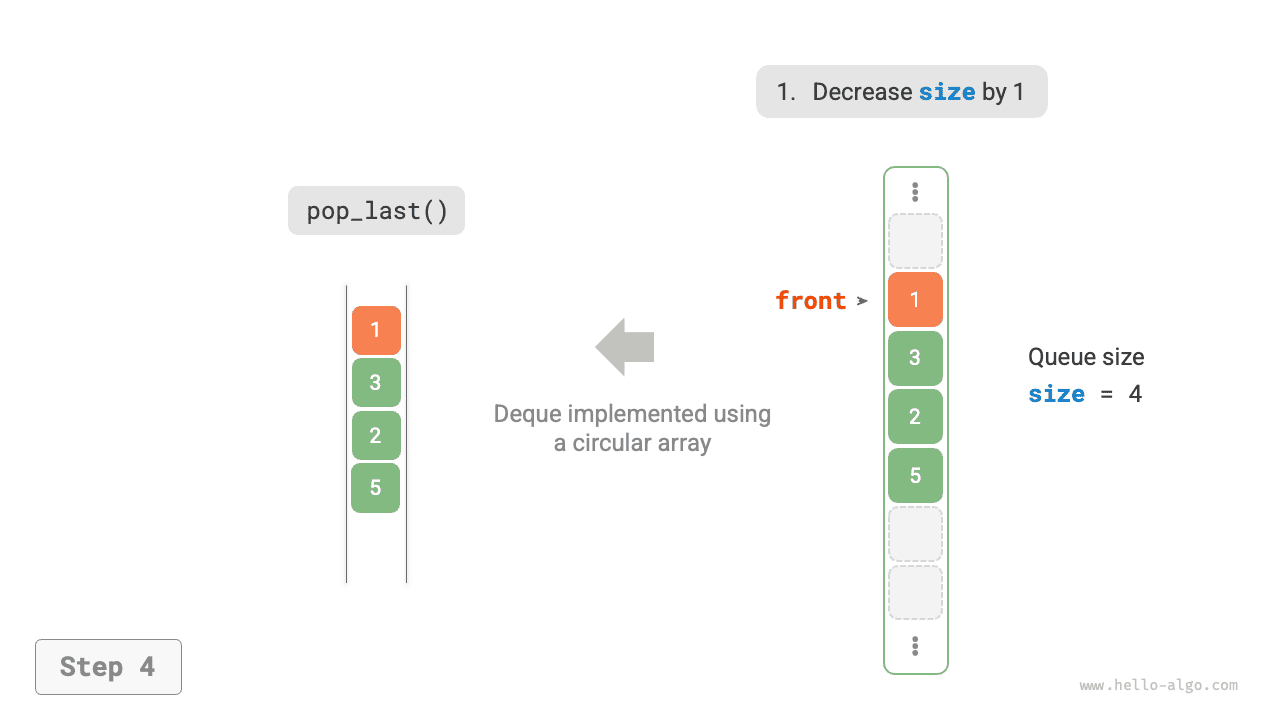

Figure 5-9 Insertion and removal in an array-based deque
Starting with the queue implementation, we need only add methods for insertion at the front and removal at the rear:
class ArrayDeque:
    """Deque implemented with a circular array"""

    def __init__(self, capacity: int):
        """Constructor"""
        self._nums: list[int] = [0] * capacity
        self._front: int = 0
        self._size: int = 0

    def capacity(self) -> int:
        """Get the deque capacity"""
        return len(self._nums)

    def size(self) -> int:
        """Get the deque size"""
        return self._size

    def is_empty(self) -> bool:
        """Check whether the deque is empty"""
        return self._size == 0

    def index(self, i: int) -> int:
        """Calculate an index in the circular array"""
        # Use modulo to connect the end of the array to its beginning
        # When i passes the end of the array, wrap around to the beginning
        # When i passes the beginning of the array, wrap around to the end
        return (i + self.capacity()) % self.capacity()

    def push_first(self, num: int):
        """Enqueue at the front"""
        if self._size == self.capacity():
            print("Deque is full")
            return
        # Move the front pointer one position to the left
        # Use modulo to wrap front to the end when it passes the beginning of the array
        self._front = self.index(self._front - 1)
        # Add num to the front
        self._nums[self._front] = num
        self._size += 1

    def push_last(self, num: int):
        """Enqueue at the rear"""
        if self._size == self.capacity():
            print("Deque is full")
            return
        # Calculate the rear pointer, which points one position past the last element
        rear = self.index(self._front + self._size)
        # Add num to the rear
        self._nums[rear] = num
        self._size += 1

    def pop_first(self) -> int:
        """Dequeue from the front"""
        num = self.peek_first()
        # Advance the front pointer by one position
        self._front = self.index(self._front + 1)
        self._size -= 1
        return num

    def pop_last(self) -> int:
        """Dequeue from the rear"""
        num = self.peek_last()
        self._size -= 1
        return num

    def peek_first(self) -> int:
        """Access the front element"""
        if self.is_empty():
            raise IndexError("Deque is empty")
        return self._nums[self._front]

    def peek_last(self) -> int:
        """Access the rear element"""
        if self.is_empty():
            raise IndexError("Deque is empty")
        # Calculate the index of the last element
        last = self.index(self._front + self._size - 1)
        return self._nums[last]

    def to_array(self) -> list[int]:
        """Return an array for printing"""
        # Convert only the list elements within the occupied range
        res = []
        for i in range(self._size):
            res.append(self._nums[self.index(self._front + i)])
        return res
/* Deque implemented with a circular array */
class ArrayDeque {
  private:
    vector<int> nums; // Array for storing deque elements
    int front;        // Front index, identifying the first element
    int queSize;      // Deque size

  public:
    /* Constructor */
    ArrayDeque(int capacity) {
        nums.resize(capacity);
        front = queSize = 0;
    }

    /* Get the deque capacity */
    int capacity() {
        return nums.size();
    }

    /* Get the deque size */
    int size() {
        return queSize;
    }

    /* Check whether the deque is empty */
    bool isEmpty() {
        return queSize == 0;
    }

    /* Calculate an index in the circular array */
    int index(int i) {
        // Use modulo to connect the end of the array to its beginning
        // When i passes the end of the array, wrap around to the beginning
        // When i passes the beginning of the array, wrap around to the end
        return (i + capacity()) % capacity();
    }

    /* Enqueue at the front */
    void pushFirst(int num) {
        if (queSize == capacity()) {
            cout << "Deque is full" << endl;
            return;
        }
        // Move the front index one position to the left
        // Use modulo to wrap front to the end when it passes the beginning of the array
        front = index(front - 1);
        // Add num to the front
        nums[front] = num;
        queSize++;
    }

    /* Enqueue at the rear */
    void pushLast(int num) {
        if (queSize == capacity()) {
            cout << "Deque is full" << endl;
            return;
        }
        // Calculate the rear index, one position past the last element
        int rear = index(front + queSize);
        // Add num to the rear
        nums[rear] = num;
        queSize++;
    }

    /* Dequeue from the front */
    int popFirst() {
        int num = peekFirst();
        // Advance the front index by one position
        front = index(front + 1);
        queSize--;
        return num;
    }

    /* Dequeue from the rear */
    int popLast() {
        int num = peekLast();
        queSize--;
        return num;
    }

    /* Access the front element */
    int peekFirst() {
        if (isEmpty())
            throw out_of_range("Deque is empty");
        return nums[front];
    }

    /* Access the rear element */
    int peekLast() {
        if (isEmpty())
            throw out_of_range("Deque is empty");
        // Calculate the index of the last element
        int last = index(front + queSize - 1);
        return nums[last];
    }

    /* Return a vector for printing */
    vector<int> toVector() {
        // Copy only the elements in the occupied range
        vector<int> res(queSize);
        for (int i = 0, j = front; i < queSize; i++, j++) {
            res[i] = nums[index(j)];
        }
        return res;
    }
};
/* Deque implemented with a circular array */
class ArrayDeque {
    private int[] nums; // Array that stores the deque elements
    private int front; // Front pointer, pointing to the first element
    private int queSize; // Deque size

    /* Constructor */
    public ArrayDeque(int capacity) {
        this.nums = new int[capacity];
        front = queSize = 0;
    }

    /* Get the deque capacity */
    public int capacity() {
        return nums.length;
    }

    /* Get the deque size */
    public int size() {
        return queSize;
    }

    /* Check whether the deque is empty */
    public boolean isEmpty() {
        return queSize == 0;
    }

    /* Calculate an index in the circular array */
    private int index(int i) {
        // Use modulo to connect the end of the array to its beginning
        // When i passes the end of the array, wrap around to the beginning
        // When i passes the beginning of the array, wrap around to the end
        return (i + capacity()) % capacity();
    }

    /* Enqueue at the front */
    public void pushFirst(int num) {
        if (queSize == capacity()) {
            System.out.println("Deque is full");
            return;
        }
        // Move the front pointer one position to the left
        // Use modulo to wrap front to the end when it passes the beginning of the array
        front = index(front - 1);
        // Add num to the front
        nums[front] = num;
        queSize++;
    }

    /* Enqueue at the rear */
    public void pushLast(int num) {
        if (queSize == capacity()) {
            System.out.println("Deque is full");
            return;
        }
        // Calculate the rear pointer, which points one position past the last element
        int rear = index(front + queSize);
        // Add num to the rear
        nums[rear] = num;
        queSize++;
    }

    /* Dequeue from the front */
    public int popFirst() {
        int num = peekFirst();
        // Advance the front pointer by one position
        front = index(front + 1);
        queSize--;
        return num;
    }

    /* Dequeue from the rear */
    public int popLast() {
        int num = peekLast();
        queSize--;
        return num;
    }

    /* Access the front element */
    public int peekFirst() {
        if (isEmpty())
            throw new IndexOutOfBoundsException();
        return nums[front];
    }

    /* Access the rear element */
    public int peekLast() {
        if (isEmpty())
            throw new IndexOutOfBoundsException();
        // Calculate the index of the last element
        int last = index(front + queSize - 1);
        return nums[last];
    }

    /* Return an array for printing */
    public int[] toArray() {
        // Convert only the list elements within the occupied range
        int[] res = new int[queSize];
        for (int i = 0, j = front; i < queSize; i++, j++) {
            res[i] = nums[index(j)];
        }
        return res;
    }
}
/* Deque implemented with a circular array */
class ArrayDeque {
    int[] nums;  // Array that stores the deque elements
    int front;   // Front pointer, pointing to the first element
    int queSize; // Deque size

    /* Constructor */
    public ArrayDeque(int capacity) {
        nums = new int[capacity];
        front = queSize = 0;
    }

    /* Get the deque capacity */
    int Capacity() {
        return nums.Length;
    }

    /* Get the deque size */
    public int Size() {
        return queSize;
    }

    /* Check whether the deque is empty */
    public bool IsEmpty() {
        return queSize == 0;
    }

    /* Calculate an index in the circular array */
    int Index(int i) {
        // Use modulo to connect the end of the array to its beginning
        // When i passes the end of the array, wrap around to the beginning
        // When i passes the beginning of the array, wrap around to the end
        return (i + Capacity()) % Capacity();
    }

    /* Enqueue at the front */
    public void PushFirst(int num) {
        if (queSize == Capacity()) {
            Console.WriteLine("Deque is full");
            return;
        }
        // Move the front pointer one position to the left
        // Use modulo to wrap front to the end when it passes the beginning of the array
        front = Index(front - 1);
        // Add num to the front
        nums[front] = num;
        queSize++;
    }

    /* Enqueue at the rear */
    public void PushLast(int num) {
        if (queSize == Capacity()) {
            Console.WriteLine("Deque is full");
            return;
        }
        // Calculate the rear pointer, which points one position past the last element
        int rear = Index(front + queSize);
        // Add num to the rear
        nums[rear] = num;
        queSize++;
    }

    /* Dequeue from the front */
    public int PopFirst() {
        int num = PeekFirst();
        // Advance the front pointer by one position
        front = Index(front + 1);
        queSize--;
        return num;
    }

    /* Dequeue from the rear */
    public int PopLast() {
        int num = PeekLast();
        queSize--;
        return num;
    }

    /* Access the front element */
    public int PeekFirst() {
        if (IsEmpty()) {
            throw new InvalidOperationException();
        }
        return nums[front];
    }

    /* Access the rear element */
    public int PeekLast() {
        if (IsEmpty()) {
            throw new InvalidOperationException();
        }
        // Calculate the index of the last element
        int last = Index(front + queSize - 1);
        return nums[last];
    }

    /* Return an array for printing */
    public int[] ToArray() {
        // Copy only the elements within the occupied range
        int[] res = new int[queSize];
        for (int i = 0, j = front; i < queSize; i++, j++) {
            res[i] = nums[Index(j)];
        }
        return res;
    }
}
/* Deque implemented with a circular array */
type arrayDeque struct {
    nums        []int // Array that stores the deque elements
    front       int   // Front pointer, pointing to the first element
    queSize     int   // Deque size
    queCapacity int   // Queue capacity (the maximum number of elements)
}

/* Initialize the queue */
func newArrayDeque(queCapacity int) *arrayDeque {
    return &arrayDeque{
        nums:        make([]int, queCapacity),
        queCapacity: queCapacity,
        front:       0,
        queSize:     0,
    }
}

/* Get the deque size */
func (q *arrayDeque) size() int {
    return q.queSize
}

/* Check whether the deque is empty */
func (q *arrayDeque) isEmpty() bool {
    return q.queSize == 0
}

/* Calculate an index in the circular array */
func (q *arrayDeque) index(i int) int {
    // Use modulo to connect the end of the array to its beginning
    // When i passes the end of the array, wrap around to the beginning
    // When i passes the beginning of the array, wrap around to the end
    return (i + q.queCapacity) % q.queCapacity
}

/* Enqueue at the front */
func (q *arrayDeque) pushFirst(num int) {
    if q.queSize == q.queCapacity {
        fmt.Println("Deque is full")
        return
    }
    // Move the front pointer one position to the left
    // Use modulo to wrap front to the end when it passes the beginning of the array
    q.front = q.index(q.front - 1)
    // Add num to the front
    q.nums[q.front] = num
    q.queSize++
}

/* Enqueue at the rear */
func (q *arrayDeque) pushLast(num int) {
    if q.queSize == q.queCapacity {
        fmt.Println("Deque is full")
        return
    }
    // Calculate the rear pointer, which points one position past the last element
    rear := q.index(q.front + q.queSize)
    // Add num to the rear
    q.nums[rear] = num
    q.queSize++
}

/* Dequeue from the front */
func (q *arrayDeque) popFirst() any {
    num := q.peekFirst()
    if num == nil {
        return nil
    }
    // Advance the front pointer by one position
    q.front = q.index(q.front + 1)
    q.queSize--
    return num
}

/* Dequeue from the rear */
func (q *arrayDeque) popLast() any {
    num := q.peekLast()
    if num == nil {
        return nil
    }
    q.queSize--
    return num
}

/* Access the front element */
func (q *arrayDeque) peekFirst() any {
    if q.isEmpty() {
        return nil
    }
    return q.nums[q.front]
}

/* Access the rear element */
func (q *arrayDeque) peekLast() any {
    if q.isEmpty() {
        return nil
    }
    // Calculate the index of the last element
    last := q.index(q.front + q.queSize - 1)
    return q.nums[last]
}

/* Get a slice for printing */
func (q *arrayDeque) toSlice() []int {
    // Convert only the list elements within the occupied range
    res := make([]int, q.queSize)
    for i, j := 0, q.front; i < q.queSize; i++ {
        res[i] = q.nums[q.index(j)]
        j++
    }
    return res
}
/* Deque implemented with a circular array */
class ArrayDeque {
    private var nums: [Int] // Array that stores the deque elements
    private var front: Int // Front index, identifying the first element
    private var _size: Int // Deque size

    /* Constructor */
    init(capacity: Int) {
        nums = Array(repeating: 0, count: capacity)
        front = 0
        _size = 0
    }

    /* Get the deque capacity */
    func capacity() -> Int {
        nums.count
    }

    /* Get the deque size */
    func size() -> Int {
        _size
    }

    /* Check whether the deque is empty */
    func isEmpty() -> Bool {
        size() == 0
    }

    /* Calculate an index in the circular array */
    private func index(i: Int) -> Int {
        // Use modulo to connect the end of the array to its beginning
        // When i passes the end of the array, wrap around to the beginning
        // When i passes the beginning of the array, wrap around to the end
        (i + capacity()) % capacity()
    }

    /* Enqueue at the front */
    func pushFirst(num: Int) {
        if size() == capacity() {
            print("Deque is full")
            return
        }
        // Move the front index one position to the left
        // Use modulo to wrap front to the end when it passes the beginning of the array
        front = index(i: front - 1)
        // Add num to the front
        nums[front] = num
        _size += 1
    }

    /* Enqueue at the rear */
    func pushLast(num: Int) {
        if size() == capacity() {
            print("Deque is full")
            return
        }
        // Calculate the rear index, one position past the last element
        let rear = index(i: front + size())
        // Add num to the rear
        nums[rear] = num
        _size += 1
    }

    /* Dequeue from the front */
    func popFirst() -> Int {
        let num = peekFirst()
        // Advance the front index by one position
        front = index(i: front + 1)
        _size -= 1
        return num
    }

    /* Dequeue from the rear */
    func popLast() -> Int {
        let num = peekLast()
        _size -= 1
        return num
    }

    /* Access the front element */
    func peekFirst() -> Int {
        if isEmpty() {
            fatalError("Deque is empty")
        }
        return nums[front]
    }

    /* Access the rear element */
    func peekLast() -> Int {
        if isEmpty() {
            fatalError("Deque is empty")
        }
        // Calculate the index of the last element
        let last = index(i: front + size() - 1)
        return nums[last]
    }

    /* Return an array for printing */
    func toArray() -> [Int] {
        // Include only the elements in the occupied range
        (front ..< front + size()).map { nums[index(i: $0)] }
    }
}
/* Deque implemented with a circular array */
class ArrayDeque {
    #nums; // Array for storing deque elements
    #front; // Front pointer, pointing to the first element
    #queSize; // Deque size

    /* Constructor */
    constructor(capacity) {
        this.#nums = new Array(capacity);
        this.#front = 0;
        this.#queSize = 0;
    }

    /* Get the deque capacity */
    capacity() {
        return this.#nums.length;
    }

    /* Get the deque size */
    size() {
        return this.#queSize;
    }

    /* Check whether the deque is empty */
    isEmpty() {
        return this.#queSize === 0;
    }

    /* Calculate an index in the circular array */
    index(i) {
        // Use modulo to connect the end of the array to its beginning
        // When i passes the end of the array, wrap around to the beginning
        // When i passes the beginning of the array, wrap around to the end
        return (i + this.capacity()) % this.capacity();
    }

    /* Enqueue at the front */
    pushFirst(num) {
        if (this.#queSize === this.capacity()) {
            console.log('Deque is full');
            return;
        }
        // Move the front pointer one position to the left
        // Use modulo to wrap front to the end when it passes the beginning of the array
        this.#front = this.index(this.#front - 1);
        // Add num to the front
        this.#nums[this.#front] = num;
        this.#queSize++;
    }

    /* Enqueue at the rear */
    pushLast(num) {
        if (this.#queSize === this.capacity()) {
            console.log('Deque is full');
            return;
        }
        // Calculate the rear pointer, which points one position past the last element
        const rear = this.index(this.#front + this.#queSize);
        // Add num to the rear
        this.#nums[rear] = num;
        this.#queSize++;
    }

    /* Dequeue from the front */
    popFirst() {
        const num = this.peekFirst();
        // Advance the front pointer by one position
        this.#front = this.index(this.#front + 1);
        this.#queSize--;
        return num;
    }

    /* Dequeue from the rear */
    popLast() {
        const num = this.peekLast();
        this.#queSize--;
        return num;
    }

    /* Access the front element */
    peekFirst() {
        if (this.isEmpty()) throw new Error('Deque is empty');
        return this.#nums[this.#front];
    }

    /* Access the rear element */
    peekLast() {
        if (this.isEmpty()) throw new Error('Deque is empty');
        // Calculate the index of the last element
        const last = this.index(this.#front + this.#queSize - 1);
        return this.#nums[last];
    }

    /* Return an array for printing */
    toArray() {
        // Convert only the list elements within the occupied range
        const res = [];
        for (let i = 0, j = this.#front; i < this.#queSize; i++, j++) {
            res[i] = this.#nums[this.index(j)];
        }
        return res;
    }
}
/* Deque implemented with a circular array */
class ArrayDeque {
    private nums: number[]; // Array for storing deque elements
    private front: number; // Front pointer, pointing to the first element
    private queSize: number; // Deque size

    /* Constructor */
    constructor(capacity: number) {
        this.nums = new Array(capacity);
        this.front = 0;
        this.queSize = 0;
    }

    /* Get the deque capacity */
    capacity(): number {
        return this.nums.length;
    }

    /* Get the deque size */
    size(): number {
        return this.queSize;
    }

    /* Check whether the deque is empty */
    isEmpty(): boolean {
        return this.queSize === 0;
    }

    /* Calculate an index in the circular array */
    index(i: number): number {
        // Use modulo to connect the end of the array to its beginning
        // When i passes the end of the array, wrap around to the beginning
        // When i passes the beginning of the array, wrap around to the end
        return (i + this.capacity()) % this.capacity();
    }

    /* Enqueue at the front */
    pushFirst(num: number): void {
        if (this.queSize === this.capacity()) {
            console.log('Deque is full');
            return;
        }
        // Move the front pointer one position to the left
        // Use modulo to wrap front to the end when it passes the beginning of the array
        this.front = this.index(this.front - 1);
        // Add num to the front
        this.nums[this.front] = num;
        this.queSize++;
    }

    /* Enqueue at the rear */
    pushLast(num: number): void {
        if (this.queSize === this.capacity()) {
            console.log('Deque is full');
            return;
        }
        // Calculate the rear pointer, which points one position past the last element
        const rear: number = this.index(this.front + this.queSize);
        // Add num to the rear
        this.nums[rear] = num;
        this.queSize++;
    }

    /* Dequeue from the front */
    popFirst(): number {
        const num: number = this.peekFirst();
        // Advance the front pointer by one position
        this.front = this.index(this.front + 1);
        this.queSize--;
        return num;
    }

    /* Dequeue from the rear */
    popLast(): number {
        const num: number = this.peekLast();
        this.queSize--;
        return num;
    }

    /* Access the front element */
    peekFirst(): number {
        if (this.isEmpty()) throw new Error('Deque is empty');
        return this.nums[this.front];
    }

    /* Access the rear element */
    peekLast(): number {
        if (this.isEmpty()) throw new Error('Deque is empty');
        // Calculate the index of the last element
        const last = this.index(this.front + this.queSize - 1);
        return this.nums[last];
    }

    /* Return an array for printing */
    toArray(): number[] {
        // Convert only the list elements within the occupied range
        const res: number[] = [];
        for (let i = 0, j = this.front; i < this.queSize; i++, j++) {
            res[i] = this.nums[this.index(j)];
        }
        return res;
    }
}
/* Deque implemented with a circular array */
class ArrayDeque {
  late List<int> _nums; // Array for storing deque elements
  late int _front; // Front pointer, pointing to the first element
  late int _queSize; // Deque size

  /* Constructor */
  ArrayDeque(int capacity) {
    this._nums = List.filled(capacity, 0);
    this._front = this._queSize = 0;
  }

  /* Get the deque capacity */
  int capacity() {
    return _nums.length;
  }

  /* Get the deque size */
  int size() {
    return _queSize;
  }

  /* Check whether the deque is empty */
  bool isEmpty() {
    return _queSize == 0;
  }

  /* Calculate an index in the circular array */
  int index(int i) {
    // Use modulo to connect the end of the array to its beginning
    // When i passes the end of the array, wrap around to the beginning
    // When i passes the beginning of the array, wrap around to the end
    return (i + capacity()) % capacity();
  }

  /* Enqueue at the front */
  void pushFirst(int _num) {
    if (_queSize == capacity()) {
      throw Exception("Deque is full");
    }
    // Move the front pointer one position to the left
    // Use modulo to wrap _front to the end when it passes the beginning of the array
    _front = index(_front - 1);
    // Add _num to the front
    _nums[_front] = _num;
    _queSize++;
  }

  /* Enqueue at the rear */
  void pushLast(int _num) {
    if (_queSize == capacity()) {
      throw Exception("Deque is full");
    }
    // Calculate the rear pointer, which points one position past the last element
    int rear = index(_front + _queSize);
    // Add _num to the rear
    _nums[rear] = _num;
    _queSize++;
  }

  /* Dequeue from the front */
  int popFirst() {
    int _num = peekFirst();
    // Move the front pointer one position to the right
    _front = index(_front + 1);
    _queSize--;
    return _num;
  }

  /* Dequeue from the rear */
  int popLast() {
    int _num = peekLast();
    _queSize--;
    return _num;
  }

  /* Access the front element */
  int peekFirst() {
    if (isEmpty()) {
      throw Exception("Deque is empty");
    }
    return _nums[_front];
  }

  /* Access the rear element */
  int peekLast() {
    if (isEmpty()) {
      throw Exception("Deque is empty");
    }
    // Calculate the index of the last element
    int last = index(_front + _queSize - 1);
    return _nums[last];
  }

  /* Return an array for printing */
  List<int> toArray() {
    // Convert only the list elements within the occupied range
    List<int> res = List.filled(_queSize, 0);
    for (int i = 0, j = _front; i < _queSize; i++, j++) {
      res[i] = _nums[index(j)];
    }
    return res;
  }
}
/* Deque implemented with a circular array */
struct ArrayDeque<T> {
    nums: Vec<T>,    // Array for storing deque elements
    front: usize,    // Front index, identifying the first element
    que_size: usize, // Deque size
}

impl<T: Copy + Default> ArrayDeque<T> {
    /* Constructor */
    pub fn new(capacity: usize) -> Self {
        Self {
            nums: vec![T::default(); capacity],
            front: 0,
            que_size: 0,
        }
    }

    /* Get the deque capacity */
    pub fn capacity(&self) -> usize {
        self.nums.len()
    }

    /* Get the deque size */
    pub fn size(&self) -> usize {
        self.que_size
    }

    /* Check whether the deque is empty */
    pub fn is_empty(&self) -> bool {
        self.que_size == 0
    }

    /* Calculate an index in the circular array */
    fn index(&self, i: i32) -> usize {
        // Use modulo to connect the end of the array to its beginning
        // When i passes the end of the array, wrap around to the beginning
        // When i passes the beginning of the array, wrap around to the end
        ((i + self.capacity() as i32) % self.capacity() as i32) as usize
    }

    /* Enqueue at the front */
    pub fn push_first(&mut self, num: T) {
        if self.que_size == self.capacity() {
            println!("Deque is full");
            return;
        }
        // Move the front index one position to the left
        // Use modulo to wrap front to the end when it passes the beginning of the array
        self.front = self.index(self.front as i32 - 1);
        // Add num to the front
        self.nums[self.front] = num;
        self.que_size += 1;
    }

    /* Enqueue at the rear */
    pub fn push_last(&mut self, num: T) {
        if self.que_size == self.capacity() {
            println!("Deque is full");
            return;
        }
        // Calculate the rear index, one position past the last element
        let rear = self.index(self.front as i32 + self.que_size as i32);
        // Add num to the rear
        self.nums[rear] = num;
        self.que_size += 1;
    }

    /* Dequeue from the front */
    fn pop_first(&mut self) -> T {
        let num = self.peek_first();
        // Advance the front index by one position
        self.front = self.index(self.front as i32 + 1);
        self.que_size -= 1;
        num
    }

    /* Dequeue from the rear */
    fn pop_last(&mut self) -> T {
        let num = self.peek_last();
        self.que_size -= 1;
        num
    }

    /* Access the front element */
    fn peek_first(&self) -> T {
        if self.is_empty() {
            panic!("Deque is empty")
        };
        self.nums[self.front]
    }

    /* Access the rear element */
    fn peek_last(&self) -> T {
        if self.is_empty() {
            panic!("Deque is empty")
        };
        // Calculate the index of the last element
        let last = self.index(self.front as i32 + self.que_size as i32 - 1);
        self.nums[last]
    }

    /* Return a vector for printing */
    fn to_array(&self) -> Vec<T> {
        // Convert only the list elements within the occupied range
        let mut res = vec![T::default(); self.que_size];
        let mut j = self.front;
        for i in 0..self.que_size {
            res[i] = self.nums[self.index(j as i32)];
            j += 1;
        }
        res
    }
}
/* Deque implemented with a circular array */
typedef struct {
    int *nums;       // Array that stores the queue elements
    int front;       // Front pointer, pointing to the first element
    int queSize;     // Current number of elements in the deque
    int queCapacity; // Queue capacity
} ArrayDeque;

/* Constructor */
ArrayDeque *newArrayDeque(int capacity) {
    ArrayDeque *deque = (ArrayDeque *)malloc(sizeof(ArrayDeque));
    // Initialize the array
    deque->queCapacity = capacity;
    deque->nums = (int *)malloc(sizeof(int) * deque->queCapacity);
    deque->front = deque->queSize = 0;
    return deque;
}

/* Destructor */
void delArrayDeque(ArrayDeque *deque) {
    free(deque->nums);
    free(deque);
}

/* Get the deque capacity */
int capacity(ArrayDeque *deque) {
    return deque->queCapacity;
}

/* Get the deque size */
int size(ArrayDeque *deque) {
    return deque->queSize;
}

/* Check whether the deque is empty */
bool empty(ArrayDeque *deque) {
    return deque->queSize == 0;
}

/* Calculate an index in the circular array */
int dequeIndex(ArrayDeque *deque, int i) {
    // Use modulo to connect the end of the array to its beginning
    // When i passes the end of the array, wrap to the beginning
    // When i passes the beginning of the array, wrap around to the end
    return ((i + capacity(deque)) % capacity(deque));
}

/* Enqueue at the front */
void pushFirst(ArrayDeque *deque, int num) {
    if (deque->queSize == capacity(deque)) {
        printf("Deque is full\r\n");
        return;
    }
    // Move the front pointer one position to the left
    // Use modulo to wrap front to the end when it passes the beginning
    deque->front = dequeIndex(deque, deque->front - 1);
    // Add num to the front
    deque->nums[deque->front] = num;
    deque->queSize++;
}

/* Enqueue at the rear */
void pushLast(ArrayDeque *deque, int num) {
    if (deque->queSize == capacity(deque)) {
        printf("Deque is full\r\n");
        return;
    }
    // Calculate the rear pointer, which points one position past the last element
    int rear = dequeIndex(deque, deque->front + deque->queSize);
    // Add num to the rear
    deque->nums[rear] = num;
    deque->queSize++;
}

/* Access the front element */
int peekFirst(ArrayDeque *deque) {
    // Access error: the deque is empty
    assert(empty(deque) == 0);
    return deque->nums[deque->front];
}

/* Access the rear element */
int peekLast(ArrayDeque *deque) {
    // Access error: the deque is empty
    assert(empty(deque) == 0);
    int last = dequeIndex(deque, deque->front + deque->queSize - 1);
    return deque->nums[last];
}

/* Dequeue from the front */
int popFirst(ArrayDeque *deque) {
    int num = peekFirst(deque);
    // Advance the front pointer by one position
    deque->front = dequeIndex(deque, deque->front + 1);
    deque->queSize--;
    return num;
}

/* Dequeue from the rear */
int popLast(ArrayDeque *deque) {
    int num = peekLast(deque);
    deque->queSize--;
    return num;
}

/* Return an array for printing */
int *toArray(ArrayDeque *deque, int *queSize) {
    *queSize = deque->queSize;
    int *res = (int *)calloc(deque->queSize, sizeof(int));
    int j = deque->front;
    for (int i = 0; i < deque->queSize; i++) {
        res[i] = deque->nums[j % deque->queCapacity];
        j++;
    }
    return res;
}
/* Constructor */
class ArrayDeque(capacity: Int) {
    private var nums: IntArray = IntArray(capacity) // Array that stores the deque elements
    private var front: Int = 0 // Front pointer, pointing to the first element
    private var queSize: Int = 0 // Deque size

    /* Get the deque capacity */
    fun capacity(): Int {
        return nums.size
    }

    /* Get the deque size */
    fun size(): Int {
        return queSize
    }

    /* Check whether the deque is empty */
    fun isEmpty(): Boolean {
        return queSize == 0
    }

    /* Calculate an index in the circular array */
    private fun index(i: Int): Int {
        // Use modulo to connect the end of the array to its beginning
        // When i passes the end of the array, wrap around to the beginning
        // When i passes the beginning of the array, wrap around to the end
        return (i + capacity()) % capacity()
    }

    /* Enqueue at the front */
    fun pushFirst(num: Int) {
        if (queSize == capacity()) {
            println("Deque is full")
            return
        }
        // Move the front pointer one position to the left
        // Use modulo to wrap front to the end when it passes the beginning of the array
        front = index(front - 1)
        // Add num to the front
        nums[front] = num
        queSize++
    }

    /* Enqueue at the rear */
    fun pushLast(num: Int) {
        if (queSize == capacity()) {
            println("Deque is full")
            return
        }
        // Calculate the rear pointer, which points one position past the last element
        val rear = index(front + queSize)
        // Add num to the rear
        nums[rear] = num
        queSize++
    }

    /* Dequeue from the front */
    fun popFirst(): Int {
        val num = peekFirst()
        // Advance the front pointer by one position
        front = index(front + 1)
        queSize--
        return num
    }

    /* Dequeue from the rear */
    fun popLast(): Int {
        val num = peekLast()
        queSize--
        return num
    }

    /* Access the front element */
    fun peekFirst(): Int {
        if (isEmpty()) throw IndexOutOfBoundsException()
        return nums[front]
    }

    /* Access the rear element */
    fun peekLast(): Int {
        if (isEmpty()) throw IndexOutOfBoundsException()
        // Calculate the index of the last element
        val last = index(front + queSize - 1)
        return nums[last]
    }

    /* Return an array for printing */
    fun toArray(): IntArray {
        // Copy only the elements within the occupied range
        val res = IntArray(queSize)
        var i = 0
        var j = front
        while (i < queSize) {
            res[i] = nums[index(j)]
            i++
            j++
        }
        return res
    }
}
### Deque implemented with a circular array ###
class ArrayDeque
  ### Get the deque size ###
  attr_reader :size

  ### Constructor ###
  def initialize(capacity)
    @nums = Array.new(capacity, 0)
    @front = 0
    @size = 0
  end

  ### Get the deque capacity ###
  def capacity
    @nums.length
  end

  ### Check whether the deque is empty ###
  def is_empty?
    size.zero?
  end

  ### Enqueue at the front ###
  def push_first(num)
    if size == capacity
      puts 'Deque is full'
      return
    end

    # Move the front pointer one position to the left
    # Use modulo to wrap front to the end when it passes the beginning of the array
    @front = index(@front - 1)
    # Add num to the front
    @nums[@front] = num
    @size += 1
  end

  ### Enqueue at the rear ###
  def push_last(num)
    if size == capacity
      puts 'Deque is full'
      return
    end

    # Calculate the rear pointer, which points one position past the last element
    rear = index(@front + size)
    # Add num to the rear
    @nums[rear] = num
    @size += 1
  end

  ### Dequeue from the front ###
  def pop_first
    num = peek_first
    # Advance the front pointer by one position
    @front = index(@front + 1)
    @size -= 1
    num
  end

  ### Dequeue from the rear ###
  def pop_last
    num = peek_last
    @size -= 1
    num
  end

  ### Access the front element ###
  def peek_first
    raise IndexError, 'Deque is empty' if is_empty?

    @nums[@front]
  end

  ### Access the rear element ###
  def peek_last
    raise IndexError, 'Deque is empty' if is_empty?

    # Calculate the index of the last element
    last = index(@front + size - 1)
    @nums[last]
  end

  ### Return an array for printing ###
  def to_array
    # Convert only the list elements within the occupied range
    res = []
    for i in 0...size
      res << @nums[index(@front + i)]
    end
    res
  end

  private

  ### Calculate an index in the circular array ###
  def index(i)
    # Use modulo to connect the end of the array to its beginning
    # When i passes the end of the array, wrap around to the beginning
    # When i passes the beginning of the array, wrap around to the end
    (i + capacity) % capacity
  end
end
5.3.3 Applications
A deque combines stack and queue behavior, so it supports all their applications while offering greater flexibility.
Software undo is usually implemented with a stack: the system uses push to record each change and pop to undo it. Because resources are limited, software often restricts the history to a fixed number of steps, such as \(50\). When the stack grows beyond \(50\), the oldest entry must be removed from the bottom, the front of the deque. A stack cannot provide this operation, so a deque is needed instead. The core undo behavior still follows last-in, first-out order; the deque simply provides flexibility for the additional logic.