# Deques
A queue allows removal only at the front and insertion only at the rear. As shown below, a double-ended queue, or deque, is more flexible: elements can be added or removed at either end.

## Common deque operations
The table below lists common operations. Actual method names depend on the programming language.
Table Efficiency of deque operations
| Method | Description | Time complexity |
| -------------- | ---------------- | ---------- |
| `push_first()` | Add an element at the front | $O(1)$ |
| `push_last()` | Add an element at the rear | $O(1)$ |
| `pop_first()` | Remove the front element | $O(1)$ |
| `pop_last()` | Remove the rear element | $O(1)$ |
| `peek_first()` | Access the front element | $O(1)$ |
| `peek_last()` | Access the rear element | $O(1)$ |
Again, we can use a deque class already provided by the programming language:
=== "Python"
```python title="deque.py"
from collections import deque
# Initialize a deque
deq: deque[int] = deque()
# Enqueue elements
deq.append(2) # Add at the rear
deq.append(5)
deq.append(4)
deq.appendleft(3) # Add at the front
deq.appendleft(1)
# Access elements
front: int = deq[0] # Front element
rear: int = deq[-1] # Rear element
# Dequeue elements
pop_front: int = deq.popleft() # Remove the front element
pop_rear: int = deq.pop() # Remove the rear element
# Get the deque size
size: int = len(deq)
# Check whether the deque is empty
is_empty: bool = len(deq) == 0
```
=== "C++"
```cpp title="deque.cpp"
/* Initialize a deque */
deque deque;
/* Enqueue elements */
deque.push_back(2); // Add at the rear
deque.push_back(5);
deque.push_back(4);
deque.push_front(3); // Add at the front
deque.push_front(1);
/* Access elements */
int front = deque.front(); // Front element
int back = deque.back(); // Rear element
/* Dequeue elements */
deque.pop_front(); // Remove the front element
deque.pop_back(); // Remove the rear element
/* Get the deque size */
int size = deque.size();
/* Check whether the deque is empty */
bool empty = deque.empty();
```
=== "Java"
```java title="deque.java"
/* Initialize a deque */
Deque deque = new LinkedList<>();
/* Enqueue elements */
deque.offerLast(2); // Add at the rear
deque.offerLast(5);
deque.offerLast(4);
deque.offerFirst(3); // Add at the front
deque.offerFirst(1);
/* Access elements */
int peekFirst = deque.peekFirst(); // Front element
int peekLast = deque.peekLast(); // Rear element
/* Dequeue elements */
int popFirst = deque.pollFirst(); // Remove the front element
int popLast = deque.pollLast(); // Remove the rear element
/* Get the deque size */
int size = deque.size();
/* Check whether the deque is empty */
boolean isEmpty = deque.isEmpty();
```
=== "C#"
```csharp title="deque.cs"
/* Initialize a deque */
// In C#, use a LinkedList as a deque
LinkedList deque = new();
/* Enqueue elements */
deque.AddLast(2); // Add at the rear
deque.AddLast(5);
deque.AddLast(4);
deque.AddFirst(3); // Add at the front
deque.AddFirst(1);
/* Access elements */
int peekFirst = deque.First.Value; // Front element
int peekLast = deque.Last.Value; // Rear element
/* Dequeue elements */
deque.RemoveFirst(); // Remove the front element
deque.RemoveLast(); // Remove the rear element
/* Get the deque size */
int size = deque.Count;
/* Check whether the deque is empty */
bool isEmpty = deque.Count == 0;
```
=== "Go"
```go title="deque_test.go"
/* Initialize a deque */
// In Go, use a list as a deque
deque := list.New()
/* Enqueue elements */
deque.PushBack(2) // Add at the rear
deque.PushBack(5)
deque.PushBack(4)
deque.PushFront(3) // Add at the front
deque.PushFront(1)
/* Access elements */
front := deque.Front() // Front element
rear := deque.Back() // Rear element
/* Dequeue elements */
deque.Remove(front) // Remove the front element
deque.Remove(rear) // Remove the rear element
/* Get the deque size */
size := deque.Len()
/* Check whether the deque is empty */
isEmpty := deque.Len() == 0
```
=== "Swift"
```swift title="deque.swift"
/* Initialize a deque */
// Swift has no built-in deque class; use an Array as a deque
var deque: [Int] = []
/* Enqueue elements */
deque.append(2) // Add at the rear
deque.append(5)
deque.append(4)
deque.insert(3, at: 0) // Add at the front
deque.insert(1, at: 0)
/* Access elements */
let peekFirst = deque.first! // Front element
let peekLast = deque.last! // Rear element
/* Dequeue elements */
// When using an Array, popFirst takes O(n) time
let popFirst = deque.removeFirst() // Remove the front element
let popLast = deque.removeLast() // Remove the rear element
/* Get the deque size */
let size = deque.count
/* Check whether the deque is empty */
let isEmpty = deque.isEmpty
```
=== "JS"
```javascript title="deque.js"
/* Initialize a deque */
// JavaScript has no built-in deque; use an Array instead
const deque = [];
/* Enqueue elements */
deque.push(2);
deque.push(5);
deque.push(4);
// Note that this is an array, so unshift() takes O(n) time
deque.unshift(3);
deque.unshift(1);
/* Access elements */
const peekFirst = deque[0];
const peekLast = deque[deque.length - 1];
/* Dequeue elements */
// Note that this is an array, so shift() takes O(n) time
const popFront = deque.shift();
const popBack = deque.pop();
/* Get the deque size */
const size = deque.length;
/* Check whether the deque is empty */
const isEmpty = size === 0;
```
=== "TS"
```typescript title="deque.ts"
/* Initialize a deque */
// TypeScript has no built-in deque; use an Array instead
const deque: number[] = [];
/* Enqueue elements */
deque.push(2);
deque.push(5);
deque.push(4);
// Note that this is an array, so unshift() takes O(n) time
deque.unshift(3);
deque.unshift(1);
/* Access elements */
const peekFirst: number = deque[0];
const peekLast: number = deque[deque.length - 1];
/* Dequeue elements */
// Note that this is an array, so shift() takes O(n) time
const popFront: number = deque.shift() as number;
const popBack: number = deque.pop() as number;
/* Get the deque size */
const size: number = deque.length;
/* Check whether the deque is empty */
const isEmpty: boolean = size === 0;
```
=== "Dart"
```dart title="deque.dart"
/* Initialize a deque */
// In Dart, Queue is defined as a deque
Queue deque = Queue();
/* Enqueue elements */
deque.addLast(2); // Add at the rear
deque.addLast(5);
deque.addLast(4);
deque.addFirst(3); // Add at the front
deque.addFirst(1);
/* Access elements */
int peekFirst = deque.first; // Front element
int peekLast = deque.last; // Rear element
/* Dequeue elements */
int popFirst = deque.removeFirst(); // Remove the front element
int popLast = deque.removeLast(); // Remove the rear element
/* Get the deque size */
int size = deque.length;
/* Check whether the deque is empty */
bool isEmpty = deque.isEmpty;
```
=== "Rust"
```rust title="deque.rs"
/* Initialize a deque */
let mut deque: VecDeque = VecDeque::new();
/* Enqueue elements */
deque.push_back(2); // Add at the rear
deque.push_back(5);
deque.push_back(4);
deque.push_front(3); // Add at the front
deque.push_front(1);
/* Access elements */
if let Some(front) = deque.front() { // Front element
}
if let Some(rear) = deque.back() { // Rear element
}
/* Dequeue elements */
if let Some(pop_front) = deque.pop_front() { // Remove the front element
}
if let Some(pop_rear) = deque.pop_back() { // Remove the rear element
}
/* Get the deque size */
let size = deque.len();
/* Check whether the deque is empty */
let is_empty = deque.is_empty();
```
=== "C"
```c title="deque.c"
// C provides no built-in deque
```
=== "Kotlin"
```kotlin title="deque.kt"
/* Initialize a deque */
val deque = LinkedList()
/* Enqueue elements */
deque.offerLast(2) // Add at the rear
deque.offerLast(5)
deque.offerLast(4)
deque.offerFirst(3) // Add at the front
deque.offerFirst(1)
/* Access elements */
val peekFirst = deque.peekFirst() // Front element
val peekLast = deque.peekLast() // Rear element
/* Dequeue elements */
val popFirst = deque.pollFirst() // Remove the front element
val popLast = deque.pollLast() // Remove the rear element
/* Get the deque size */
val size = deque.size
/* Check whether the deque is empty */
val isEmpty = deque.isEmpty()
```
=== "Ruby"
```ruby title="deque.rb"
# Initialize a deque
# Ruby has no built-in deque; use an Array instead
deque = []
# Enqueue elements
deque << 2
deque << 5
deque << 4
# Note that this is an array, so Array#unshift takes O(n) time
deque.unshift(3)
deque.unshift(1)
# Access elements
peek_first = deque.first
peek_last = deque.last
# Dequeue elements
# Note that this is an array, so Array#shift takes O(n) time
pop_front = deque.shift
pop_back = deque.pop
# Get the deque size
size = deque.length
# Check whether the deque is empty
is_empty = size.zero?
```
??? pythontutor "Visualize execution"
https://pythontutor.com/render.html#code=from%20collections%20import%20deque%0A%0A%22%22%22Driver%20Code%22%22%22%0Aif%20__name__%20%3D%3D%20%22__main__%22%3A%0A%20%20%20%20%23%20Initialize%20a%20deque%0A%20%20%20%20deq%20%3D%20deque%28%29%0A%0A%20%20%20%20%23%20Enqueue%20elements%0A%20%20%20%20deq.append%282%29%20%20%23%20Add%20at%20the%20rear%0A%20%20%20%20deq.append%285%29%0A%20%20%20%20deq.append%284%29%0A%20%20%20%20deq.appendleft%283%29%20%20%23%20Add%20at%20the%20front%0A%20%20%20%20deq.appendleft%281%29%0A%20%20%20%20print%28%22Deque%3A%20deque%20%3D%22%2C%20deq%29%0A%0A%20%20%20%20%23%20Access%20elements%0A%20%20%20%20front%20%3D%20deq%5B0%5D%20%20%23%20Front%20element%0A%20%20%20%20print%28%22Front%20element%3A%20front%20%3D%22%2C%20front%29%0A%20%20%20%20rear%20%3D%20deq%5B-1%5D%20%20%23%20Rear%20element%0A%20%20%20%20print%28%22Rear%20element%3A%20rear%20%3D%22%2C%20rear%29%0A%0A%20%20%20%20%23%20Dequeue%20elements%0A%20%20%20%20pop_front%20%3D%20deq.popleft%28%29%20%20%23%20Remove%20the%20front%20element%0A%20%20%20%20print%28%22Element%20removed%20from%20the%20front%3A%20pop_front%20%3D%22%2C%20pop_front%29%0A%20%20%20%20print%28%22After%20removing%20from%20the%20front%3A%20deque%20%3D%22%2C%20deq%29%0A%20%20%20%20pop_rear%20%3D%20deq.pop%28%29%20%20%23%20Remove%20the%20rear%20element%0A%20%20%20%20print%28%22Element%20removed%20from%20the%20rear%3A%20pop_rear%20%3D%22%2C%20pop_rear%29%0A%20%20%20%20print%28%22After%20removing%20from%20the%20rear%3A%20deque%20%3D%22%2C%20deq%29%0A%0A%20%20%20%20%23%20Get%20the%20deque%20size%0A%20%20%20%20size%20%3D%20len%28deq%29%0A%20%20%20%20print%28%22Deque%20size%3A%20size%20%3D%22%2C%20size%29%0A%0A%20%20%20%20%23%20Check%20whether%20the%20deque%20is%20empty%0A%20%20%20%20is_empty%20%3D%20len%28deq%29%20%3D%3D%200%0A%20%20%20%20print%28%22Is%20the%20deque%20empty%20%3D%22%2C%20is_empty%29&cumulative=false&curInstr=3&heapPrimitives=nevernest&mode=display&origin=opt-frontend.js&py=311&rawInputLstJSON=%5B%5D&textReferences=false
## Implementing a deque *
A deque is implemented much like a queue, using either a linked list or an array as the underlying structure.
### Implementation with a doubly linked list
In the previous section, we used a singly linked list for a queue because it easily supports removing the head for dequeueing and adding after the tail for enqueueing.
A deque supports both insertion and removal at both ends. It therefore needs the symmetric operations in the other direction as well. For this reason, we use a doubly linked list.
As shown below, treat the list's head and tail as the deque's front and rear, and support adding and removing nodes at both ends.
=== "<1>"

=== "<2>"

=== "<3>"

=== "<4>"

=== "<5>"

The implementation is as follows:
```src
[file]{linkedlist_deque}-[class]{linked_list_deque}-[func]{}
```
### Implementation with an array
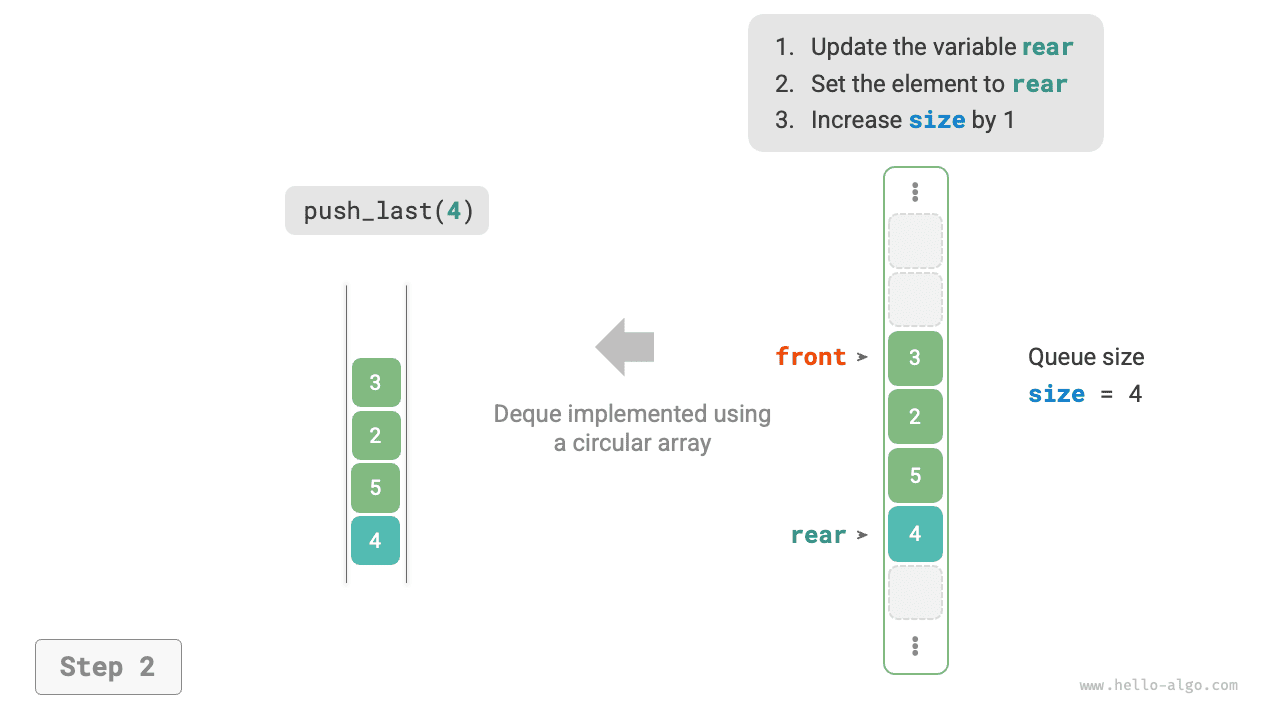
As with an array-based queue, we can use a circular array to implement a deque, as shown below.
=== "<1>"

=== "<2>"
=== "<3>"

=== "<4>"

=== "<5>"

Starting with the queue implementation, we need only add methods for insertion at the front and removal at the rear:
```src
[file]{array_deque}-[class]{array_deque}-[func]{}
```
## Applications
A deque combines stack and queue behavior, **so it supports all their applications while offering greater flexibility**.
Software undo is usually implemented with a stack: the system uses `push` to record each change and `pop` to undo it. Because resources are limited, software often restricts the history to a fixed number of steps, such as $50$. When the stack grows beyond $50$, the oldest entry must be removed from the bottom, the front of the deque. **A stack cannot provide this operation, so a deque is needed instead**. The core undo behavior still follows last-in, first-out order; the deque simply provides flexibility for the additional logic.