
参与本项目,贡献其他语言版本的代码,拥抱开源,让更多学习算法的小伙伴们收益!
## 19.删除链表的倒数第N个节点 [力扣题目链接](https://leetcode.cn/problems/remove-nth-node-from-end-of-list/) 给你一个链表,删除链表的倒数第 n 个结点,并且返回链表的头结点。 进阶:你能尝试使用一趟扫描实现吗? 示例 1:  输入:head = [1,2,3,4,5], n = 2 输出:[1,2,3,5] 示例 2: 输入:head = [1], n = 1 输出:[] 示例 3: 输入:head = [1,2], n = 1 输出:[1] ## 思路 《代码随想录》算法公开课:[链表遍历学清楚! | LeetCode:19.删除链表倒数第N个节点](https://www.bilibili.com/video/BV1vW4y1U7Gf),相信结合视频在看本篇题解,更有助于大家对链表的理解。 双指针的经典应用,如果要删除倒数第n个节点,让fast移动n步,然后让fast和slow同时移动,直到fast指向链表末尾。删掉slow所指向的节点就可以了。 思路是这样的,但要注意一些细节。 分为如下几步: * 首先这里我推荐大家使用虚拟头结点,这样方便处理删除实际头结点的逻辑,如果虚拟头结点不清楚,可以看这篇: [链表:听说用虚拟头节点会方便很多?](https://programmercarl.com/0203.移除链表元素.html) * 定义fast指针和slow指针,初始值为虚拟头结点,如图: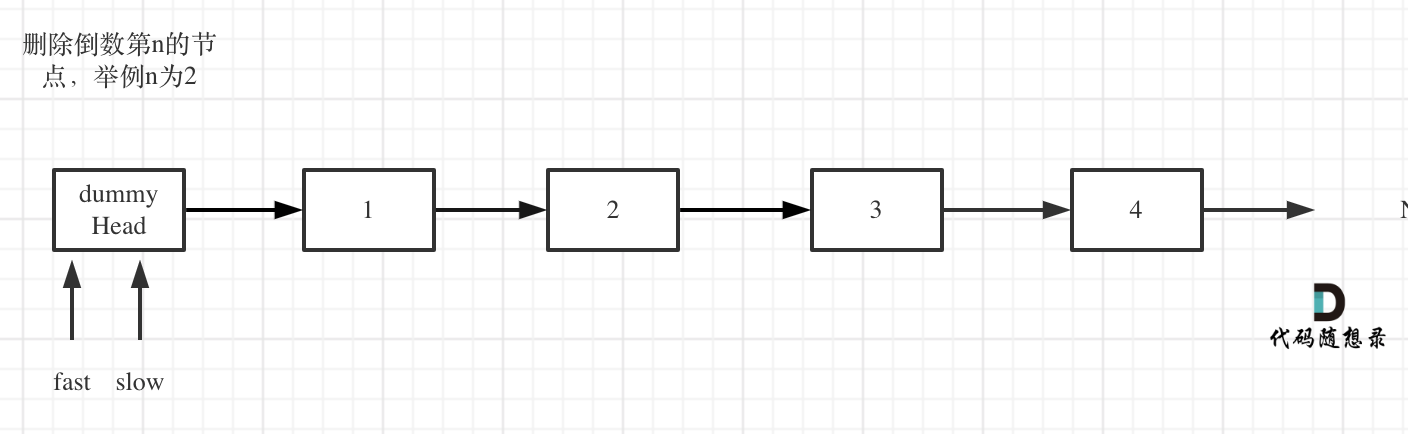 * fast首先走n + 1步 ,为什么是n+1呢,因为只有这样同时移动的时候slow才能指向删除节点的上一个节点(方便做删除操作),如图:
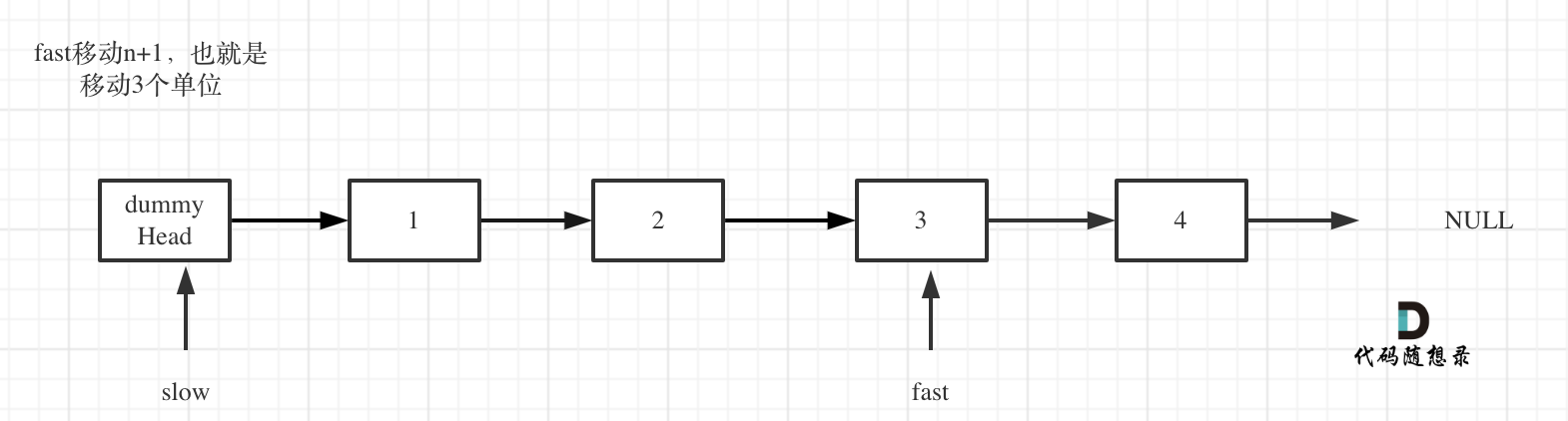 * fast和slow同时移动,直到fast指向末尾,如题:
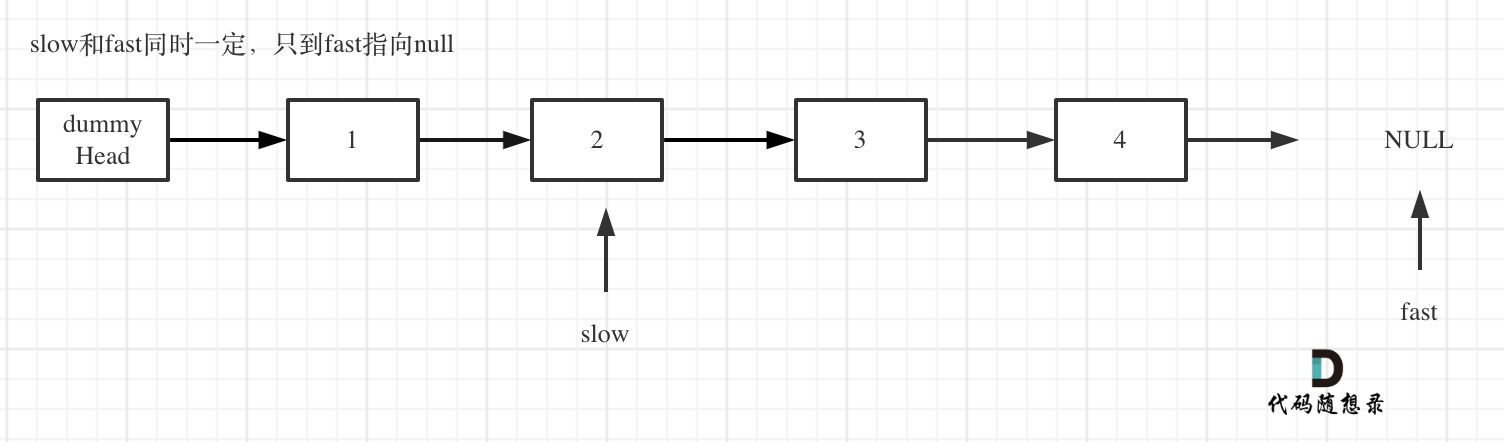 * 删除slow指向的下一个节点,如图:
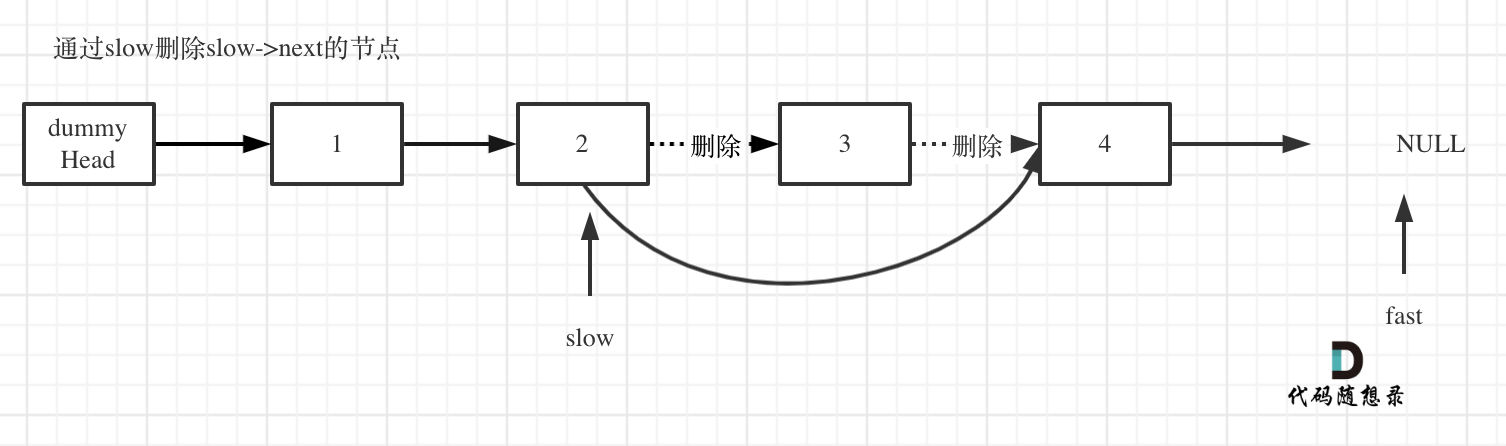 此时不难写出如下C++代码:
```CPP
class Solution {
public:
ListNode* removeNthFromEnd(ListNode* head, int n) {
ListNode* dummyHead = new ListNode(0);
dummyHead->next = head;
ListNode* slow = dummyHead;
ListNode* fast = dummyHead;
while(n-- && fast != NULL) {
fast = fast->next;
}
fast = fast->next; // fast再提前走一步,因为需要让slow指向删除节点的上一个节点
while (fast != NULL) {
fast = fast->next;
slow = slow->next;
}
slow->next = slow->next->next;
return dummyHead->next;
}
};
```
## 其他语言版本
java:
```java
class Solution {
public ListNode removeNthFromEnd(ListNode head, int n) {
ListNode dummy = new ListNode(-1);
dummy.next = head;
ListNode slow = dummy;
ListNode fast = dummy;
while (n-- > 0) {
fast = fast.next;
}
// 记住 待删除节点slow 的上一节点
ListNode prev = null;
while (fast != null) {
prev = slow;
slow = slow.next;
fast = fast.next;
}
// 上一节点的next指针绕过 待删除节点slow 直接指向slow的下一节点
prev.next = slow.next;
// 释放 待删除节点slow 的next指针, 这句删掉也能AC
slow.next = null;
return dummy.next;
}
}
```
Python:
```python
# Definition for singly-linked list.
# class ListNode:
# def __init__(self, val=0, next=None):
# self.val = val
# self.next = next
class Solution:
def removeNthFromEnd(self, head: ListNode, n: int) -> ListNode:
head_dummy = ListNode()
head_dummy.next = head
slow, fast = head_dummy, head_dummy
while(n!=0): #fast先往前走n步
fast = fast.next
n -= 1
while(fast.next!=None):
slow = slow.next
fast = fast.next
#fast 走到结尾后,slow的下一个节点为倒数第N个节点
slow.next = slow.next.next #删除
return head_dummy.next
```
Go:
```Go
/**
* Definition for singly-linked list.
* type ListNode struct {
* Val int
* Next *ListNode
* }
*/
func removeNthFromEnd(head *ListNode, n int) *ListNode {
dummyHead := &ListNode{}
dummyHead.Next = head
cur := head
prev := dummyHead
i := 1
for cur != nil {
cur = cur.Next
if i > n {
prev = prev.Next
}
i++
}
prev.Next = prev.Next.Next
return dummyHead.Next
}
```
JavaScript:
```js
/**
* @param {ListNode} head
* @param {number} n
* @return {ListNode}
*/
var removeNthFromEnd = function(head, n) {
let ret = new ListNode(0, head),
slow = fast = ret;
while(n--) fast = fast.next;
while (fast.next !== null) {
fast = fast.next;
slow = slow.next
};
slow.next = slow.next.next;
return ret.next;
};
```
TypeScript:
版本一(快慢指针法):
```typescript
function removeNthFromEnd(head: ListNode | null, n: number): ListNode | null {
let newHead: ListNode | null = new ListNode(0, head);
//根据leetcode题目的定义可推断这里快慢指针均不需要定义为ListNode | null。
let slowNode: ListNode = newHead;
let fastNode: ListNode = newHead;
while(n--) {
fastNode = fastNode.next!; //由虚拟头节点前进n个节点时,fastNode.next可推断不为null。
}
while(fastNode.next) { //遍历直至fastNode.next = null, 即尾部节点。 此时slowNode指向倒数第n个节点。
fastNode = fastNode.next;
slowNode = slowNode.next!;
}
slowNode.next = slowNode.next!.next; //倒数第n个节点可推断其next节点不为空。
return newHead.next;
}
```
版本二(计算节点总数法):
```typescript
function removeNthFromEnd(head: ListNode | null, n: number): ListNode | null {
let curNode: ListNode | null = head;
let listSize: number = 0;
while (curNode) {
curNode = curNode.next;
listSize++;
}
if (listSize === n) {
head = head.next;
} else {
curNode = head;
for (let i = 0; i < listSize - n - 1; i++) {
curNode = curNode.next;
}
curNode.next = curNode.next.next;
}
return head;
};
```
版本三(递归倒退n法):
```typescript
function removeNthFromEnd(head: ListNode | null, n: number): ListNode | null {
let newHead: ListNode | null = new ListNode(0, head);
let cnt = 0;
function recur(node) {
if (node === null) return;
recur(node.next);
cnt++;
if (cnt === n + 1) {
node.next = node.next.next;
}
}
recur(newHead);
return newHead.next;
};
```
Kotlin:
```Kotlin
fun removeNthFromEnd(head: ListNode?, n: Int): ListNode? {
val pre = ListNode(0).apply {
this.next = head
}
var fastNode: ListNode? = pre
var slowNode: ListNode? = pre
for (i in 0..n) {
fastNode = fastNode?.next
}
while (fastNode != null) {
slowNode = slowNode?.next
fastNode = fastNode.next
}
slowNode?.next = slowNode?.next?.next
return pre.next
}
```
Swift:
```swift
func removeNthFromEnd(_ head: ListNode?, _ n: Int) -> ListNode? {
if head == nil {
return nil
}
if n == 0 {
return head
}
let dummyHead = ListNode(-1, head)
var fast: ListNode? = dummyHead
var slow: ListNode? = dummyHead
// fast 前移 n
for _ in 0 ..< n {
fast = fast?.next
}
while fast?.next != nil {
fast = fast?.next
slow = slow?.next
}
slow?.next = slow?.next?.next
return dummyHead.next
}
```
PHP:
```php
function removeNthFromEnd($head, $n) {
// 设置虚拟头节点
$dummyHead = new ListNode();
$dummyHead->next = $head;
$slow = $fast = $dummyHead;
while($n-- && $fast != null){
$fast = $fast->next;
}
// fast 再走一步,让 slow 指向删除节点的上一个节点
$fast = $fast->next;
while ($fast != NULL) {
$fast = $fast->next;
$slow = $slow->next;
}
$slow->next = $slow->next->next;
return $dummyHead->next;
}
```
Scala:
```scala
object Solution {
def removeNthFromEnd(head: ListNode, n: Int): ListNode = {
val dummy = new ListNode(-1, head) // 定义虚拟头节点
var fast = head // 快指针从头开始走
var slow = dummy // 慢指针从虚拟头开始头
// 因为参数 n 是不可变量,所以不能使用 while(n>0){n-=1}的方式
for (i <- 0 until n) {
fast = fast.next
}
// 快指针和满指针一起走,直到fast走到null
while (fast != null) {
slow = slow.next
fast = fast.next
}
// 删除slow的下一个节点
slow.next = slow.next.next
// 返回虚拟头节点的下一个
dummy.next
}
}
```
-----------------------
此时不难写出如下C++代码:
```CPP
class Solution {
public:
ListNode* removeNthFromEnd(ListNode* head, int n) {
ListNode* dummyHead = new ListNode(0);
dummyHead->next = head;
ListNode* slow = dummyHead;
ListNode* fast = dummyHead;
while(n-- && fast != NULL) {
fast = fast->next;
}
fast = fast->next; // fast再提前走一步,因为需要让slow指向删除节点的上一个节点
while (fast != NULL) {
fast = fast->next;
slow = slow->next;
}
slow->next = slow->next->next;
return dummyHead->next;
}
};
```
## 其他语言版本
java:
```java
class Solution {
public ListNode removeNthFromEnd(ListNode head, int n) {
ListNode dummy = new ListNode(-1);
dummy.next = head;
ListNode slow = dummy;
ListNode fast = dummy;
while (n-- > 0) {
fast = fast.next;
}
// 记住 待删除节点slow 的上一节点
ListNode prev = null;
while (fast != null) {
prev = slow;
slow = slow.next;
fast = fast.next;
}
// 上一节点的next指针绕过 待删除节点slow 直接指向slow的下一节点
prev.next = slow.next;
// 释放 待删除节点slow 的next指针, 这句删掉也能AC
slow.next = null;
return dummy.next;
}
}
```
Python:
```python
# Definition for singly-linked list.
# class ListNode:
# def __init__(self, val=0, next=None):
# self.val = val
# self.next = next
class Solution:
def removeNthFromEnd(self, head: ListNode, n: int) -> ListNode:
head_dummy = ListNode()
head_dummy.next = head
slow, fast = head_dummy, head_dummy
while(n!=0): #fast先往前走n步
fast = fast.next
n -= 1
while(fast.next!=None):
slow = slow.next
fast = fast.next
#fast 走到结尾后,slow的下一个节点为倒数第N个节点
slow.next = slow.next.next #删除
return head_dummy.next
```
Go:
```Go
/**
* Definition for singly-linked list.
* type ListNode struct {
* Val int
* Next *ListNode
* }
*/
func removeNthFromEnd(head *ListNode, n int) *ListNode {
dummyHead := &ListNode{}
dummyHead.Next = head
cur := head
prev := dummyHead
i := 1
for cur != nil {
cur = cur.Next
if i > n {
prev = prev.Next
}
i++
}
prev.Next = prev.Next.Next
return dummyHead.Next
}
```
JavaScript:
```js
/**
* @param {ListNode} head
* @param {number} n
* @return {ListNode}
*/
var removeNthFromEnd = function(head, n) {
let ret = new ListNode(0, head),
slow = fast = ret;
while(n--) fast = fast.next;
while (fast.next !== null) {
fast = fast.next;
slow = slow.next
};
slow.next = slow.next.next;
return ret.next;
};
```
TypeScript:
版本一(快慢指针法):
```typescript
function removeNthFromEnd(head: ListNode | null, n: number): ListNode | null {
let newHead: ListNode | null = new ListNode(0, head);
//根据leetcode题目的定义可推断这里快慢指针均不需要定义为ListNode | null。
let slowNode: ListNode = newHead;
let fastNode: ListNode = newHead;
while(n--) {
fastNode = fastNode.next!; //由虚拟头节点前进n个节点时,fastNode.next可推断不为null。
}
while(fastNode.next) { //遍历直至fastNode.next = null, 即尾部节点。 此时slowNode指向倒数第n个节点。
fastNode = fastNode.next;
slowNode = slowNode.next!;
}
slowNode.next = slowNode.next!.next; //倒数第n个节点可推断其next节点不为空。
return newHead.next;
}
```
版本二(计算节点总数法):
```typescript
function removeNthFromEnd(head: ListNode | null, n: number): ListNode | null {
let curNode: ListNode | null = head;
let listSize: number = 0;
while (curNode) {
curNode = curNode.next;
listSize++;
}
if (listSize === n) {
head = head.next;
} else {
curNode = head;
for (let i = 0; i < listSize - n - 1; i++) {
curNode = curNode.next;
}
curNode.next = curNode.next.next;
}
return head;
};
```
版本三(递归倒退n法):
```typescript
function removeNthFromEnd(head: ListNode | null, n: number): ListNode | null {
let newHead: ListNode | null = new ListNode(0, head);
let cnt = 0;
function recur(node) {
if (node === null) return;
recur(node.next);
cnt++;
if (cnt === n + 1) {
node.next = node.next.next;
}
}
recur(newHead);
return newHead.next;
};
```
Kotlin:
```Kotlin
fun removeNthFromEnd(head: ListNode?, n: Int): ListNode? {
val pre = ListNode(0).apply {
this.next = head
}
var fastNode: ListNode? = pre
var slowNode: ListNode? = pre
for (i in 0..n) {
fastNode = fastNode?.next
}
while (fastNode != null) {
slowNode = slowNode?.next
fastNode = fastNode.next
}
slowNode?.next = slowNode?.next?.next
return pre.next
}
```
Swift:
```swift
func removeNthFromEnd(_ head: ListNode?, _ n: Int) -> ListNode? {
if head == nil {
return nil
}
if n == 0 {
return head
}
let dummyHead = ListNode(-1, head)
var fast: ListNode? = dummyHead
var slow: ListNode? = dummyHead
// fast 前移 n
for _ in 0 ..< n {
fast = fast?.next
}
while fast?.next != nil {
fast = fast?.next
slow = slow?.next
}
slow?.next = slow?.next?.next
return dummyHead.next
}
```
PHP:
```php
function removeNthFromEnd($head, $n) {
// 设置虚拟头节点
$dummyHead = new ListNode();
$dummyHead->next = $head;
$slow = $fast = $dummyHead;
while($n-- && $fast != null){
$fast = $fast->next;
}
// fast 再走一步,让 slow 指向删除节点的上一个节点
$fast = $fast->next;
while ($fast != NULL) {
$fast = $fast->next;
$slow = $slow->next;
}
$slow->next = $slow->next->next;
return $dummyHead->next;
}
```
Scala:
```scala
object Solution {
def removeNthFromEnd(head: ListNode, n: Int): ListNode = {
val dummy = new ListNode(-1, head) // 定义虚拟头节点
var fast = head // 快指针从头开始走
var slow = dummy // 慢指针从虚拟头开始头
// 因为参数 n 是不可变量,所以不能使用 while(n>0){n-=1}的方式
for (i <- 0 until n) {
fast = fast.next
}
// 快指针和满指针一起走,直到fast走到null
while (fast != null) {
slow = slow.next
fast = fast.next
}
// 删除slow的下一个节点
slow.next = slow.next.next
// 返回虚拟头节点的下一个
dummy.next
}
}
```
-----------------------