mirror of
https://github.com/youngyangyang04/leetcode-master.git
synced 2026-02-02 18:39:09 +08:00

492 lines
16 KiB
Markdown
Executable File
492 lines
16 KiB
Markdown
Executable File
* [做项目(多个C++、Java、Go、测开、前端项目)](https://www.programmercarl.com/other/kstar.html)
|
||
* [刷算法(两个月高强度学算法)](https://www.programmercarl.com/xunlian/xunlianying.html)
|
||
* [背八股(40天挑战高频面试题)](https://www.programmercarl.com/xunlian/bagu.html)
|
||
|
||
|
||
> 本来是打算将二叉树和二叉搜索树的公共祖先问题一起讲,后来发现篇幅过长了,只能先说一说二叉树的公共祖先问题。
|
||
|
||
# 236. 二叉树的最近公共祖先
|
||
|
||
[力扣题目链接](https://leetcode.cn/problems/lowest-common-ancestor-of-a-binary-tree/)
|
||
|
||
给定一个二叉树, 找到该树中两个指定节点的最近公共祖先。
|
||
|
||
百度百科中最近公共祖先的定义为:“对于有根树 T 的两个结点 p、q,最近公共祖先表示为一个结点 x,满足 x 是 p、q 的祖先且 x 的深度尽可能大(一个节点也可以是它自己的祖先)。”
|
||
|
||
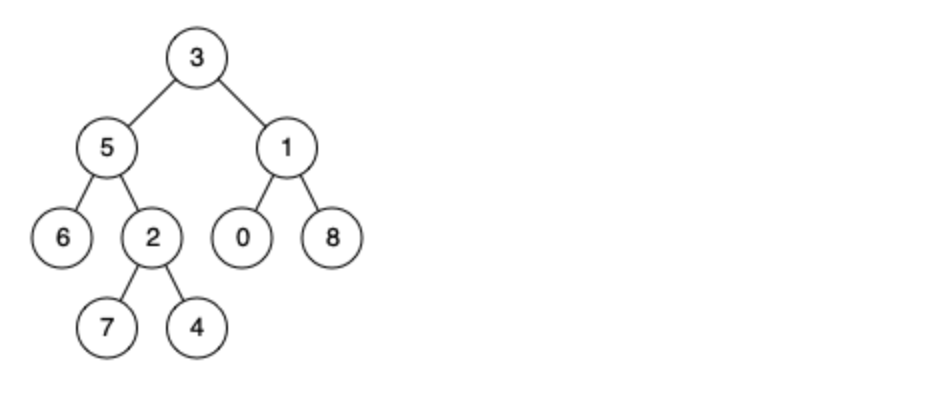
例如,给定如下二叉树: root = [3,5,1,6,2,0,8,null,null,7,4]
|
||
|
||
|
||
|
||
|
||
示例 1:
|
||
输入: root = [3,5,1,6,2,0,8,null,null,7,4], p = 5, q = 1
|
||
输出: 3
|
||
解释: 节点 5 和节点 1 的最近公共祖先是节点 3。
|
||
|
||
示例 2:
|
||
输入: root = [3,5,1,6,2,0,8,null,null,7,4], p = 5, q = 4
|
||
输出: 5
|
||
解释: 节点 5 和节点 4 的最近公共祖先是节点 5。因为根据定义最近公共祖先节点可以为节点本身。
|
||
|
||
说明:
|
||
* 所有节点的值都是唯一的。
|
||
* p、q 为不同节点且均存在于给定的二叉树中。
|
||
|
||
## 算法公开课
|
||
|
||
**[《代码随想录》算法视频公开课](https://programmercarl.com/other/gongkaike.html):[自底向上查找,有点难度! | LeetCode:236. 二叉树的最近公共祖先](https://www.bilibili.com/video/BV1jd4y1B7E2),相信结合视频再看本篇题解,更有助于大家对本题的理解**。
|
||
|
||
|
||
## 思路
|
||
|
||
遇到这个题目首先想的是要是能自底向上查找就好了,这样就可以找到公共祖先了。
|
||
|
||
那么二叉树如何可以自底向上查找呢?
|
||
|
||
回溯啊,二叉树回溯的过程就是从底到上。
|
||
|
||
后序遍历(左右中)就是天然的回溯过程,可以根据左右子树的返回值,来处理中节点的逻辑。
|
||
|
||
接下来就看如何判断一个节点是节点q和节点p的公共祖先呢。
|
||
|
||
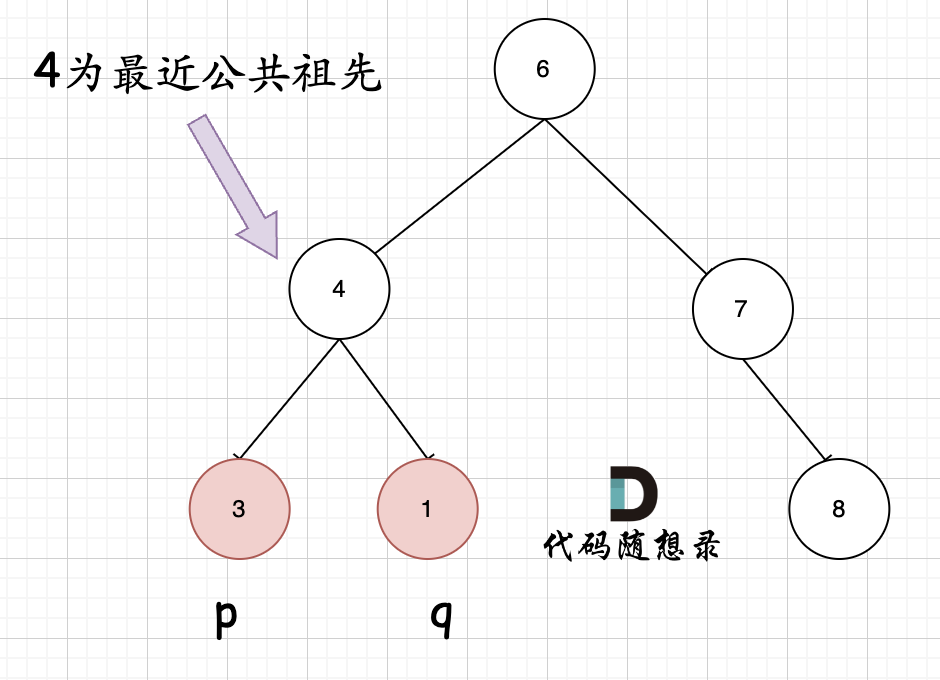
**首先最容易想到的一个情况:如果找到一个节点,发现左子树出现结点p,右子树出现节点q,或者 左子树出现结点q,右子树出现节点p,那么该节点就是节点p和q的最近公共祖先。** 即情况一:
|
||
|
||
|
||
|
||
判断逻辑是 如果递归遍历遇到q,就将q返回,遇到p 就将p返回,那么如果 左右子树的返回值都不为空,说明此时的中节点,一定是q 和p 的最近祖先。
|
||
|
||
那么有录友可能疑惑,会不会左子树 遇到q 返回,右子树也遇到q返回,这样并没有找到 q 和p的最近祖先。
|
||
|
||
这么想的录友,要审题了,题目强调:**二叉树节点数值是不重复的,而且一定存在 q 和 p**。
|
||
|
||
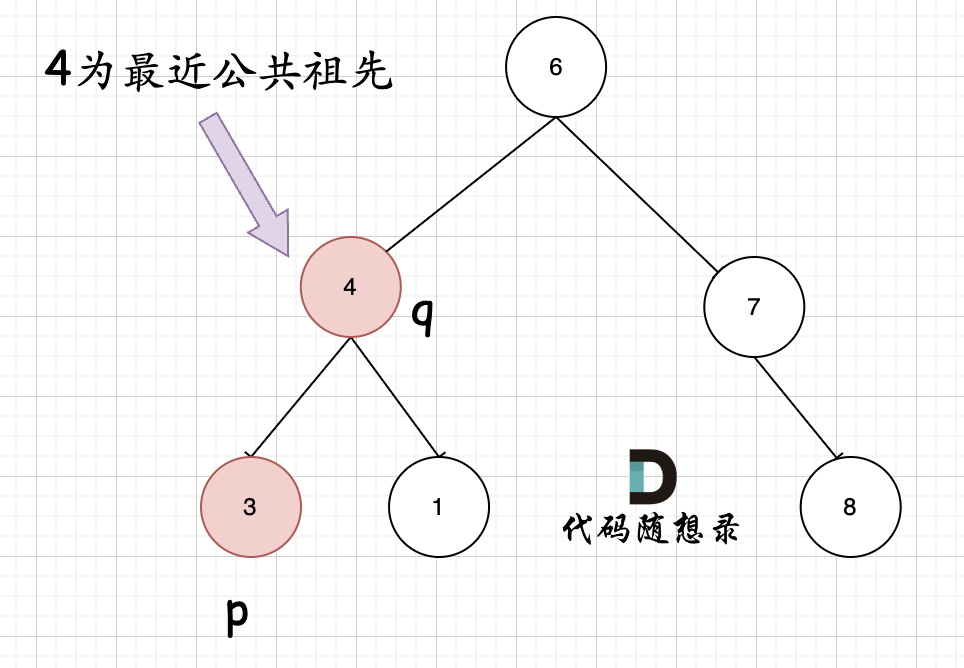
**但是很多人容易忽略一个情况,就是节点本身p(q),它拥有一个子孙节点q(p)。** 情况二:
|
||
|
||
|
||
|
||
其实情况一 和 情况二 代码实现过程都是一样的,也可以说,实现情况一的逻辑,顺便包含了情况二。
|
||
|
||
因为遇到 q 或者 p 就返回,这样也包含了 q 或者 p 本身就是 公共祖先的情况。
|
||
|
||
这一点是很多录友容易忽略的,在下面的代码讲解中,可以再去体会。
|
||
|
||
递归三部曲:
|
||
|
||
* 确定递归函数返回值以及参数
|
||
|
||
需要递归函数返回值,来告诉我们是否找到节点q或者p,那么返回值为bool类型就可以了。
|
||
|
||
但我们还要返回最近公共节点,可以利用上题目中返回值是TreeNode * ,那么如果遇到p或者q,就把q或者p返回,返回值不为空,就说明找到了q或者p。
|
||
|
||
代码如下:
|
||
|
||
```CPP
|
||
TreeNode* lowestCommonAncestor(TreeNode* root, TreeNode* p, TreeNode* q)
|
||
```
|
||
|
||
* 确定终止条件
|
||
|
||
遇到空的话,因为树都是空了,所以返回空。
|
||
|
||
那么我们来说一说,如果 root == q,或者 root == p,说明找到 q p ,则将其返回,这个返回值,后面在中节点的处理过程中会用到,那么中节点的处理逻辑,下面讲解。
|
||
|
||
代码如下:
|
||
|
||
```CPP
|
||
if (root == q || root == p || root == NULL) return root;
|
||
```
|
||
|
||
|
||
|
||
* 确定单层递归逻辑
|
||
|
||
值得注意的是 本题函数有返回值,是因为回溯的过程需要递归函数的返回值做判断,但本题我们依然要遍历树的所有节点。
|
||
|
||
我们在[二叉树:递归函数究竟什么时候需要返回值,什么时候不要返回值?](https://programmercarl.com/0112.路径总和.html)中说了 递归函数有返回值就是要遍历某一条边,但有返回值也要看如何处理返回值!
|
||
|
||
如果递归函数有返回值,如何区分要搜索一条边,还是搜索整个树呢?
|
||
|
||
搜索一条边的写法:
|
||
|
||
```CPP
|
||
if (递归函数(root->left)) return ;
|
||
|
||
if (递归函数(root->right)) return ;
|
||
```
|
||
|
||
搜索整个树写法:
|
||
|
||
```CPP
|
||
left = 递归函数(root->left); // 左
|
||
right = 递归函数(root->right); // 右
|
||
left与right的逻辑处理; // 中
|
||
```
|
||
|
||
看出区别了没?
|
||
|
||
**在递归函数有返回值的情况下:如果要搜索一条边,递归函数返回值不为空的时候,立刻返回,如果搜索整个树,直接用一个变量left、right接住返回值,这个left、right后序还有逻辑处理的需要,也就是后序遍历中处理中间节点的逻辑(也是回溯)**。
|
||
|
||
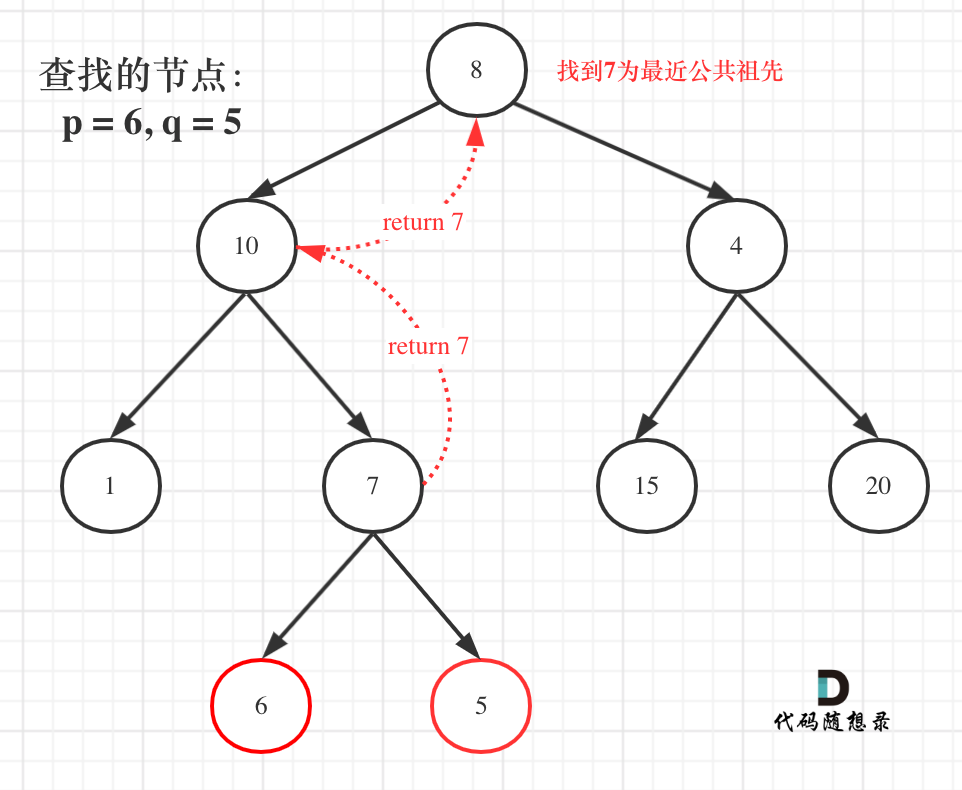
那么为什么要遍历整棵树呢?直观上来看,找到最近公共祖先,直接一路返回就可以了。
|
||
|
||
如图:
|
||
|
||
|
||
|
||
就像图中一样直接返回7。
|
||
|
||
但事实上还要遍历根节点右子树(即使此时已经找到了目标节点了),也就是图中的节点4、15、20。
|
||
|
||
因为在如下代码的后序遍历中,如果想利用left和right做逻辑处理, 不能立刻返回,而是要等left与right逻辑处理完之后才能返回。
|
||
|
||
```CPP
|
||
left = 递归函数(root->left); // 左
|
||
right = 递归函数(root->right); // 右
|
||
left与right的逻辑处理; // 中
|
||
```
|
||
|
||
所以此时大家要知道我们要遍历整棵树。知道这一点,对本题就有一定深度的理解了。
|
||
|
||
|
||
那么先用left和right接住左子树和右子树的返回值,代码如下:
|
||
|
||
```CPP
|
||
TreeNode* left = lowestCommonAncestor(root->left, p, q);
|
||
TreeNode* right = lowestCommonAncestor(root->right, p, q);
|
||
|
||
```
|
||
|
||
**如果left 和 right都不为空,说明此时root就是最近公共节点。这个比较好理解**
|
||
|
||
**如果left为空,right不为空,就返回right,说明目标节点是通过right返回的,反之依然**。
|
||
|
||
这里有的同学就理解不了了,为什么left为空,right不为空,目标节点通过right返回呢?
|
||
|
||
如图:
|
||
|
||
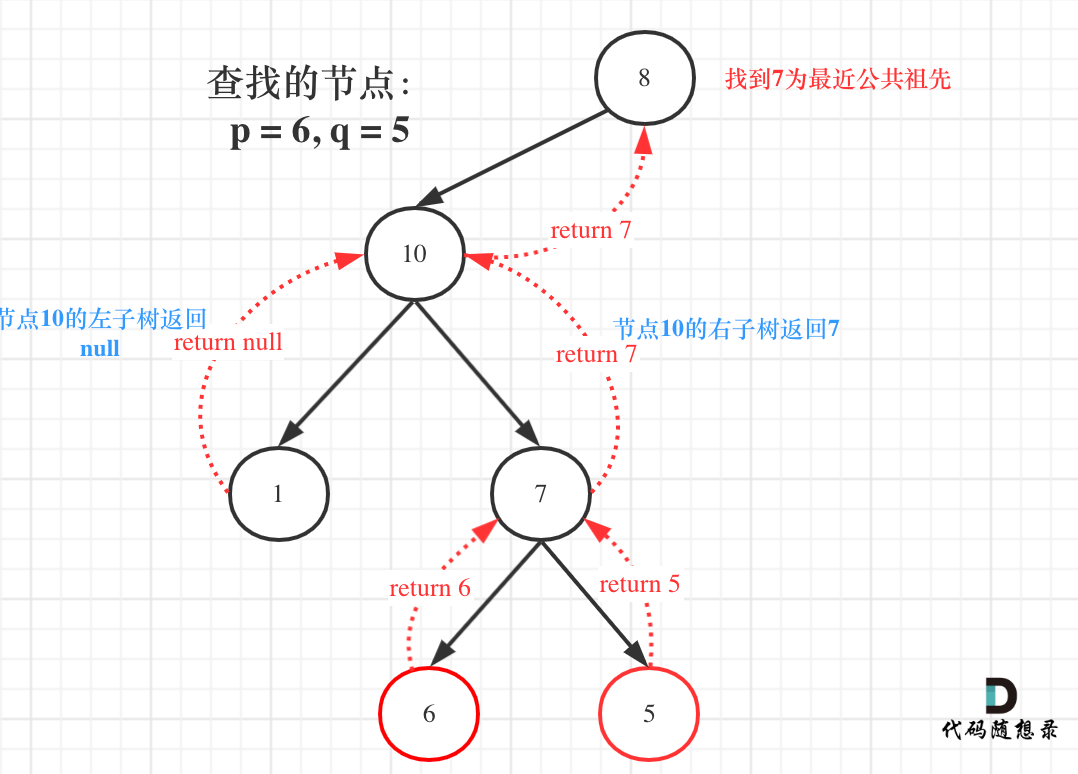
|
||
|
||
图中节点10的左子树返回null,右子树返回目标值7,那么此时节点10的处理逻辑就是把右子树的返回值(最近公共祖先7)返回上去!
|
||
|
||
这里也很重要,可能刷过这道题目的同学,都不清楚结果究竟是如何从底层一层一层传到头结点的。
|
||
|
||
那么如果left和right都为空,则返回left或者right都是可以的,也就是返回空。
|
||
|
||
代码如下:
|
||
|
||
```CPP
|
||
if (left == NULL && right != NULL) return right;
|
||
else if (left != NULL && right == NULL) return left;
|
||
else { // (left == NULL && right == NULL)
|
||
return NULL;
|
||
}
|
||
|
||
```
|
||
|
||
那么寻找最小公共祖先,完整流程图如下:
|
||
|
||
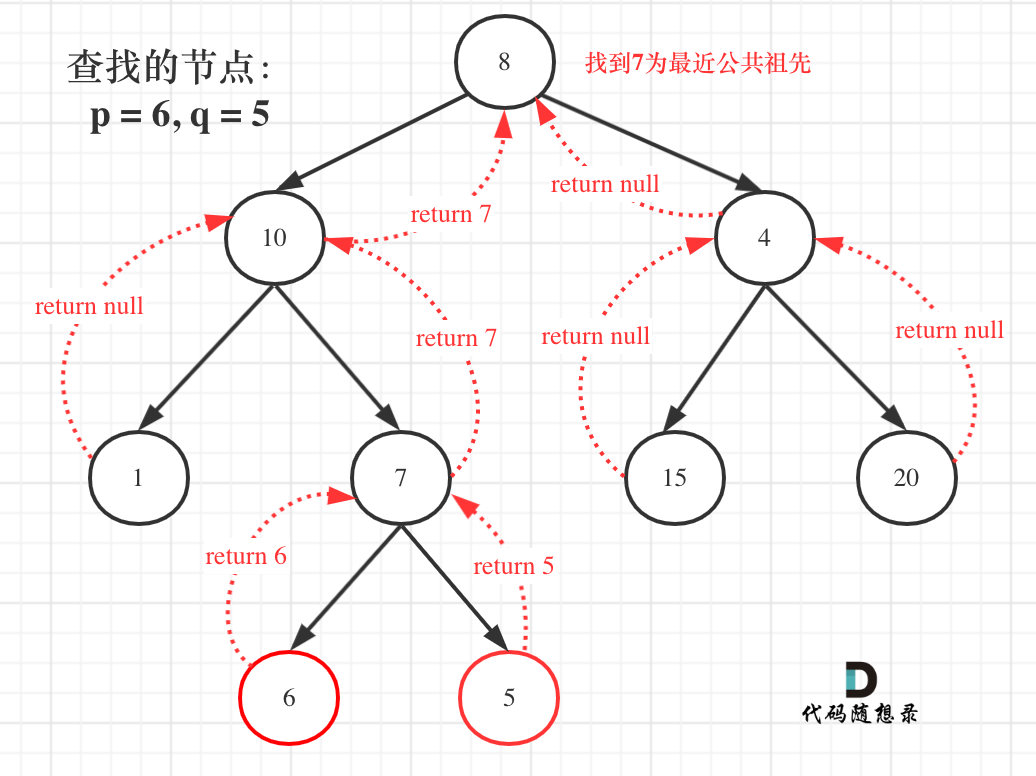
|
||
|
||
**从图中,大家可以看到,我们是如何回溯遍历整棵二叉树,将结果返回给头结点的!**
|
||
|
||
整体代码如下:
|
||
|
||
```CPP
|
||
class Solution {
|
||
public:
|
||
TreeNode* lowestCommonAncestor(TreeNode* root, TreeNode* p, TreeNode* q) {
|
||
if (root == q || root == p || root == NULL) return root;
|
||
TreeNode* left = lowestCommonAncestor(root->left, p, q);
|
||
TreeNode* right = lowestCommonAncestor(root->right, p, q);
|
||
if (left != NULL && right != NULL) return root;
|
||
|
||
if (left == NULL && right != NULL) return right;
|
||
else if (left != NULL && right == NULL) return left;
|
||
else { // (left == NULL && right == NULL)
|
||
return NULL;
|
||
}
|
||
|
||
}
|
||
};
|
||
```
|
||
|
||
稍加精简,代码如下:
|
||
|
||
```CPP
|
||
class Solution {
|
||
public:
|
||
TreeNode* lowestCommonAncestor(TreeNode* root, TreeNode* p, TreeNode* q) {
|
||
if (root == q || root == p || root == NULL) return root;
|
||
TreeNode* left = lowestCommonAncestor(root->left, p, q);
|
||
TreeNode* right = lowestCommonAncestor(root->right, p, q);
|
||
if (left != NULL && right != NULL) return root;
|
||
if (left == NULL) return right;
|
||
return left;
|
||
}
|
||
};
|
||
```
|
||
|
||
## 总结
|
||
|
||
这道题目刷过的同学未必真正了解这里面回溯的过程,以及结果是如何一层一层传上去的。
|
||
|
||
**那么我给大家归纳如下三点**:
|
||
|
||
1. 求最小公共祖先,需要从底向上遍历,那么二叉树,只能通过后序遍历(即:回溯)实现从底向上的遍历方式。
|
||
|
||
2. 在回溯的过程中,必然要遍历整棵二叉树,即使已经找到结果了,依然要把其他节点遍历完,因为要使用递归函数的返回值(也就是代码中的left和right)做逻辑判断。
|
||
|
||
3. 要理解如果返回值left为空,right不为空为什么要返回right,为什么可以用返回right传给上一层结果。
|
||
|
||
可以说这里每一步,都是有难度的,都需要对二叉树,递归和回溯有一定的理解。
|
||
|
||
本题没有给出迭代法,因为迭代法不适合模拟回溯的过程。理解递归的解法就够了。
|
||
|
||
|
||
## 其他语言版本
|
||
|
||
|
||
### Java
|
||
递归
|
||
```Java
|
||
class Solution {
|
||
public TreeNode lowestCommonAncestor(TreeNode root, TreeNode p, TreeNode q) {
|
||
if (root == null || root == p || root == q) { // 递归结束条件
|
||
return root;
|
||
}
|
||
|
||
// 后序遍历
|
||
TreeNode left = lowestCommonAncestor(root.left, p, q);
|
||
TreeNode right = lowestCommonAncestor(root.right, p, q);
|
||
|
||
if(left == null && right == null) { // 若未找到节点 p 或 q
|
||
return null;
|
||
}else if(left == null && right != null) { // 若找到一个节点
|
||
return right;
|
||
}else if(left != null && right == null) { // 若找到一个节点
|
||
return left;
|
||
}else { // 若找到两个节点
|
||
return root;
|
||
}
|
||
}
|
||
}
|
||
|
||
```
|
||
迭代
|
||
```Java
|
||
class Solution {
|
||
public TreeNode lowestCommonAncestor(TreeNode root, TreeNode p, TreeNode q) {
|
||
int max = Integer.MAX_VALUE;
|
||
Stack<TreeNode> st = new Stack<>();
|
||
TreeNode cur = root, pre = null;
|
||
while (cur != null || !st.isEmpty()) {
|
||
while (cur != null) {
|
||
st.push(cur);
|
||
cur = cur.left;
|
||
}
|
||
cur = st.pop();
|
||
if (cur.right == null || cur.right == pre) {
|
||
// p/q是 中/左 或者 中/右 , 返回中
|
||
if (cur == p || cur == q) {
|
||
if ((cur.left != null && cur.left.val == max) || (cur.right != null && cur.right.val == max)) {
|
||
return cur;
|
||
}
|
||
cur.val = max;
|
||
}
|
||
// p/q是 左/右 , 返回中
|
||
if (cur.left != null && cur.left.val == max && cur.right != null && cur.right.val == max) {
|
||
return cur;
|
||
}
|
||
// MAX_VALUE 往上传递
|
||
if ((cur.left != null && cur.left.val == max) || (cur.right != null && cur.right.val == max)) {
|
||
cur.val = max;
|
||
}
|
||
pre = cur;
|
||
cur = null;
|
||
} else {
|
||
st.push(cur);
|
||
cur = cur.right;
|
||
}
|
||
}
|
||
return null;
|
||
}
|
||
}
|
||
|
||
```
|
||
|
||
### Python
|
||
递归法(版本一)
|
||
```python
|
||
class Solution:
|
||
def lowestCommonAncestor(self, root, p, q):
|
||
if root == q or root == p or root is None:
|
||
return root
|
||
|
||
left = self.lowestCommonAncestor(root.left, p, q)
|
||
right = self.lowestCommonAncestor(root.right, p, q)
|
||
|
||
if left is not None and right is not None:
|
||
return root
|
||
|
||
if left is None and right is not None:
|
||
return right
|
||
elif left is not None and right is None:
|
||
return left
|
||
else:
|
||
return None
|
||
```
|
||
递归法(版本二)精简
|
||
```python
|
||
class Solution:
|
||
def lowestCommonAncestor(self, root, p, q):
|
||
if root == q or root == p or root is None:
|
||
return root
|
||
|
||
left = self.lowestCommonAncestor(root.left, p, q)
|
||
right = self.lowestCommonAncestor(root.right, p, q)
|
||
|
||
if left is not None and right is not None:
|
||
return root
|
||
|
||
if left is None:
|
||
return right
|
||
return left
|
||
|
||
```
|
||
### Go
|
||
|
||
```Go
|
||
func lowestCommonAncestor(root, p, q *TreeNode) *TreeNode {
|
||
// check
|
||
if root == nil {
|
||
return root
|
||
}
|
||
// 相等 直接返回root节点即可
|
||
if root == p || root == q {
|
||
return root
|
||
}
|
||
// Divide
|
||
left := lowestCommonAncestor(root.Left, p, q)
|
||
right := lowestCommonAncestor(root.Right, p, q)
|
||
|
||
// Conquer
|
||
// 左右两边都不为空,则根节点为祖先
|
||
if left != nil && right != nil {
|
||
return root
|
||
}
|
||
if left != nil {
|
||
return left
|
||
}
|
||
if right != nil {
|
||
return right
|
||
}
|
||
return nil
|
||
}
|
||
```
|
||
|
||
### JavaScript
|
||
|
||
```javascript
|
||
var lowestCommonAncestor = function(root, p, q) {
|
||
// 使用递归的方法
|
||
// 需要从下到上,所以使用后序遍历
|
||
// 1. 确定递归的函数
|
||
const travelTree = function(root,p,q) {
|
||
// 2. 确定递归终止条件
|
||
if(root === null || root === p || root === q) {
|
||
return root;
|
||
}
|
||
// 3. 确定递归单层逻辑
|
||
let left = travelTree(root.left,p,q);
|
||
let right = travelTree(root.right,p,q);
|
||
if(left !== null && right !== null) {
|
||
return root;
|
||
}
|
||
if(left === null) {
|
||
return right;
|
||
}
|
||
return left;
|
||
}
|
||
return travelTree(root,p,q);
|
||
};
|
||
```
|
||
|
||
### TypeScript
|
||
|
||
```typescript
|
||
function lowestCommonAncestor(root: TreeNode | null, p: TreeNode | null, q: TreeNode | null): TreeNode | null {
|
||
if (root === null || root === p || root === q) return root;
|
||
const left = lowestCommonAncestor(root.left, p, q);
|
||
const right = lowestCommonAncestor(root.right, p, q);
|
||
if (left !== null && right !== null) return root;
|
||
if (left !== null) return left;
|
||
if (right !== null) return right;
|
||
return null;
|
||
};
|
||
```
|
||
|
||
### Scala
|
||
|
||
```scala
|
||
object Solution {
|
||
def lowestCommonAncestor(root: TreeNode, p: TreeNode, q: TreeNode): TreeNode = {
|
||
// 递归结束条件
|
||
if (root == null || root == p || root == q) {
|
||
return root
|
||
}
|
||
|
||
var left = lowestCommonAncestor(root.left, p, q)
|
||
var right = lowestCommonAncestor(root.right, p, q)
|
||
|
||
if (left != null && right != null) return root
|
||
if (left == null) return right
|
||
left
|
||
}
|
||
}
|
||
```
|
||
|
||
### Rust
|
||
|
||
```rust
|
||
impl Solution {
|
||
pub fn lowest_common_ancestor(
|
||
root: Option<Rc<RefCell<TreeNode>>>,
|
||
p: Option<Rc<RefCell<TreeNode>>>,
|
||
q: Option<Rc<RefCell<TreeNode>>>,
|
||
) -> Option<Rc<RefCell<TreeNode>>> {
|
||
if root.is_none() {
|
||
return root;
|
||
}
|
||
if Rc::ptr_eq(root.as_ref().unwrap(), p.as_ref().unwrap())
|
||
|| Rc::ptr_eq(root.as_ref().unwrap(), q.as_ref().unwrap()) {
|
||
return root;
|
||
}
|
||
let left = Self::lowest_common_ancestor(
|
||
root.as_ref().unwrap().borrow().left.clone(),
|
||
p.clone(),
|
||
q.clone(),
|
||
);
|
||
let right =
|
||
Self::lowest_common_ancestor(root.as_ref().unwrap().borrow().right.clone(), p, q);
|
||
match (&left, &right) {
|
||
(None, Some(_)) => right,
|
||
(Some(_), Some(_)) => root,
|
||
_ => left,
|
||
}
|
||
}
|
||
}
|
||
```
|
||
### C#
|
||
```csharp
|
||
public TreeNode LowestCommonAncestor(TreeNode root, TreeNode p, TreeNode q)
|
||
{
|
||
if (root == null || root == p || root == q) return root;
|
||
TreeNode left = LowestCommonAncestor(root.left, p, q);
|
||
TreeNode right = LowestCommonAncestor(root.right, p, q);
|
||
if (left != null && right != null) return root;
|
||
if (left == null && right != null) return right;
|
||
if (left != null && right == null) return left;
|
||
return null;
|
||
}
|
||
```
|
||
|
||
|