mirror of
https://github.com/youngyangyang04/leetcode-master.git
synced 2026-02-02 18:39:09 +08:00

539 lines
19 KiB
Markdown
539 lines
19 KiB
Markdown
|
||
<p align="center"><strong><a href="./qita/join.md">参与本项目</a>,贡献其他语言版本的代码,拥抱开源,让更多学习算法的小伙伴们受益!</strong></p>
|
||
|
||
# Bellman_ford 队列优化算法(又名SPFA)
|
||
|
||
[卡码网:94. 城市间货物运输 I](https://kamacoder.com/problempage.php?pid=1152)
|
||
|
||
题目描述
|
||
|
||
某国为促进城市间经济交流,决定对货物运输提供补贴。共有 n 个编号为 1 到 n 的城市,通过道路网络连接,网络中的道路仅允许从某个城市单向通行到另一个城市,不能反向通行。
|
||
|
||
|
||
网络中的道路都有各自的运输成本和政府补贴,道路的权值计算方式为:运输成本 - 政府补贴。
|
||
|
||
权值为正表示扣除了政府补贴后运输货物仍需支付的费用;权值为负则表示政府的补贴超过了支出的运输成本,实际表现为运输过程中还能赚取一定的收益。
|
||
|
||
|
||
请找出从城市 1 到城市 n 的所有可能路径中,综合政府补贴后的最低运输成本。
|
||
|
||
如果最低运输成本是一个负数,它表示在遵循最优路径的情况下,运输过程中反而能够实现盈利。
|
||
|
||
城市 1 到城市 n 之间可能会出现没有路径的情况,同时保证道路网络中不存在任何负权回路。
|
||
|
||
> 负权回路是指一系列道路的总权值为负,这样的回路使得通过反复经过回路中的道路,理论上可以无限地减少总成本或无限地增加总收益。
|
||
|
||
输入描述
|
||
|
||
第一行包含两个正整数,第一个正整数 n 表示该国一共有 n 个城市,第二个整数 m 表示这些城市中共有 m 条道路。
|
||
|
||
接下来为 m 行,每行包括三个整数,s、t 和 v,表示 s 号城市运输货物到达 t 号城市,道路权值为 v(单向图)。
|
||
|
||
输出描述
|
||
|
||
如果能够从城市 1 到连通到城市 n, 请输出一个整数,表示运输成本。如果该整数是负数,则表示实现了盈利。如果从城市 1 没有路径可达城市 n,请输出 "unconnected"。
|
||
|
||
输入示例:
|
||
|
||
```
|
||
6 7
|
||
5 6 -2
|
||
1 2 1
|
||
5 3 1
|
||
2 5 2
|
||
2 4 -3
|
||
4 6 4
|
||
1 3 5
|
||
```
|
||
|
||
## 背景
|
||
|
||
本题我们来系统讲解 Bellman_ford 队列优化算法 ,也叫SPFA算法(Shortest Path Faster Algorithm)。
|
||
|
||
> SPFA的称呼来自 1994年西南交通大学段凡丁的论文,其实Bellman_ford 提出后不久 (20世纪50年代末期) 就有队列优化的版本,国际上不承认这个算法是是国内提出的。 所以国际上一般称呼 该算法为 Bellman_ford 队列优化算法(Queue improved Bellman-Ford)
|
||
|
||
大家知道以上来历,知道 SPFA 和 Bellman_ford 队列优化算法 指的都是一个算法就好。
|
||
|
||
如果大家还不够了解 Bellman_ford 算法,强烈建议按照《代码随想录》的顺序学习,否则可能看不懂下面的讲解。
|
||
|
||
大家可以发现 Bellman_ford 算法每次松弛 都是对所有边进行松弛。
|
||
|
||
但真正有效的松弛,是基于已经计算过的节点在做的松弛。
|
||
|
||
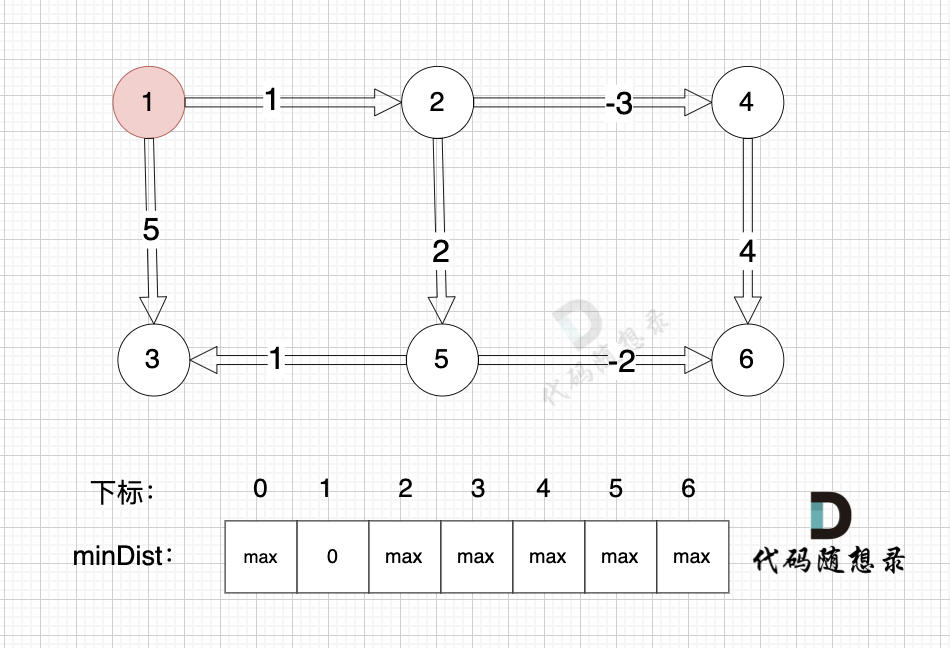
给大家举一个例子:
|
||
|
||
|
||
|
||
本图中,对所有边进行松弛,真正有效的松弛,只有松弛 边(节点1->节点2) 和 边(节点1->节点3) 。
|
||
|
||
而松弛 边(节点4->节点6) ,边(节点5->节点3)等等 都是无效的操作,因为 节点4 和 节点 5 都是没有被计算过的节点。
|
||
|
||
|
||
所以 Bellman_ford 算法 每次都是对所有边进行松弛,其实是多做了一些无用功。
|
||
|
||
**只需要对 上一次松弛的时候更新过的节点作为出发节点所连接的边 进行松弛就够了**。
|
||
|
||
基于以上思路,如何记录 上次松弛的时候更新过的节点呢?
|
||
|
||
用队列来记录。(其实用栈也行,对元素顺序没有要求)
|
||
|
||
## 模拟过程
|
||
|
||
接下来来举例这个队列是如何工作的。
|
||
|
||
以示例给出的所有边为例:
|
||
|
||
```
|
||
5 6 -2
|
||
1 2 1
|
||
5 3 1
|
||
2 5 2
|
||
2 4 -3
|
||
4 6 4
|
||
1 3 5
|
||
```
|
||
|
||
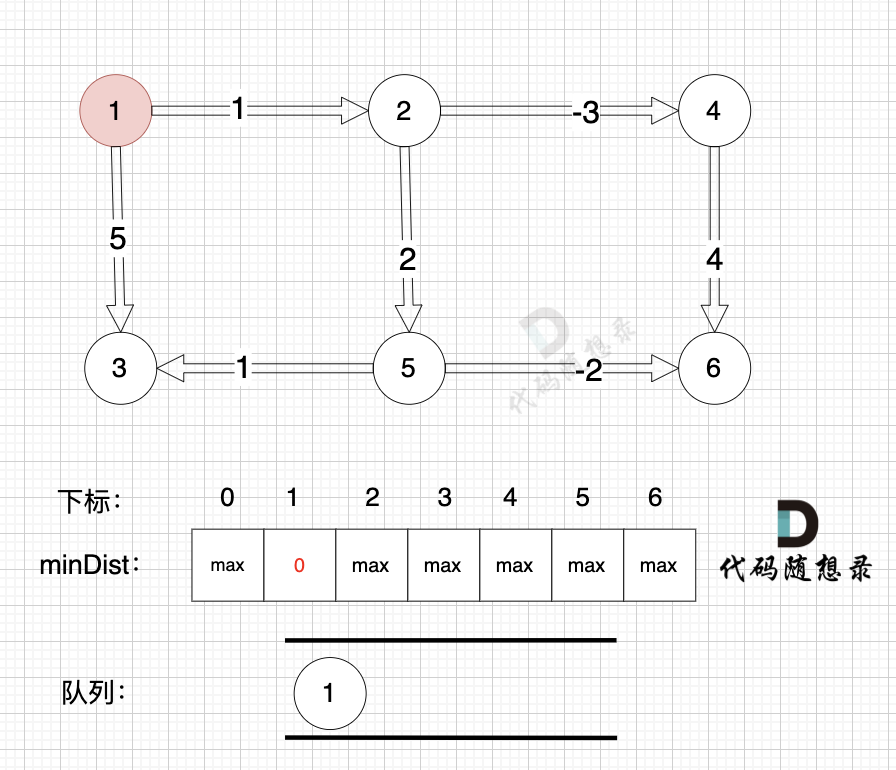
我们依然使用**minDist数组来表达 起点到各个节点的最短距离**,例如minDist[3] = 5 表示起点到达节点3 的最小距离为5
|
||
|
||
初始化,起点为节点1, 起点到起点的最短距离为0,所以minDist[1] 为 0。 将节点1 加入队列 (下次松弛从节点1开始)
|
||
|
||
|
||
|
||
------------
|
||
|
||
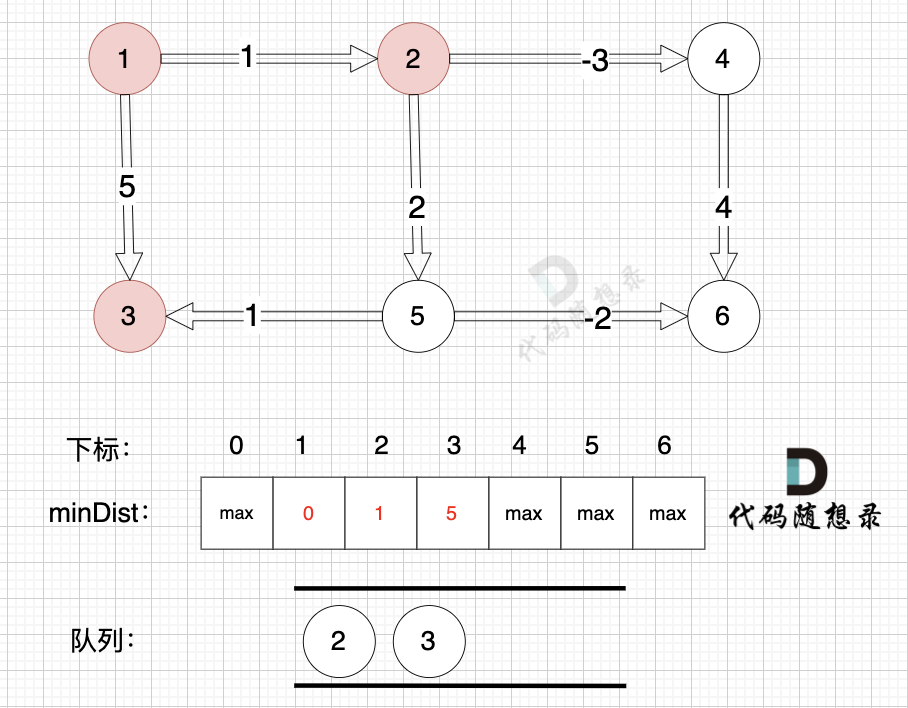
从队列里取出节点1,松弛节点1 作为出发点连接的边(节点1 -> 节点2)和边(节点1 -> 节点3)
|
||
|
||
边:节点1 -> 节点2,权值为1 ,minDist[2] > minDist[1] + 1 ,更新 minDist[2] = minDist[1] + 1 = 0 + 1 = 1 。
|
||
|
||
边:节点1 -> 节点3,权值为5 ,minDist[3] > minDist[1] + 5,更新 minDist[3] = minDist[1] + 5 = 0 + 5 = 5。
|
||
|
||
将节点2、节点3 加入队列,如图:
|
||
|
||
|
||
|
||
|
||
-----------------
|
||
|
||
|
||
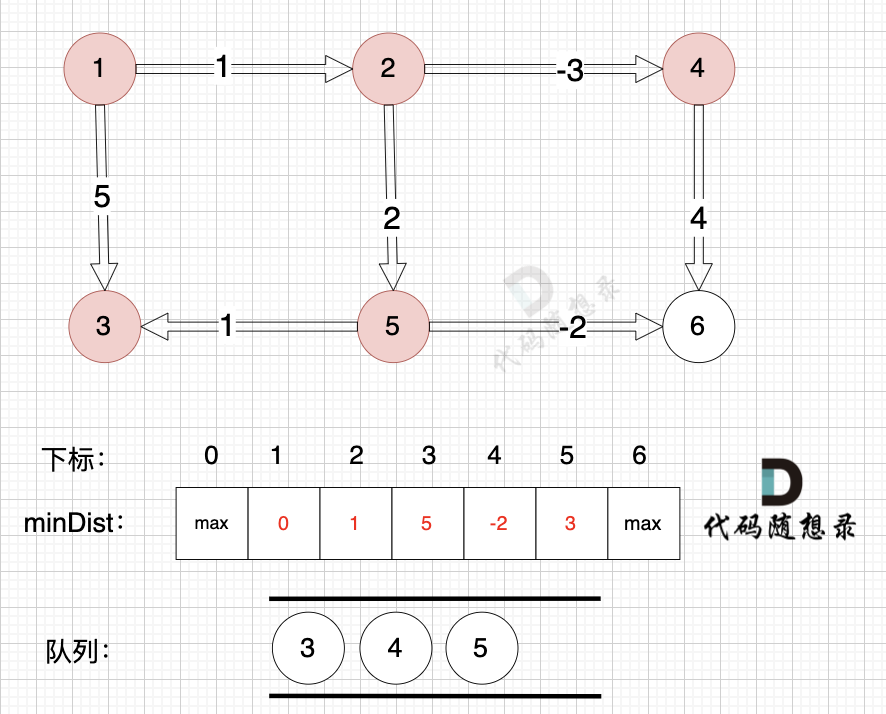
从队列里取出节点2,松弛节点2 作为出发点连接的边(节点2 -> 节点4)和边(节点2 -> 节点5)
|
||
|
||
边:节点2 -> 节点4,权值为1 ,minDist[4] > minDist[2] + (-3) ,更新 minDist[4] = minDist[2] + (-3) = 1 + (-3) = -2 。
|
||
|
||
边:节点2 -> 节点5,权值为2 ,minDist[5] > minDist[2] + 2 ,更新 minDist[5] = minDist[2] + 2 = 1 + 2 = 3 。
|
||
|
||
|
||
将节点4,节点5 加入队列,如图:
|
||
|
||
|
||
|
||
|
||
--------------------
|
||
|
||
|
||
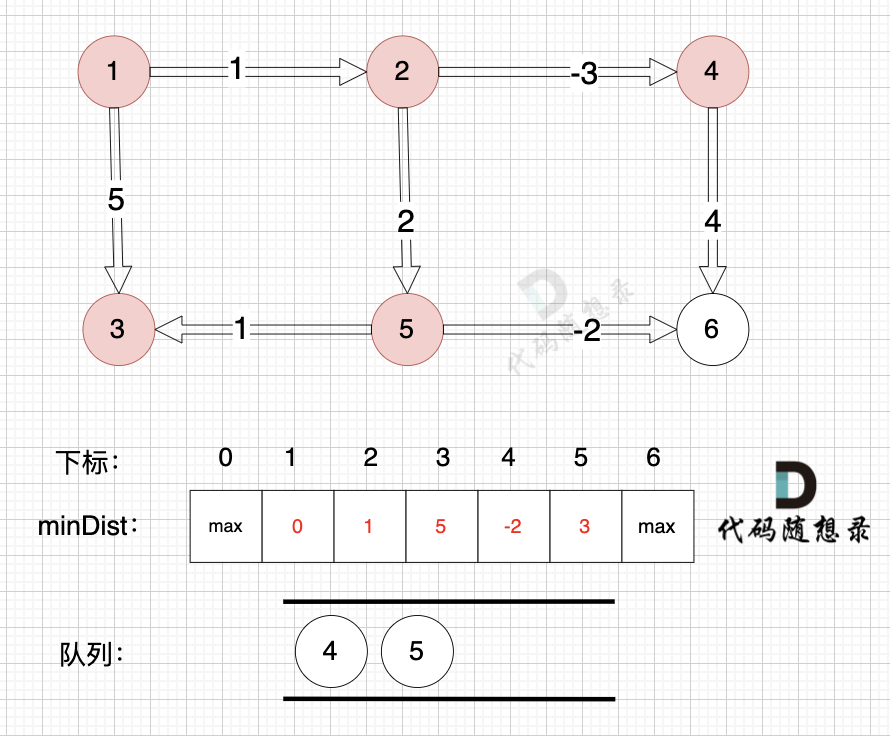
从队列里出去节点3,松弛节点3 作为出发点连接的边。
|
||
|
||
因为没有从节点3作为出发点的边,所以这里就从队列里取出节点3就好,不用做其他操作,如图:
|
||
|
||
|
||
|
||
|
||
------------
|
||
|
||
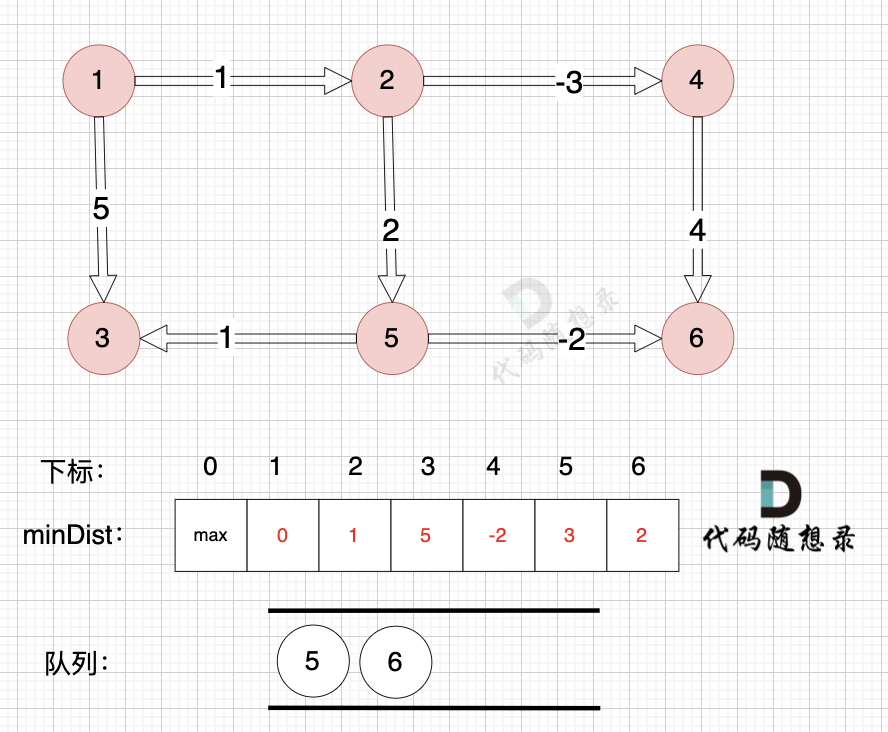
从队列中取出节点4,松弛节点4作为出发点连接的边(节点4 -> 节点6)
|
||
|
||
边:节点4 -> 节点6,权值为4 ,minDist[6] > minDist[4] + 4,更新 minDist[6] = minDist[4] + 4 = -2 + 4 = 2 。
|
||
|
||
将节点6加入队列
|
||
|
||
如图:
|
||
|
||
|
||
|
||
|
||
---------------
|
||
|
||
从队列中取出节点5,松弛节点5作为出发点连接的边(节点5 -> 节点3),边(节点5 -> 节点6)
|
||
|
||
边:节点5 -> 节点3,权值为1 ,minDist[3] > minDist[5] + 1 ,更新 minDist[3] = minDist[5] + 1 = 3 + 1 = 4
|
||
|
||
边:节点5 -> 节点6,权值为-2 ,minDist[6] > minDist[5] + (-2) ,更新 minDist[6] = minDist[5] + (-2) = 3 - 2 = 1
|
||
|
||
如图,将节点3加入队列,因为节点6已经在队列里,所以不用重复添加
|
||
|
||

|
||
|
||
所以我们在加入队列的过程可以有一个优化,**用visited数组记录已经在队列里的元素,已经在队列的元素不用重复加入**
|
||
|
||
--------------
|
||
|
||
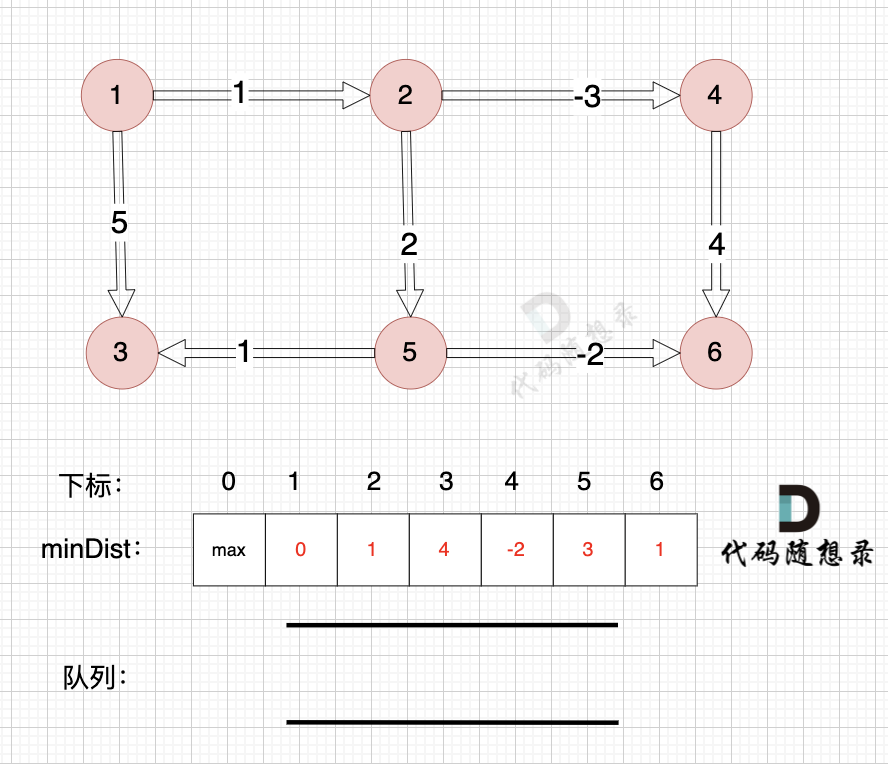
从队列中取出节点6,松弛节点6 作为出发点连接的边。
|
||
|
||
节点6作为终点,没有可以出发的边。
|
||
|
||
同理从队列中取出节点3,也没有可以出发的边
|
||
|
||
所以直接从队列中取出,如图:
|
||
|
||
|
||
|
||
----------
|
||
|
||
这样我们就完成了基于队列优化的bellman_ford的算法模拟过程。
|
||
|
||
大家可以发现 基于队列优化的算法,要比bellman_ford 算法 减少很多无用的松弛情况,特别是对于边数众多的大图 优化效果明显。
|
||
|
||
了解了大体流程,我们再看代码应该怎么写。
|
||
|
||
在上面模拟过程中,我们每次都要知道 一个节点作为出发点连接了哪些节点。
|
||
|
||
如果想方便知道这些数据,就需要使用邻接表来存储这个图,如果对于邻接表不了解的话,可以看 [kama0047.参会dijkstra堆](./0047.参会dijkstra堆.md) 中 图的存储 部分。
|
||
|
||
|
||
整体代码如下:
|
||
|
||
```
|
||
#include <iostream>
|
||
#include <vector>
|
||
#include <queue>
|
||
#include <list>
|
||
#include <climits>
|
||
using namespace std;
|
||
|
||
struct Edge { //邻接表
|
||
int to; // 链接的节点
|
||
int val; // 边的权重
|
||
|
||
Edge(int t, int w): to(t), val(w) {} // 构造函数
|
||
};
|
||
|
||
|
||
int main() {
|
||
int n, m, p1, p2, val;
|
||
cin >> n >> m;
|
||
|
||
vector<list<Edge>> grid(n + 1);
|
||
|
||
vector<bool> isInQueue(n + 1); // 加入优化,已经在队里里的元素不用重复添加
|
||
|
||
// 将所有边保存起来
|
||
for(int i = 0; i < m; i++){
|
||
cin >> p1 >> p2 >> val;
|
||
// p1 指向 p2,权值为 val
|
||
grid[p1].push_back(Edge(p2, val));
|
||
}
|
||
int start = 1; // 起点
|
||
int end = n; // 终点
|
||
|
||
vector<int> minDist(n + 1 , INT_MAX);
|
||
minDist[start] = 0;
|
||
|
||
queue<int> que;
|
||
que.push(start);
|
||
|
||
while (!que.empty()) {
|
||
|
||
int node = que.front(); que.pop();
|
||
isInQueue[node] = false; // 从队列里取出的时候,要取消标记,我们只保证已经在队列里的元素不用重复加入
|
||
for (Edge edge : grid[node]) {
|
||
int from = node;
|
||
int to = edge.to;
|
||
int value = edge.val;
|
||
if (minDist[to] > minDist[from] + value) { // 开始松弛
|
||
minDist[to] = minDist[from] + value;
|
||
if (isInQueue[to] == false) { // 已经在队列里的元素不用重复添加
|
||
que.push(to);
|
||
isInQueue[to] = true;
|
||
}
|
||
}
|
||
}
|
||
|
||
}
|
||
if (minDist[end] == INT_MAX) cout << "unconnected" << endl; // 不能到达终点
|
||
else cout << minDist[end] << endl; // 到达终点最短路径
|
||
}
|
||
|
||
```
|
||
|
||
## 效率分析
|
||
|
||
队列优化版Bellman_ford 的时间复杂度 并不稳定,效率高低依赖于图的结构。
|
||
|
||
例如 如果是一个双向图,且每一个节点和所有其他节点都相连的话,那么该算法的时间复杂度就接近于 Bellman_ford 的 O(N * E) N 为节点数量,E为边的数量。
|
||
|
||
在这种图中,每一个节点都会重复加入队列 n - 1次,因为 这种图中 每个节点 都有 n-1 条指向该节点的边,每条边指向该节点,就需要加入一次队列。(如果这里看不懂,可以在重温一下代码逻辑)
|
||
|
||
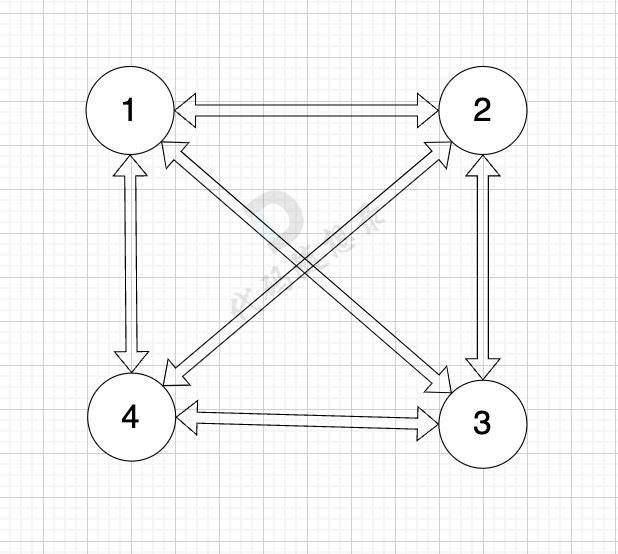
至于为什么 双向图且每一个节点和所有其他节点都相连的话,每个节点 都有 n-1 条指向该节点的边, 我再来举个例子,如图:
|
||
|
||
|
||
|
||
图中 每个节点都与其他所有节点相连,节点数n 为 4,每个节点都有3条指向该节点的边,即入度为3。
|
||
|
||
n为其他数值的时候,也是一样的。
|
||
|
||
当然这种图是比较极端的情况,也是最稠密的图。
|
||
|
||
所以如果图越稠密,则 SPFA的效率越接近与 Bellman_ford。
|
||
|
||
反之,图越稀疏,SPFA的效率就越高。
|
||
|
||
一般来说,SPFA 的时间复杂度为 O(K * N) K 为不定值,因为 节点需要计入几次队列取决于 图的稠密度。
|
||
|
||
如果图是一条线形图且单向的话,每个节点的入度为1,那么只需要加入一次队列,这样时间复杂度就是 O(N)。
|
||
|
||
所以 SPFA 在最坏的情况下是 O(N * E),但 一般情况下 时间复杂度为 O(K * N)。
|
||
|
||
尽管如此,**以上分析都是 理论上的时间复杂度分析**。
|
||
|
||
并没有计算 出队列 和 入队列的时间消耗。 因为这个在不同语言上 时间消耗也是不一定的。
|
||
|
||
以C++为例,以下两段代码理论上,时间复杂度都是 O(n) :
|
||
|
||
```CPP
|
||
for (long long i = 0; i < n; i++) {
|
||
k++;
|
||
}
|
||
|
||
```
|
||
|
||
```CPP
|
||
for (long long i = 0; i < n; i++) {
|
||
que.push(i);
|
||
que.front();
|
||
que.pop();
|
||
}
|
||
|
||
```
|
||
|
||
在 MacBook Pro (13-inch, M1, 2020) 机器上分别测试这两段代码的时间消耗情况:
|
||
|
||
* n = 10^4,第一段代码的时间消耗:1ms,第二段代码的时间消耗: 4 ms
|
||
* n = 10^5,第一段代码的时间消耗:1ms,第二段代码的时间消耗: 13 ms
|
||
* n = 10^6,第一段代码的时间消耗:4ms,第二段代码的时间消耗: 59 ms
|
||
* n = 10^7,第一段代码的时间消耗: 24ms,第二段代码的时间消耗: 463 ms
|
||
* n = 10^8,第一段代码的时间消耗: 135ms,第二段代码的时间消耗: 4268 ms
|
||
|
||
在这里就可以看出 出队列和入队列 其实也是十分耗时的。
|
||
|
||
SPFA(队列优化版Bellman_ford) 在理论上 时间复杂度更胜一筹,但实际上,也要看图的稠密程度,如果 图很大且非常稠密的情况下,虽然 SPFA的时间复杂度接近Bellman_ford,但实际时间消耗 可能是 SPFA耗时更多。
|
||
|
||
针对这种情况,我在后面题目讲解中,会特别加入稠密图的测试用例来给大家讲解。
|
||
|
||
|
||
## 拓展
|
||
|
||
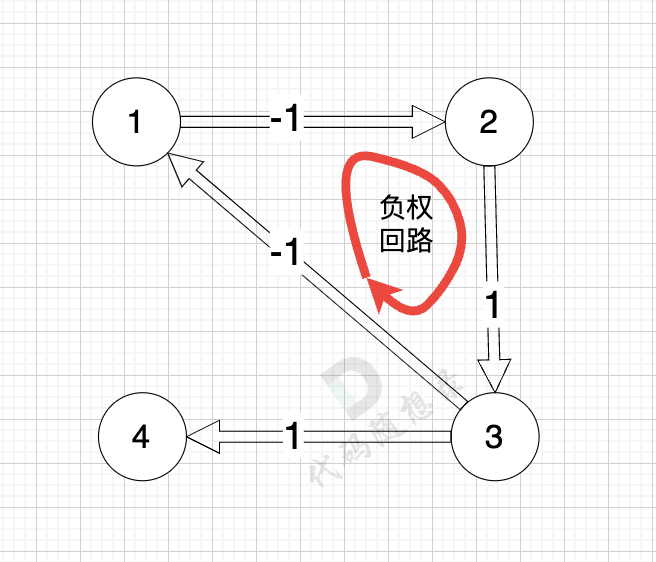
这里可能有录友疑惑,`while (!que.empty())` 队里里 会不会造成死循环? 例如 图中有环,这样一直有元素加入到队列里?
|
||
|
||
其实有环的情况,要看它是 正权回路 还是 负权回路。
|
||
|
||
题目描述中,已经说了,本题没有 负权回路 。
|
||
|
||
如图:
|
||
|
||
|
||
|
||
正权回路 就是有环,但环的总权值为正数。
|
||
|
||
在有环且只有正权回路的情况下,即使元素重复加入队列,最后,也会因为 所有边都松弛后,节点数值(minDist数组)不在发生变化了 而终止。
|
||
|
||
(而且有重复元素加入队列是正常的,多条路径到达同一个节点,节点必要要选择一个最短的路径,而这个节点就会重复加入队列进行判断,选一个最短的)
|
||
|
||
在[0094.城市间货物运输I](./0094.城市间货物运输I.md) 中我们讲过对所有边 最多松弛 n -1 次,就一定可以求出所有起点到所有节点的最小距离即 minDist数组。
|
||
|
||
即使再松弛n次以上, 所有起点到所有节点的最小距离(minDist数组) 不会再变了。 (这里如果不理解,建议认真看[0094.城市间货物运输I](./0094.城市间货物运输I.md)讲解)
|
||
|
||
所以本题我们使用队列优化,有元素重复加入队列,也会因为最后 minDist数组 不会在发生变化而终止。
|
||
|
||
节点再加入队列,需要有松弛的行为, 而 每个节点已经都计算出来 起点到该节点的最短路径,那么就不会有 执行这个判断条件`if (minDist[to] > minDist[from] + value)`,从而不会有新的节点加入到队列。
|
||
|
||
但如果本题有 负权回路,那情况就不一样了,我在下一题目讲解中,会重点讲解 负权回路 带来的变化。
|
||
|
||
|
||
|
||
## 其他语言版本
|
||
|
||
### Java
|
||
```Java
|
||
import java.util.*;
|
||
|
||
public class Main {
|
||
|
||
// Define an inner class Edge
|
||
static class Edge {
|
||
int from;
|
||
int to;
|
||
int val;
|
||
public Edge(int from, int to, int val) {
|
||
this.from = from;
|
||
this.to = to;
|
||
this.val = val;
|
||
}
|
||
}
|
||
|
||
public static void main(String[] args) {
|
||
// Input processing
|
||
Scanner sc = new Scanner(System.in);
|
||
int n = sc.nextInt();
|
||
int m = sc.nextInt();
|
||
List<List<Edge>> graph = new ArrayList<>();
|
||
|
||
for (int i = 0; i <= n; i++) {
|
||
graph.add(new ArrayList<>());
|
||
}
|
||
|
||
for (int i = 0; i < m; i++) {
|
||
int from = sc.nextInt();
|
||
int to = sc.nextInt();
|
||
int val = sc.nextInt();
|
||
graph.get(from).add(new Edge(from, to, val));
|
||
}
|
||
|
||
// Declare the minDist array to record the minimum distance form current node to the original node
|
||
int[] minDist = new int[n + 1];
|
||
Arrays.fill(minDist, Integer.MAX_VALUE);
|
||
minDist[1] = 0;
|
||
|
||
// Declare a queue to store the updated nodes instead of traversing all nodes each loop for more efficiency
|
||
Queue<Integer> queue = new LinkedList<>();
|
||
queue.offer(1);
|
||
|
||
// Declare a boolean array to record if the current node is in the queue to optimise the processing
|
||
boolean[] isInQueue = new boolean[n + 1];
|
||
|
||
while (!queue.isEmpty()) {
|
||
int curNode = queue.poll();
|
||
isInQueue[curNode] = false; // Represents the current node is not in the queue after being polled
|
||
for (Edge edge : graph.get(curNode)) {
|
||
if (minDist[edge.to] > minDist[edge.from] + edge.val) { // Start relaxing the edge
|
||
minDist[edge.to] = minDist[edge.from] + edge.val;
|
||
if (!isInQueue[edge.to]) { // Don't add the node if it's already in the queue
|
||
queue.offer(edge.to);
|
||
isInQueue[edge.to] = true;
|
||
}
|
||
}
|
||
}
|
||
}
|
||
|
||
// Outcome printing
|
||
if (minDist[n] == Integer.MAX_VALUE) {
|
||
System.out.println("unconnected");
|
||
} else {
|
||
System.out.println(minDist[n]);
|
||
}
|
||
}
|
||
}
|
||
|
||
```
|
||
|
||
### Python
|
||
```Python
|
||
import collections
|
||
|
||
def main():
|
||
n, m = map(int, input().strip().split())
|
||
edges = [[] for _ in range(n + 1)]
|
||
for _ in range(m):
|
||
src, dest, weight = map(int, input().strip().split())
|
||
edges[src].append([dest, weight])
|
||
|
||
minDist = [float("inf")] * (n + 1)
|
||
minDist[1] = 0
|
||
que = collections.deque([1])
|
||
visited = [False] * (n + 1)
|
||
visited[1] = True
|
||
|
||
while que:
|
||
cur = que.popleft()
|
||
visited[cur] = False
|
||
for dest, weight in edges[cur]:
|
||
if minDist[cur] != float("inf") and minDist[cur] + weight < minDist[dest]:
|
||
minDist[dest] = minDist[cur] + weight
|
||
if visited[dest] == False:
|
||
que.append(dest)
|
||
visited[dest] = True
|
||
|
||
if minDist[-1] == float("inf"):
|
||
return "unconnected"
|
||
return minDist[-1]
|
||
|
||
if __name__ == "__main__":
|
||
print(main())
|
||
```
|
||
### Go
|
||
|
||
### Rust
|
||
|
||
### JavaScript
|
||
|
||
```js
|
||
async function main() {
|
||
// 輸入
|
||
const rl = require('readline').createInterface({ input: process.stdin })
|
||
const iter = rl[Symbol.asyncIterator]()
|
||
const readline = async () => (await iter.next()).value
|
||
const [n, m] = (await readline()).split(" ").map(Number)
|
||
const grid = {}
|
||
for (let i = 0 ; i < m ; i++) {
|
||
const [src, desc, w] = (await readline()).split(" ").map(Number)
|
||
if (grid.hasOwnProperty(src)) {
|
||
grid[src].push([desc, w])
|
||
} else {
|
||
grid[src] = [[desc, w]]
|
||
}
|
||
}
|
||
const minDist = Array.from({length: n + 1}, () => Number.MAX_VALUE)
|
||
|
||
// 起始點
|
||
minDist[1] = 0
|
||
|
||
const q = [1]
|
||
const visited = Array.from({length: n + 1}, () => false)
|
||
|
||
while (q.length) {
|
||
const src = q.shift()
|
||
const neighbors = grid[src]
|
||
visited[src] = false
|
||
if (neighbors) {
|
||
for (const [desc, w] of neighbors) {
|
||
if (minDist[src] !== Number.MAX_VALUE
|
||
&& minDist[src] + w < minDist[desc]) {
|
||
minDist[desc] = minDist[src] + w
|
||
if (!visited[desc]) {
|
||
q.push(desc)
|
||
visited[desc] = true
|
||
}
|
||
|
||
}
|
||
}
|
||
}
|
||
}
|
||
|
||
// 輸出
|
||
if (minDist[n] === Number.MAX_VALUE) {
|
||
console.log('unconnected')
|
||
} else {
|
||
console.log(minDist[n])
|
||
}
|
||
}
|
||
|
||
main()
|
||
```
|
||
|
||
### TypeScript
|
||
|
||
### PhP
|
||
|
||
### Swift
|
||
|
||
### Scala
|
||
|
||
### C#
|
||
|
||
### Dart
|
||
|
||
### C
|
||
|
||
|
||
|
||
|
||
|