mirror of
https://github.com/youngyangyang04/leetcode-master.git
synced 2026-02-02 18:39:09 +08:00

179 lines
7.9 KiB
Markdown
179 lines
7.9 KiB
Markdown
<p align="center">
|
||
<a href="https://programmercarl.com/other/kstar.html" target="_blank">
|
||
<img src="https://code-thinking-1253855093.file.myqcloud.com/pics/20210924105952.png" width="1000"/>
|
||
</a>
|
||
<p align="center"><strong><a href="https://mp.weixin.qq.com/s/tqCxrMEU-ajQumL1i8im9A">参与本项目</a>,贡献其他语言版本的代码,拥抱开源,让更多学习算法的小伙伴们收益!</strong></p>
|
||
# 贪心算法:根据身高重建队列(续集)
|
||
|
||
在讲解[贪心算法:根据身高重建队列](https://programmercarl.com/0406.根据身高重建队列.html)中,我们提到了使用vector(C++中的动态数组)来进行insert操作是费时的。
|
||
|
||
但是在解释的过程中有不恰当的地方,所以来专门写一篇文章来详细说一说这个问题。
|
||
|
||
使用vector的代码如下:
|
||
```CPP
|
||
// 版本一,使用vector(动态数组)
|
||
class Solution {
|
||
public:
|
||
static bool cmp(const vector<int> a, const vector<int> b) {
|
||
if (a[0] == b[0]) return a[1] < b[1];
|
||
return a[0] > b[0];
|
||
}
|
||
vector<vector<int>> reconstructQueue(vector<vector<int>>& people) {
|
||
sort (people.begin(), people.end(), cmp);
|
||
vector<vector<int>> que;
|
||
for (int i = 0; i < people.size(); i++) {
|
||
int position = people[i][1];
|
||
que.insert(que.begin() + position, people[i]);
|
||
}
|
||
return que;
|
||
}
|
||
};
|
||
|
||
```
|
||
耗时如下:
|
||

|
||
|
||
其直观上来看数组的insert操作是O(n)的,整体代码的时间复杂度是O(n^2)。
|
||
|
||
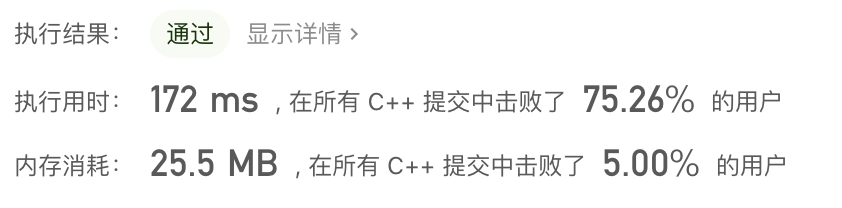
这么一分析好像和版本二链表实现的时间复杂度是一样的啊,为什么提交之后效率会差距这么大呢?
|
||
```CPP
|
||
// 版本二,使用list(链表)
|
||
class Solution {
|
||
public:
|
||
// 身高从大到小排(身高相同k小的站前面)
|
||
static bool cmp(const vector<int> a, const vector<int> b) {
|
||
if (a[0] == b[0]) return a[1] < b[1];
|
||
return a[0] > b[0];
|
||
}
|
||
vector<vector<int>> reconstructQueue(vector<vector<int>>& people) {
|
||
sort (people.begin(), people.end(), cmp);
|
||
list<vector<int>> que; // list底层是链表实现,插入效率比vector高的多
|
||
for (int i = 0; i < people.size(); i++) {
|
||
int position = people[i][1]; // 插入到下标为position的位置
|
||
std::list<vector<int>>::iterator it = que.begin();
|
||
while (position--) { // 寻找在插入位置
|
||
it++;
|
||
}
|
||
que.insert(it, people[i]);
|
||
}
|
||
return vector<vector<int>>(que.begin(), que.end());
|
||
}
|
||
};
|
||
```
|
||
|
||
耗时如下:
|
||
|
||
|
||
|
||
大家都知道对于普通数组,一旦定义了大小就不能改变,例如int a[10];,这个数组a至多只能放10个元素,改不了的。
|
||
|
||
对于动态数组,就是可以不用关心初始时候的大小,可以随意往里放数据,那么耗时的原因就在于动态数组的底层实现。
|
||
|
||
动态数组为什么可以不受初始大小的限制,可以随意push_back数据呢?
|
||
|
||
**首先vector的底层实现也是普通数组**。
|
||
|
||
vector的大小有两个维度一个是size一个是capicity,size就是我们平时用来遍历vector时候用的,例如:
|
||
```
|
||
for (int i = 0; i < vec.size(); i++) {
|
||
|
||
}
|
||
```
|
||
|
||
而capicity是vector底层数组(就是普通数组)的大小,capicity可不一定就是size。
|
||
|
||
当insert数据的时候,如果已经大于capicity,capicity会成倍扩容,但对外暴漏的size其实仅仅是+1。
|
||
|
||
那么既然vector底层实现是普通数组,怎么扩容的?
|
||
|
||
就是重新申请一个二倍于原数组大小的数组,然后把数据都拷贝过去,并释放原数组内存。(对,就是这么原始粗暴的方法!)
|
||
|
||
举一个例子,如图:
|
||

|
||
|
||
原vector中的size和capicity相同都是3,初始化为1 2 3,此时要push_back一个元素4。
|
||
|
||
那么底层其实就要申请一个大小为6的普通数组,并且把原元素拷贝过去,释放原数组内存,**注意图中底层数组的内存起始地址已经变了**。
|
||
|
||
**同时也注意此时capicity和size的变化,关键的地方我都标红了**。
|
||
|
||
而在[贪心算法:根据身高重建队列](https://programmercarl.com/0406.根据身高重建队列.html)中,我们使用vector来做insert的操作,此时大家可会发现,**虽然表面上复杂度是O(n^2),但是其底层都不知道额外做了多少次全量拷贝了,所以算上vector的底层拷贝,整体时间复杂度可以认为是O(n^2 + t × n)级别的,t是底层拷贝的次数**。
|
||
|
||
那么是不是可以直接确定好vector的大小,不让它在动态扩容了,例如在[贪心算法:根据身高重建队列](https://programmercarl.com/0406.根据身高重建队列.html)中已经给出了有people.size这么多的人,可以定义好一个固定大小的vector,这样我们就可以控制vector,不让它底层动态扩容。
|
||
|
||
这种方法需要自己模拟插入的操作,不仅没有直接调用insert接口那么方便,需要手动模拟插入操作,而且效率也不高!
|
||
|
||
手动模拟的过程其实不是很简单的,需要很多细节,我粗略写了一个版本,如下:
|
||
|
||
```CPP
|
||
// 版本三
|
||
// 使用vector,但不让它动态扩容
|
||
class Solution {
|
||
public:
|
||
static bool cmp(const vector<int> a, const vector<int> b) {
|
||
if (a[0] == b[0]) return a[1] < b[1];
|
||
return a[0] > b[0];
|
||
}
|
||
vector<vector<int>> reconstructQueue(vector<vector<int>>& people) {
|
||
sort (people.begin(), people.end(), cmp);
|
||
vector<vector<int>> que(people.size(), vector<int>(2, -1));
|
||
for (int i = 0; i < people.size(); i++) {
|
||
int position = people[i][1];
|
||
if (position == que.size() - 1) que[position] = people[i];
|
||
else { // 将插入位置后面的元素整体向后移
|
||
for (int j = que.size() - 2; j >= position; j--) que[j + 1] = que[j];
|
||
que[position] = people[i];
|
||
}
|
||
}
|
||
return que;
|
||
}
|
||
};
|
||
```
|
||
耗时如下:
|
||
|
||

|
||
|
||
这份代码就是不让vector动态扩容,全程我们自己模拟insert的操作,大家也可以直观的看出是一个O(n^2)的方法了。
|
||
|
||
但这份代码在leetcode上统计的耗时甚至比版本一的还高,我们都不让它动态扩容了,为什么耗时更高了呢?
|
||
|
||
一方面是leetcode的耗时统计本来就不太准,忽高忽低的,只能测个大概。
|
||
|
||
另一方面:可能是就算避免的vector的底层扩容,但这个固定大小的数组,每次向后移动元素赋值的次数比方法一中移动赋值的次数要多很多。
|
||
|
||
因为方法一中一开始数组是很小的,插入操作,向后移动元素次数比较少,即使有偶尔的扩容操作。而方法三每次都是按照最大数组规模向后移动元素的。
|
||
|
||
所以对于两种使用数组的方法一和方法三,也不好确定谁优,但一定都没有使用方法二链表的效率高!
|
||
|
||
一波分析之后,对于[贪心算法:根据身高重建队列](https://programmercarl.com/0406.根据身高重建队列.html) ,大家就安心使用链表吧!别折腾了,哈哈,相当于我替大家折腾了一下。
|
||
|
||
## 总结
|
||
|
||
大家应该发现了,编程语言中一个普通容器的insert,delete的使用,都可能对写出来的算法的有很大影响!
|
||
|
||
如果抛开语言谈算法,除非从来不用代码写算法纯分析,**否则的话,语言功底不到位O(n)的算法可以写出$O(n^2)$的性能**,哈哈。
|
||
|
||
相信在这里学习算法的录友们,都是想在软件行业长远发展的,都是要从事编程的工作,那么一定要深耕好一门编程语言,这个非常重要!
|
||
|
||
|
||
|
||
|
||
|
||
|
||
## 其他语言版本
|
||
|
||
|
||
Java:
|
||
|
||
|
||
Python:
|
||
|
||
|
||
Go:
|
||
|
||
|
||
|
||
|
||
-----------------------
|
||
<div align="center"><img src=https://code-thinking.cdn.bcebos.com/pics/01二维码一.jpg width=500> </img></div>
|