mirror of
https://github.com/youngyangyang04/leetcode-master.git
synced 2026-02-02 18:39:09 +08:00

945 lines
29 KiB
Markdown
945 lines
29 KiB
Markdown
<p align="center">
|
||
<a href="https://www.programmercarl.com/xunlian/xunlianying.html" target="_blank">
|
||
<img src="../pics/训练营.png" width="1000"/>
|
||
</a>
|
||
<p align="center"><strong><a href="./qita/join.md">参与本项目</a>,贡献其他语言版本的代码,拥抱开源,让更多学习算法的小伙伴们受益!</strong></p>
|
||
|
||
|
||
> 以为只用了递归,其实还用了回溯
|
||
|
||
# 257. 二叉树的所有路径
|
||
|
||
[力扣题目链接](https://leetcode.cn/problems/binary-tree-paths/)
|
||
|
||
给定一个二叉树,返回所有从根节点到叶子节点的路径。
|
||
|
||
说明: 叶子节点是指没有子节点的节点。
|
||
|
||
示例:
|
||
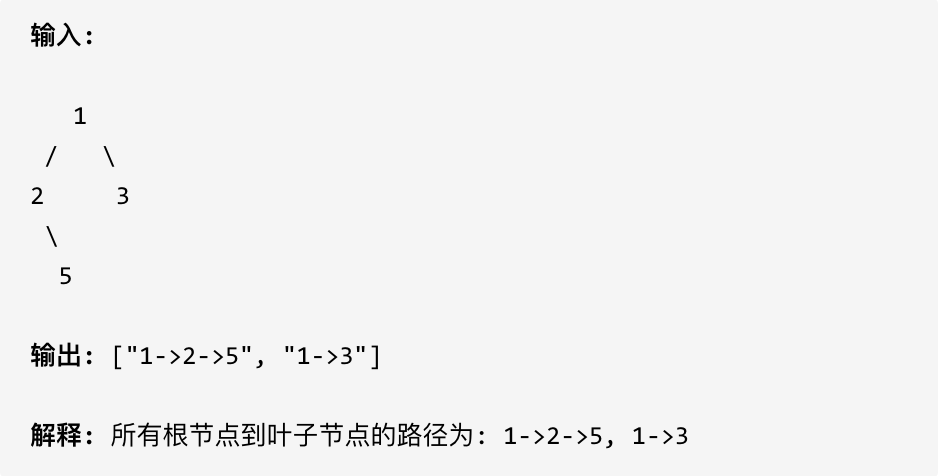
|
||
|
||
## 算法公开课
|
||
|
||
**[《代码随想录》算法视频公开课](https://programmercarl.com/other/gongkaike.html)::[递归中带着回溯,你感受到了没?| LeetCode:257. 二叉树的所有路径](https://www.bilibili.com/video/BV1ZG411G7Dh),相信结合视频在看本篇题解,更有助于大家对本题的理解**。
|
||
|
||
## 思路
|
||
|
||
这道题目要求从根节点到叶子的路径,所以需要前序遍历,这样才方便让父节点指向孩子节点,找到对应的路径。
|
||
|
||
在这道题目中将第一次涉及到回溯,因为我们要把路径记录下来,需要回溯来回退一个路径再进入另一个路径。
|
||
|
||
前序遍历以及回溯的过程如图:
|
||
|
||
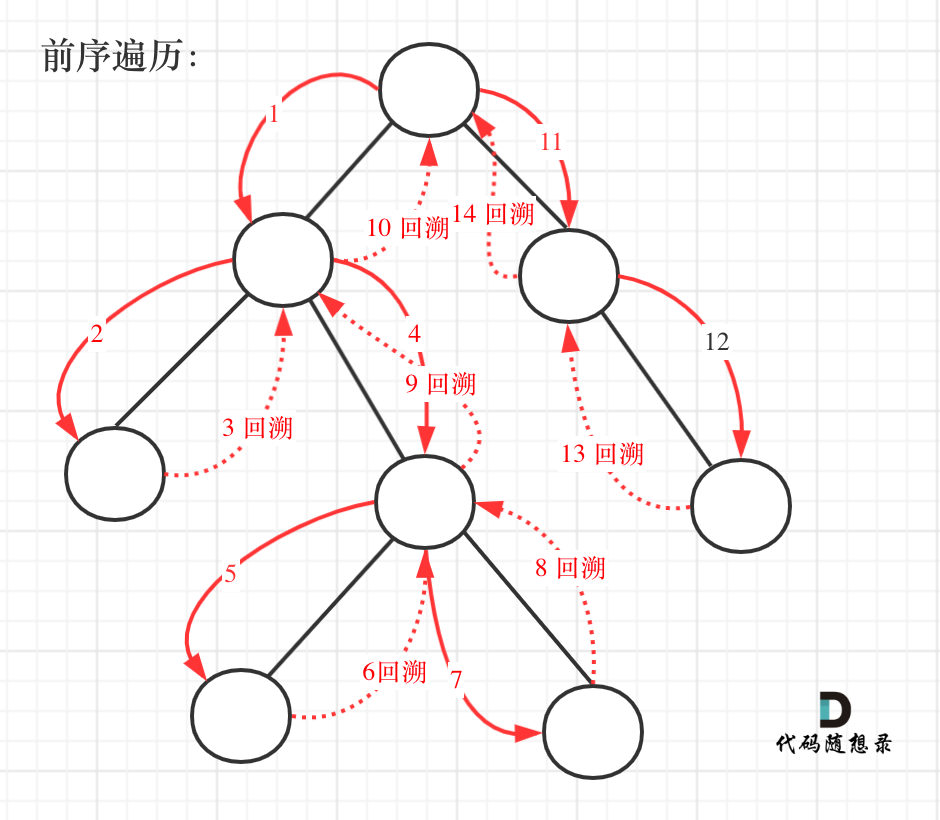
|
||
|
||
我们先使用递归的方式,来做前序遍历。**要知道递归和回溯就是一家的,本题也需要回溯。**
|
||
|
||
### 递归
|
||
|
||
1. 递归函数参数以及返回值
|
||
|
||
要传入根节点,记录每一条路径的path,和存放结果集的result,这里递归不需要返回值,代码如下:
|
||
|
||
```CPP
|
||
void traversal(TreeNode* cur, vector<int>& path, vector<string>& result)
|
||
```
|
||
|
||
2. 确定递归终止条件
|
||
|
||
在写递归的时候都习惯了这么写:
|
||
|
||
```CPP
|
||
if (cur == NULL) {
|
||
终止处理逻辑
|
||
}
|
||
```
|
||
|
||
但是本题的终止条件这样写会很麻烦,因为本题要找到叶子节点,就开始结束的处理逻辑了(把路径放进result里)。
|
||
|
||
**那么什么时候算是找到了叶子节点?** 是当 cur不为空,其左右孩子都为空的时候,就找到叶子节点。
|
||
|
||
所以本题的终止条件是:
|
||
```CPP
|
||
if (cur->left == NULL && cur->right == NULL) {
|
||
终止处理逻辑
|
||
}
|
||
```
|
||
|
||
为什么没有判断cur是否为空呢,因为下面的逻辑可以控制空节点不入循环。
|
||
|
||
再来看一下终止处理的逻辑。
|
||
|
||
这里使用vector<int> 结构path来记录路径,所以要把vector<int> 结构的path转为string格式,再把这个string 放进 result里。
|
||
|
||
**那么为什么使用了vector<int> 结构来记录路径呢?** 因为在下面处理单层递归逻辑的时候,要做回溯,使用vector方便来做回溯。
|
||
|
||
可能有的同学问了,我看有些人的代码也没有回溯啊。
|
||
|
||
**其实是有回溯的,只不过隐藏在函数调用时的参数赋值里**,下文我还会提到。
|
||
|
||
这里我们先使用vector<int>结构的path容器来记录路径,那么终止处理逻辑如下:
|
||
|
||
```CPP
|
||
if (cur->left == NULL && cur->right == NULL) { // 遇到叶子节点
|
||
string sPath;
|
||
for (int i = 0; i < path.size() - 1; i++) { // 将path里记录的路径转为string格式
|
||
sPath += to_string(path[i]);
|
||
sPath += "->";
|
||
}
|
||
sPath += to_string(path[path.size() - 1]); // 记录最后一个节点(叶子节点)
|
||
result.push_back(sPath); // 收集一个路径
|
||
return;
|
||
}
|
||
```
|
||
|
||
3. 确定单层递归逻辑
|
||
|
||
因为是前序遍历,需要先处理中间节点,中间节点就是我们要记录路径上的节点,先放进path中。
|
||
|
||
`path.push_back(cur->val);`
|
||
|
||
然后是递归和回溯的过程,上面说过没有判断cur是否为空,那么在这里递归的时候,如果为空就不进行下一层递归了。
|
||
|
||
所以递归前要加上判断语句,下面要递归的节点是否为空,如下
|
||
|
||
```CPP
|
||
if (cur->left) {
|
||
traversal(cur->left, path, result);
|
||
}
|
||
if (cur->right) {
|
||
traversal(cur->right, path, result);
|
||
}
|
||
```
|
||
|
||
此时还没完,递归完,要做回溯啊,因为path 不能一直加入节点,它还要删节点,然后才能加入新的节点。
|
||
|
||
那么回溯要怎么回溯呢,一些同学会这么写,如下:
|
||
|
||
```CPP
|
||
if (cur->left) {
|
||
traversal(cur->left, path, result);
|
||
}
|
||
if (cur->right) {
|
||
traversal(cur->right, path, result);
|
||
}
|
||
path.pop_back();
|
||
```
|
||
|
||
这个回溯就有很大的问题,我们知道,**回溯和递归是一一对应的,有一个递归,就要有一个回溯**,这么写的话相当于把递归和回溯拆开了, 一个在花括号里,一个在花括号外。
|
||
|
||
**所以回溯要和递归永远在一起,世界上最遥远的距离是你在花括号里,而我在花括号外!**
|
||
|
||
那么代码应该这么写:
|
||
|
||
```CPP
|
||
if (cur->left) {
|
||
traversal(cur->left, path, result);
|
||
path.pop_back(); // 回溯
|
||
}
|
||
if (cur->right) {
|
||
traversal(cur->right, path, result);
|
||
path.pop_back(); // 回溯
|
||
}
|
||
```
|
||
|
||
那么本题整体代码如下:
|
||
|
||
```CPP
|
||
// 版本一
|
||
class Solution {
|
||
private:
|
||
|
||
void traversal(TreeNode* cur, vector<int>& path, vector<string>& result) {
|
||
path.push_back(cur->val); // 中,中为什么写在这里,因为最后一个节点也要加入到path中
|
||
// 这才到了叶子节点
|
||
if (cur->left == NULL && cur->right == NULL) {
|
||
string sPath;
|
||
for (int i = 0; i < path.size() - 1; i++) {
|
||
sPath += to_string(path[i]);
|
||
sPath += "->";
|
||
}
|
||
sPath += to_string(path[path.size() - 1]);
|
||
result.push_back(sPath);
|
||
return;
|
||
}
|
||
if (cur->left) { // 左
|
||
traversal(cur->left, path, result);
|
||
path.pop_back(); // 回溯
|
||
}
|
||
if (cur->right) { // 右
|
||
traversal(cur->right, path, result);
|
||
path.pop_back(); // 回溯
|
||
}
|
||
}
|
||
|
||
public:
|
||
vector<string> binaryTreePaths(TreeNode* root) {
|
||
vector<string> result;
|
||
vector<int> path;
|
||
if (root == NULL) return result;
|
||
traversal(root, path, result);
|
||
return result;
|
||
}
|
||
};
|
||
```
|
||
如上的C++代码充分体现了回溯。
|
||
|
||
那么如上代码可以精简成如下代码:
|
||
|
||
```CPP
|
||
class Solution {
|
||
private:
|
||
|
||
void traversal(TreeNode* cur, string path, vector<string>& result) {
|
||
path += to_string(cur->val); // 中
|
||
if (cur->left == NULL && cur->right == NULL) {
|
||
result.push_back(path);
|
||
return;
|
||
}
|
||
if (cur->left) traversal(cur->left, path + "->", result); // 左
|
||
if (cur->right) traversal(cur->right, path + "->", result); // 右
|
||
}
|
||
|
||
public:
|
||
vector<string> binaryTreePaths(TreeNode* root) {
|
||
vector<string> result;
|
||
string path;
|
||
if (root == NULL) return result;
|
||
traversal(root, path, result);
|
||
return result;
|
||
|
||
}
|
||
};
|
||
```
|
||
|
||
如上代码精简了不少,也隐藏了不少东西。
|
||
|
||
注意在函数定义的时候`void traversal(TreeNode* cur, string path, vector<string>& result)` ,定义的是`string path`,每次都是复制赋值,不用使用引用,否则就无法做到回溯的效果。(这里涉及到C++语法知识)
|
||
|
||
那么在如上代码中,**貌似没有看到回溯的逻辑,其实不然,回溯就隐藏在`traversal(cur->left, path + "->", result);`中的 `path + "->"`。** 每次函数调用完,path依然是没有加上"->" 的,这就是回溯了。
|
||
|
||
为了把这份精简代码的回溯过程展现出来,大家可以试一试把:
|
||
|
||
```CPP
|
||
if (cur->left) traversal(cur->left, path + "->", result); // 左 回溯就隐藏在这里
|
||
```
|
||
|
||
改成如下代码:
|
||
|
||
```CPP
|
||
path += "->";
|
||
traversal(cur->left, path, result); // 左
|
||
```
|
||
|
||
即:
|
||
|
||
```CPP
|
||
if (cur->left) {
|
||
path += "->";
|
||
traversal(cur->left, path, result); // 左
|
||
}
|
||
if (cur->right) {
|
||
path += "->";
|
||
traversal(cur->right, path, result); // 右
|
||
}
|
||
```
|
||
|
||
此时就没有回溯了,这个代码就是通过不了的了。
|
||
|
||
如果想把回溯加上,就要 在上面代码的基础上,加上回溯,就可以AC了。
|
||
|
||
```CPP
|
||
if (cur->left) {
|
||
path += "->";
|
||
traversal(cur->left, path, result); // 左
|
||
path.pop_back(); // 回溯 '>'
|
||
path.pop_back(); // 回溯 '-'
|
||
}
|
||
if (cur->right) {
|
||
path += "->";
|
||
traversal(cur->right, path, result); // 右
|
||
path.pop_back(); // 回溯 '>'
|
||
path.pop_back(); // 回溯 '-'
|
||
}
|
||
```
|
||
|
||
整体代码如下:
|
||
|
||
```CPP
|
||
//版本二
|
||
class Solution {
|
||
private:
|
||
void traversal(TreeNode* cur, string path, vector<string>& result) {
|
||
path += to_string(cur->val); // 中,中为什么写在这里,因为最后一个节点也要加入到path中
|
||
if (cur->left == NULL && cur->right == NULL) {
|
||
result.push_back(path);
|
||
return;
|
||
}
|
||
if (cur->left) {
|
||
path += "->";
|
||
traversal(cur->left, path, result); // 左
|
||
path.pop_back(); // 回溯 '>'
|
||
path.pop_back(); // 回溯 '-'
|
||
}
|
||
if (cur->right) {
|
||
path += "->";
|
||
traversal(cur->right, path, result); // 右
|
||
path.pop_back(); // 回溯'>'
|
||
path.pop_back(); // 回溯 '-'
|
||
}
|
||
}
|
||
|
||
public:
|
||
vector<string> binaryTreePaths(TreeNode* root) {
|
||
vector<string> result;
|
||
string path;
|
||
if (root == NULL) return result;
|
||
traversal(root, path, result);
|
||
return result;
|
||
|
||
}
|
||
};
|
||
|
||
```
|
||
|
||
**大家应该可以感受出来,如果把 `path + "->"`作为函数参数就是可以的,因为并没有改变path的数值,执行完递归函数之后,path依然是之前的数值(相当于回溯了)**
|
||
|
||
|
||
**综合以上,第二种递归的代码虽然精简但把很多重要的点隐藏在了代码细节里,第一种递归写法虽然代码多一些,但是把每一个逻辑处理都完整的展现出来了。**
|
||
|
||
### 拓展
|
||
|
||
这里讲解本题解的写法逻辑以及一些更具体的细节,下面的讲解中,涉及到C++语法特性,如果不是C++的录友,就可以不看了,避免越看越晕。
|
||
|
||
如果是C++的录友,建议本题独立刷过两遍,再看下面的讲解,同样避免越看越晕,造成不必要的负担。
|
||
|
||
在第二版本的代码中,其实仅仅是回溯了 `->` 部分(调用两次pop_back,一个pop`>` 一次pop`-`),大家应该疑惑那么 `path += to_string(cur->val);` 这一步为什么没有回溯呢? 一条路径能持续加节点 不做回溯吗?
|
||
|
||
其实关键还在于 参数,使用的是 `string path`,这里并没有加上引用`&` ,即本层递归中,path + 该节点数值,但该层递归结束,上一层path的数值并不会受到任何影响。 如图所示:
|
||
|
||
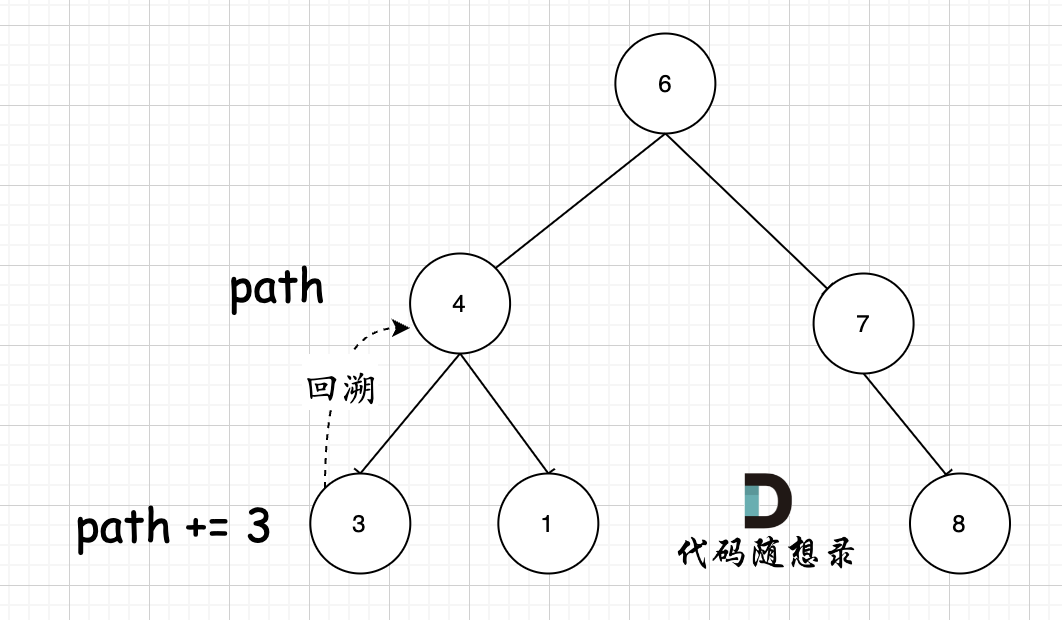
|
||
|
||
节点4 的path,在遍历到节点3,path+3,遍历节点3的递归结束之后,返回节点4(回溯的过程),path并不会把3加上。
|
||
|
||
所以这是参数中,不带引用,不做地址拷贝,只做内容拷贝的效果。(这里涉及到C++引用方面的知识)
|
||
|
||
在第一个版本中,函数参数我就使用了引用,即 `vector<int>& path` ,这是会拷贝地址的,所以 本层递归逻辑如果有`path.push_back(cur->val);` 就一定要有对应的 `path.pop_back()`
|
||
|
||
那有同学可能想,为什么不去定义一个 `string& path` 这样的函数参数呢,然后也可能在递归函数中展现回溯的过程,但关键在于,`path += to_string(cur->val);` 每次是加上一个数字,这个数字如果是个位数,那好说,就调用一次`path.pop_back()`,但如果是 十位数,百位数,千位数呢? 百位数就要调用三次`path.pop_back()`,才能实现对应的回溯操作,这样代码实现就太冗余了。
|
||
|
||
所以,第一个代码版本中,我才使用 vector 类型的path,这样方便给大家演示代码中回溯的操作。 vector类型的path,不管 每次 路径收集的数字是几位数,总之一定是int,所以就一次 pop_back就可以。
|
||
|
||
|
||
### 迭代法
|
||
|
||
|
||
至于非递归的方式,我们可以依然可以使用前序遍历的迭代方式来模拟遍历路径的过程,对该迭代方式不了解的同学,可以看文章[二叉树:听说递归能做的,栈也能做!](https://programmercarl.com/二叉树的迭代遍历.html)和[二叉树:前中后序迭代方式统一写法](https://programmercarl.com/二叉树的统一迭代法.html)。
|
||
|
||
这里除了模拟递归需要一个栈,同时还需要一个栈来存放对应的遍历路径。
|
||
|
||
C++代码如下:
|
||
|
||
```CPP
|
||
class Solution {
|
||
public:
|
||
vector<string> binaryTreePaths(TreeNode* root) {
|
||
stack<TreeNode*> treeSt;// 保存树的遍历节点
|
||
stack<string> pathSt; // 保存遍历路径的节点
|
||
vector<string> result; // 保存最终路径集合
|
||
if (root == NULL) return result;
|
||
treeSt.push(root);
|
||
pathSt.push(to_string(root->val));
|
||
while (!treeSt.empty()) {
|
||
TreeNode* node = treeSt.top(); treeSt.pop(); // 取出节点 中
|
||
string path = pathSt.top();pathSt.pop(); // 取出该节点对应的路径
|
||
if (node->left == NULL && node->right == NULL) { // 遇到叶子节点
|
||
result.push_back(path);
|
||
}
|
||
if (node->right) { // 右
|
||
treeSt.push(node->right);
|
||
pathSt.push(path + "->" + to_string(node->right->val));
|
||
}
|
||
if (node->left) { // 左
|
||
treeSt.push(node->left);
|
||
pathSt.push(path + "->" + to_string(node->left->val));
|
||
}
|
||
}
|
||
return result;
|
||
}
|
||
};
|
||
```
|
||
当然,使用java的同学,可以直接定义一个成员变量为object的栈`Stack<Object> stack = new Stack<>();`,这样就不用定义两个栈了,都放到一个栈里就可以了。
|
||
|
||
## 总结
|
||
|
||
**本文我们开始初步涉及到了回溯,很多同学过了这道题目,可能都不知道自己其实使用了回溯,回溯和递归都是相伴相生的。**
|
||
|
||
我在第一版递归代码中,把递归与回溯的细节都充分的展现了出来,大家可以自己感受一下。
|
||
|
||
第二版递归代码对于初学者其实非常不友好,代码看上去简单,但是隐藏细节于无形。
|
||
|
||
最后我依然给出了迭代法。
|
||
|
||
对于本题充分了解递归与回溯的过程之后,有精力的同学可以再去实现迭代法。
|
||
|
||
## 其他语言版本
|
||
|
||
### Java:
|
||
|
||
```Java
|
||
//解法一
|
||
|
||
//方式一
|
||
class Solution {
|
||
/**
|
||
* 递归法
|
||
*/
|
||
public List<String> binaryTreePaths(TreeNode root) {
|
||
List<String> res = new ArrayList<>();// 存最终的结果
|
||
if (root == null) {
|
||
return res;
|
||
}
|
||
List<Integer> paths = new ArrayList<>();// 作为结果中的路径
|
||
traversal(root, paths, res);
|
||
return res;
|
||
}
|
||
|
||
private void traversal(TreeNode root, List<Integer> paths, List<String> res) {
|
||
paths.add(root.val);// 前序遍历,中
|
||
// 遇到叶子结点
|
||
if (root.left == null && root.right == null) {
|
||
// 输出
|
||
StringBuilder sb = new StringBuilder();// StringBuilder用来拼接字符串,速度更快
|
||
for (int i = 0; i < paths.size() - 1; i++) {
|
||
sb.append(paths.get(i)).append("->");
|
||
}
|
||
sb.append(paths.get(paths.size() - 1));// 记录最后一个节点
|
||
res.add(sb.toString());// 收集一个路径
|
||
return;
|
||
}
|
||
// 递归和回溯是同时进行,所以要放在同一个花括号里
|
||
if (root.left != null) { // 左
|
||
traversal(root.left, paths, res);
|
||
paths.remove(paths.size() - 1);// 回溯
|
||
}
|
||
if (root.right != null) { // 右
|
||
traversal(root.right, paths, res);
|
||
paths.remove(paths.size() - 1);// 回溯
|
||
}
|
||
}
|
||
}
|
||
|
||
//方式二
|
||
class Solution {
|
||
|
||
List<String> result = new ArrayList<>();
|
||
|
||
public List<String> binaryTreePaths(TreeNode root) {
|
||
deal(root, "");
|
||
return result;
|
||
}
|
||
|
||
public void deal(TreeNode node, String s) {
|
||
if (node == null)
|
||
return;
|
||
if (node.left == null && node.right == null) {
|
||
result.add(new StringBuilder(s).append(node.val).toString());
|
||
return;
|
||
}
|
||
String tmp = new StringBuilder(s).append(node.val).append("->").toString();
|
||
deal(node.left, tmp);
|
||
deal(node.right, tmp);
|
||
}
|
||
}
|
||
```
|
||
```java
|
||
// 解法二
|
||
class Solution {
|
||
/**
|
||
* 迭代法
|
||
*/
|
||
public List<String> binaryTreePaths(TreeNode root) {
|
||
List<String> result = new ArrayList<>();
|
||
if (root == null)
|
||
return result;
|
||
Stack<Object> stack = new Stack<>();
|
||
// 节点和路径同时入栈
|
||
stack.push(root);
|
||
stack.push(root.val + "");
|
||
while (!stack.isEmpty()) {
|
||
// 节点和路径同时出栈
|
||
String path = (String) stack.pop();
|
||
TreeNode node = (TreeNode) stack.pop();
|
||
// 若找到叶子节点
|
||
if (node.left == null && node.right == null) {
|
||
result.add(path);
|
||
}
|
||
//右子节点不为空
|
||
if (node.right != null) {
|
||
stack.push(node.right);
|
||
stack.push(path + "->" + node.right.val);
|
||
}
|
||
//左子节点不为空
|
||
if (node.left != null) {
|
||
stack.push(node.left);
|
||
stack.push(path + "->" + node.left.val);
|
||
}
|
||
}
|
||
return result;
|
||
}
|
||
}
|
||
```
|
||
---
|
||
### Python:
|
||
|
||
|
||
递归法+回溯
|
||
```Python
|
||
# Definition for a binary tree node.
|
||
class Solution:
|
||
def traversal(self, cur, path, result):
|
||
path.append(cur.val) # 中
|
||
if not cur.left and not cur.right: # 到达叶子节点
|
||
sPath = '->'.join(map(str, path))
|
||
result.append(sPath)
|
||
return
|
||
if cur.left: # 左
|
||
self.traversal(cur.left, path, result)
|
||
path.pop() # 回溯
|
||
if cur.right: # 右
|
||
self.traversal(cur.right, path, result)
|
||
path.pop() # 回溯
|
||
|
||
def binaryTreePaths(self, root):
|
||
result = []
|
||
path = []
|
||
if not root:
|
||
return result
|
||
self.traversal(root, path, result)
|
||
return result
|
||
|
||
|
||
```
|
||
递归法+隐形回溯(版本一)
|
||
```Python
|
||
# Definition for a binary tree node.
|
||
# class TreeNode:
|
||
# def __init__(self, val=0, left=None, right=None):
|
||
# self.val = val
|
||
# self.left = left
|
||
# self.right = right
|
||
from typing import List, Optional
|
||
|
||
class Solution:
|
||
def binaryTreePaths(self, root: Optional[TreeNode]) -> List[str]:
|
||
if not root:
|
||
return []
|
||
result = []
|
||
self.traversal(root, [], result)
|
||
return result
|
||
|
||
def traversal(self, cur: TreeNode, path: List[int], result: List[str]) -> None:
|
||
if not cur:
|
||
return
|
||
path.append(cur.val)
|
||
if not cur.left and not cur.right:
|
||
result.append('->'.join(map(str, path)))
|
||
if cur.left:
|
||
self.traversal(cur.left, path[:], result)
|
||
if cur.right:
|
||
self.traversal(cur.right, path[:], result)
|
||
|
||
```
|
||
|
||
递归法+隐形回溯(版本二)
|
||
```Python
|
||
# Definition for a binary tree node.
|
||
# class TreeNode:
|
||
# def __init__(self, val=0, left=None, right=None):
|
||
# self.val = val
|
||
# self.left = left
|
||
# self.right = right
|
||
class Solution:
|
||
def binaryTreePaths(self, root: TreeNode) -> List[str]:
|
||
path = ''
|
||
result = []
|
||
if not root: return result
|
||
self.traversal(root, path, result)
|
||
return result
|
||
|
||
def traversal(self, cur: TreeNode, path: str, result: List[str]) -> None:
|
||
path += str(cur.val)
|
||
# 若当前节点为leave,直接输出
|
||
if not cur.left and not cur.right:
|
||
result.append(path)
|
||
|
||
if cur.left:
|
||
# + '->' 是隐藏回溯
|
||
self.traversal(cur.left, path + '->', result)
|
||
|
||
if cur.right:
|
||
self.traversal(cur.right, path + '->', result)
|
||
```
|
||
|
||
迭代法:
|
||
|
||
```Python
|
||
class Solution:
|
||
|
||
def binaryTreePaths(self, root: TreeNode) -> List[str]:
|
||
# 题目中节点数至少为1
|
||
stack, path_st, result = [root], [str(root.val)], []
|
||
|
||
while stack:
|
||
cur = stack.pop()
|
||
path = path_st.pop()
|
||
# 如果当前节点为叶子节点,添加路径到结果中
|
||
if not (cur.left or cur.right):
|
||
result.append(path)
|
||
if cur.right:
|
||
stack.append(cur.right)
|
||
path_st.append(path + '->' + str(cur.right.val))
|
||
if cur.left:
|
||
stack.append(cur.left)
|
||
path_st.append(path + '->' + str(cur.left.val))
|
||
|
||
return result
|
||
```
|
||
|
||
---
|
||
|
||
### Go:
|
||
|
||
递归法:
|
||
|
||
```go
|
||
func binaryTreePaths(root *TreeNode) []string {
|
||
res := make([]string, 0)
|
||
var travel func(node *TreeNode, s string)
|
||
travel = func(node *TreeNode, s string) {
|
||
if node.Left == nil && node.Right == nil {
|
||
v := s + strconv.Itoa(node.Val)
|
||
res = append(res, v)
|
||
return
|
||
}
|
||
s = s + strconv.Itoa(node.Val) + "->"
|
||
if node.Left != nil {
|
||
travel(node.Left, s)
|
||
}
|
||
if node.Right != nil {
|
||
travel(node.Right, s)
|
||
}
|
||
}
|
||
travel(root, "")
|
||
return res
|
||
}
|
||
```
|
||
|
||
迭代法:
|
||
|
||
```go
|
||
func binaryTreePaths(root *TreeNode) []string {
|
||
stack := []*TreeNode{}
|
||
paths := make([]string, 0)
|
||
res := make([]string, 0)
|
||
if root != nil {
|
||
stack = append(stack, root)
|
||
paths = append(paths, "")
|
||
}
|
||
for len(stack) > 0 {
|
||
l := len(stack)
|
||
node := stack[l-1]
|
||
path := paths[l-1]
|
||
stack = stack[:l-1]
|
||
paths = paths[:l-1]
|
||
if node.Left == nil && node.Right == nil {
|
||
res = append(res, path+strconv.Itoa(node.Val))
|
||
continue
|
||
}
|
||
if node.Right != nil {
|
||
stack = append(stack, node.Right)
|
||
paths = append(paths, path+strconv.Itoa(node.Val)+"->")
|
||
}
|
||
if node.Left != nil {
|
||
stack = append(stack, node.Left)
|
||
paths = append(paths, path+strconv.Itoa(node.Val)+"->")
|
||
}
|
||
}
|
||
return res
|
||
}
|
||
```
|
||
|
||
---
|
||
### JavaScript:
|
||
|
||
递归法:
|
||
|
||
```javascript
|
||
var binaryTreePaths = function(root) {
|
||
//递归遍历+递归三部曲
|
||
let res = [];
|
||
//1. 确定递归函数 函数参数
|
||
const getPath = function(node,curPath) {
|
||
//2. 确定终止条件,到叶子节点就终止
|
||
if(node.left === null && node.right === null) {
|
||
curPath += node.val;
|
||
res.push(curPath);
|
||
return;
|
||
}
|
||
//3. 确定单层递归逻辑
|
||
curPath += node.val + '->';
|
||
node.left && getPath(node.left, curPath);
|
||
node.right && getPath(node.right, curPath);
|
||
}
|
||
getPath(root, '');
|
||
return res;
|
||
};
|
||
```
|
||
|
||
迭代法:
|
||
|
||
```javascript
|
||
var binaryTreePaths = function(root) {
|
||
if (!root) return [];
|
||
const stack = [root], paths = [''], res = [];
|
||
while (stack.length) {
|
||
const node = stack.pop();
|
||
let path = paths.pop();
|
||
if (!node.left && !node.right) { // 到叶子节点终止, 添加路径到结果中
|
||
res.push(path + node.val);
|
||
continue;
|
||
}
|
||
path += node.val + '->';
|
||
if (node.right) { // 右节点存在
|
||
stack.push(node.right);
|
||
paths.push(path);
|
||
}
|
||
if (node.left) { // 左节点存在
|
||
stack.push(node.left);
|
||
paths.push(path);
|
||
}
|
||
}
|
||
return res;
|
||
};
|
||
```
|
||
|
||
### TypeScript:
|
||
|
||
> 递归法
|
||
|
||
```typescript
|
||
function binaryTreePaths(root: TreeNode | null): string[] {
|
||
function recur(node: TreeNode, route: string, resArr: string[]): void {
|
||
route += String(node.val);
|
||
if (node.left === null && node.right === null) {
|
||
resArr.push(route);
|
||
return;
|
||
}
|
||
if (node.left !== null) recur(node.left, route + '->', resArr);
|
||
if (node.right !== null) recur(node.right, route + '->', resArr);
|
||
}
|
||
const resArr: string[] = [];
|
||
if (root === null) return resArr;
|
||
recur(root, '', resArr);
|
||
return resArr;
|
||
};
|
||
```
|
||
|
||
> 迭代法
|
||
|
||
```typescript
|
||
// 迭代法2
|
||
function binaryTreePaths(root: TreeNode | null): string[] {
|
||
let helperStack: TreeNode[] = [];
|
||
let tempNode: TreeNode;
|
||
let routeArr: string[] = [];
|
||
let resArr: string[] = [];
|
||
if (root !== null) {
|
||
helperStack.push(root);
|
||
routeArr.push(String(root.val));
|
||
};
|
||
while (helperStack.length > 0) {
|
||
tempNode = helperStack.pop()!;
|
||
let route: string = routeArr.pop()!; // tempNode 对应的路径
|
||
if (tempNode.left === null && tempNode.right === null) {
|
||
resArr.push(route);
|
||
}
|
||
if (tempNode.right !== null) {
|
||
helperStack.push(tempNode.right);
|
||
routeArr.push(route + '->' + tempNode.right.val); // tempNode.right 对应的路径
|
||
}
|
||
if (tempNode.left !== null) {
|
||
helperStack.push(tempNode.left);
|
||
routeArr.push(route + '->' + tempNode.left.val); // tempNode.left 对应的路径
|
||
}
|
||
}
|
||
return resArr;
|
||
};
|
||
```
|
||
|
||
### Swift:
|
||
|
||
> 递归/回溯
|
||
```swift
|
||
func binaryTreePaths(_ root: TreeNode?) -> [String] {
|
||
var res = [String]()
|
||
guard let root = root else {
|
||
return res
|
||
}
|
||
var path = [Int]()
|
||
_binaryTreePaths(root, path: &path, res: &res)
|
||
return res
|
||
}
|
||
func _binaryTreePaths(_ root: TreeNode, path: inout [Int], res: inout [String]) {
|
||
path.append(root.val)
|
||
if root.left == nil && root.right == nil {
|
||
var str = ""
|
||
for i in 0 ..< path.count - 1 {
|
||
str.append("\(path[i])->")
|
||
}
|
||
str.append("\(path.last!)")
|
||
res.append(str)
|
||
return
|
||
}
|
||
if let left = root.left {
|
||
_binaryTreePaths(left, path: &path, res: &res)
|
||
path.removeLast()
|
||
}
|
||
if let right = root.right {
|
||
_binaryTreePaths(right, path: &path, res: &res)
|
||
path.removeLast()
|
||
}
|
||
}
|
||
```
|
||
|
||
> 迭代
|
||
```swift
|
||
func binaryTreePaths(_ root: TreeNode?) -> [String] {
|
||
var res = [String]()
|
||
guard let root = root else {
|
||
return res
|
||
}
|
||
var stackNode = [TreeNode]()
|
||
stackNode.append(root)
|
||
|
||
var stackStr = [String]()
|
||
stackStr.append("\(root.val)")
|
||
|
||
while !stackNode.isEmpty {
|
||
let node = stackNode.popLast()!
|
||
let str = stackStr.popLast()!
|
||
if node.left == nil && node.right == nil {
|
||
res.append(str)
|
||
}
|
||
if let left = node.left {
|
||
stackNode.append(left)
|
||
stackStr.append("\(str)->\(left.val)")
|
||
}
|
||
if let right = node.right {
|
||
stackNode.append(right)
|
||
stackStr.append("\(str)->\(right.val)")
|
||
}
|
||
}
|
||
return res
|
||
}
|
||
```
|
||
|
||
### Scala:
|
||
|
||
递归:
|
||
```scala
|
||
object Solution {
|
||
import scala.collection.mutable.ListBuffer
|
||
def binaryTreePaths(root: TreeNode): List[String] = {
|
||
val res = ListBuffer[String]()
|
||
def traversal(curNode: TreeNode, path: ListBuffer[Int]): Unit = {
|
||
path.append(curNode.value)
|
||
if (curNode.left == null && curNode.right == null) {
|
||
res.append(path.mkString("->")) // mkString函数: 将数组的所有值按照指定字符串拼接
|
||
return // 处理完可以直接return
|
||
}
|
||
|
||
if (curNode.left != null) {
|
||
traversal(curNode.left, path)
|
||
path.remove(path.size - 1)
|
||
}
|
||
if (curNode.right != null) {
|
||
traversal(curNode.right, path)
|
||
path.remove(path.size - 1)
|
||
}
|
||
}
|
||
traversal(root, ListBuffer[Int]())
|
||
res.toList
|
||
}
|
||
}
|
||
```
|
||
|
||
### Rust:
|
||
|
||
```rust
|
||
// 递归
|
||
impl Solution {
|
||
pub fn binary_tree_paths(root: Option<Rc<RefCell<TreeNode>>>) -> Vec<String> {
|
||
let mut res = vec![];
|
||
Self::recur(&root, String::from(""), &mut res);
|
||
res
|
||
}
|
||
pub fn recur(node: &Option<Rc<RefCell<TreeNode>>>, mut path: String, res: &mut Vec<String>) {
|
||
let r = node.as_ref().unwrap().borrow();
|
||
path += format!("{}", r.val).as_str();
|
||
if r.left.is_none() && r.right.is_none() {
|
||
res.push(path.to_string());
|
||
return;
|
||
}
|
||
if r.left.is_some() {
|
||
Self::recur(&r.left, path.clone() + "->", res);
|
||
}
|
||
if r.right.is_some() {
|
||
Self::recur(&r.right, path + "->", res);
|
||
}
|
||
}
|
||
}
|
||
```
|
||
### C#
|
||
```csharp
|
||
public IList<string> BinaryTreePaths(TreeNode root)
|
||
{
|
||
List<int> path = new();
|
||
List<string> res = new();
|
||
if (root == null) return res;
|
||
Traversal(root, path, res);
|
||
return res;
|
||
}
|
||
public void Traversal(TreeNode node, List<int> path, List<string> res)
|
||
{
|
||
path.Add(node.val);
|
||
if (node.left == null && node.right == null)
|
||
{
|
||
string sPath = "";
|
||
for (int i = 0; i < path.Count - 1; i++)
|
||
{
|
||
sPath += path[i].ToString();
|
||
sPath += "->";
|
||
}
|
||
sPath += path[path.Count - 1].ToString();
|
||
res.Add(sPath);
|
||
return;
|
||
}
|
||
if (node.left != null)
|
||
{
|
||
Traversal(node.left, path, res);
|
||
path.RemoveAt(path.Count-1);
|
||
}
|
||
if (node.right != null)
|
||
{
|
||
Traversal(node.right, path, res);
|
||
path.RemoveAt(path.Count-1);
|
||
}
|
||
}
|
||
```
|
||
|
||
<p align="center">
|
||
<a href="https://programmercarl.com/other/kstar.html" target="_blank">
|
||
<img src="../pics/网站星球宣传海报.jpg" width="1000"/>
|
||
</a>
|