mirror of
https://github.com/springzfx/cgproxy.git
synced 2026-01-07 13:07:56 +08:00

184 lines
5.7 KiB
Markdown
184 lines
5.7 KiB
Markdown
# Transparent Proxy with cgroup v2
|
|
|
|
|
|
|
|
## Introduction
|
|
|
|
cgproxy will transparent proxy anything running in specific cgroup. It resembles with *proxychains* and *tsock*, but without their disadvantages, and more powerfull.
|
|
|
|
It aslo supports global transparent proxy and gateway proxy. See [Global transparent proxy](#global-transparent-proxy) and [Gateway proxy](#gateway-proxy)
|
|
|
|
<!--ts-->
|
|
|
|
* [Transparent Proxy with cgroup v2](#transparent-proxy-with-cgroup-v2)
|
|
* [Introduction](#introduction)
|
|
* [Prerequest](#prerequest)
|
|
* [How to install](#how-to-install)
|
|
* [How to use](#how-to-use)
|
|
* [Global transparent proxy](#global-transparent-proxy)
|
|
* [Gateway proxy](#gateway-proxy)
|
|
* [Other useful tools provided in this project](#other-useful-tools-provided-in-this-project)
|
|
* [NOTES](#notes)
|
|
* [TIPS](#tips)
|
|
* [Licences](#licences)
|
|
|
|
<!-- Added by: fancy, at: Thu 23 Apr 2020 01:23:57 PM HKT -->
|
|
|
|
<!--te-->
|
|
|
|
## Prerequest
|
|
|
|
- cgroup2
|
|
|
|
Both cgroup and cgroup2 are enabled in linux by default. So you don't have to do anything about this.
|
|
- `systemd-cgls` to see the cgroup hierarchical tree.
|
|
- Why cgroup v2? Because simple, elegant and intuitive.
|
|
|
|
- TPROXY
|
|
|
|
A process listening on port (e.g. 12345) to accept iptables TPROXY, for example v2ray's dokodemo-door in tproxy mode.
|
|
|
|
## How to install
|
|
|
|
```bash
|
|
mkdir build && cd build && cmake .. && make && make install
|
|
```
|
|
|
|
- It is alreay in [archlinux AUR](https://aur.archlinux.org/packages/cgproxy/).
|
|
|
|
- DEB and RPM are packaged in [release page](https://github.com/springzfx/cgproxy/releases).
|
|
|
|
## How to use
|
|
|
|
- First enable service
|
|
|
|
```bash
|
|
sudo systemctl enable --now cgproxy.service
|
|
sudo systemctl status cgproxy.service
|
|
```
|
|
|
|
- Then prefix with cgproxy with your command, just like proxychains
|
|
|
|
```
|
|
cgproxy <CMD>
|
|
```
|
|
|
|
- For example, test proxy
|
|
|
|
```bash
|
|
cgproxy curl -vIs https://www.google.com
|
|
```
|
|
|
|
<details>
|
|
<summary>More config in `/etc/cgproxy.conf` (click to expand)</summary>
|
|
|
|
```bash
|
|
########################################################################
|
|
## cgroup transparent proxy
|
|
## any process in cgroup_proxy will be proxied, and cgroup_noproxy the opposite
|
|
## cgroup must start with slash '/'
|
|
# cgroup_proxy="/"
|
|
cgroup_proxy="/proxy.slice"
|
|
cgroup_noproxy="/noproxy.slice"
|
|
|
|
########################################################################
|
|
## allow as gateway for local network
|
|
enable_gateway=false
|
|
|
|
########################################################################
|
|
## listening port of another proxy process, for example v2ray
|
|
port=12345
|
|
|
|
########################################################################
|
|
## if you set to false, it's traffic won't go through proxy, but still can go direct to internet
|
|
enable_tcp=true
|
|
enable_udp=true
|
|
enable_ipv4=true
|
|
enable_ipv6=true
|
|
enable_dns=true
|
|
|
|
########################################################################
|
|
## do not modify this if you don't known what you are doing
|
|
table=100
|
|
fwmark=0x01
|
|
mark_noproxy=0xff
|
|
mark_newin=0x02
|
|
```
|
|
</details>
|
|
If you changed config, remember to restart service
|
|
|
|
```bash
|
|
sudo systemctl restart cgproxy.service
|
|
```
|
|
|
|
## Global transparent proxy
|
|
|
|
- First, set **cgroup_proxy="/"** in `/etc/cgproxy.conf`, this will proxy all connection
|
|
|
|
- Then, run your proxy software in cgroup_noproxy to allow direct to internet
|
|
|
|
```bash
|
|
cgnoproxy <PROXY PROGRAM>
|
|
# qv2ray as example
|
|
cgnoproxy qv2ray
|
|
# v2ray as example
|
|
cgnoproxy sudo v2ray --config config_file
|
|
```
|
|
|
|
- Finally, restart service `sudo systemctl restart cgproxy.service`, that's all
|
|
|
|
## Gateway proxy
|
|
|
|
- Set **enable_gateway=true** in `/etc/cgproxy.conf` and restart service
|
|
- Run your proxy software in cgroup_noproxy to allow direct to internet as above. This is necessary when you use global transparent proxy the same time.
|
|
- Other device set this host as gateway, and set public dns if necessary
|
|
|
|
## Other useful tools provided in this project
|
|
|
|
- `cgnoproxy` run program wihout proxy, very useful in global transparent proxy
|
|
|
|
```bash
|
|
cgnoproxy <CMD>
|
|
```
|
|
|
|
- `run_in_cgroup` run command in specific cgroup which will create if not exist , cgroup can be only one level down exist cgroup, otherwise created fail.
|
|
|
|
```bash
|
|
run_in_cgroup --cgroup=CGROUP <COMMAND>
|
|
# example
|
|
run_in_cgroup --cgroup=/mycgroup.slice ping 127.0.0.1
|
|
```
|
|
|
|
- `cgattach` attach specific process pid to specific cgroup which will create if not exist , cgroup can be only one level down exist cgroup, otherwise created fail.
|
|
|
|
```bash
|
|
cgattch <pid> <cgroup>
|
|
# example
|
|
cgattch 9999 /proxy.slice
|
|
```
|
|
|
|
## NOTES
|
|
|
|
- `cgattach` attach pid to specific cgroup, and has *suid* bit set by default, be careful to use on multi-user server for securiry. To avoid this situation, you can remove the *suid* bit , then it will fallback to use *sudo*, with *visudo* you can restrict permission or set NOPASSWD for youself.
|
|
|
|
- v2ray TPROXY need root or special permission
|
|
|
|
```bash
|
|
sudo setcap "cap_net_admin,cap_net_bind_service=ep" /usr/lib/v2ray/v2ray
|
|
```
|
|
|
|
- Why not outbound mark solution, because in v2ray [when `"localhost"` is used, out-going DNS traffic is not controlled by V2Ray](https://www.v2fly.org/en/configuration/dns.html), so no mark at all, that's pitty.
|
|
|
|
## TIPS
|
|
|
|
- `systemd-cgls` to see the cgroup hierarchical tree.
|
|
- v2ray full config exmaple in [v2ray_buid](https://github.com/springzfx/cgproxy/tree/master/v2ray_buid), more to see [v2ray multi-file config](https://www.v2fly.org/chapter_02/multiple_config.html)
|
|
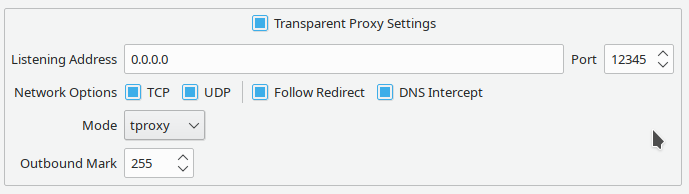
- Qv2ray config example
|
|
|
|
|
|
|
|
|
|
## Licences
|
|
|
|
cgproxy is licenced under [](https://www.gnu.org/licenses/gpl-2.0)
|